
RedKalion
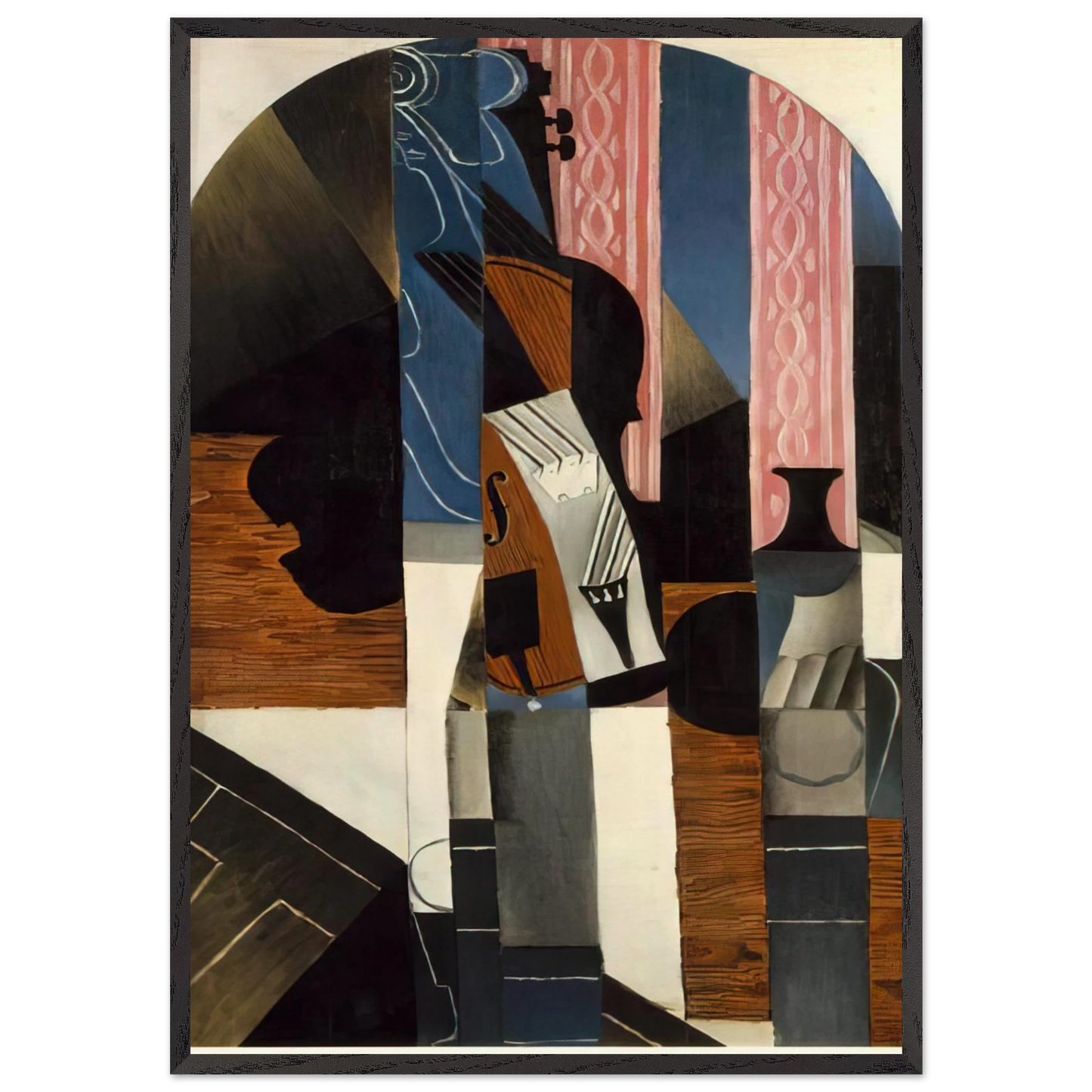
VIOLIN AND INK BOTTLE ON A TABLE 1913 - Juan Gris 70x100 cm / 28x40 inches Framed Art Print – Black Wooden Frame
VIOLIN AND INK BOTTLE ON A TABLE 1913 - Juan Gris 70x100 cm / 28x40 inches Framed Art Print – Black Wooden Frame
Couldn't load pickup availability
Violin and Ink Bottle on a Table (1913) by Juan Gris – Museum-Quality Framed Art Print
Immerse your space in the pioneering vision of Cubism with this archival reproduction of Juan Gris's "Violin and Ink Bottle on a Table" (1913). This iconic work, created during the height of the Cubist movement, masterfully deconstructs everyday objects—a violin and ink bottle—into a harmonious interplay of geometric forms and muted tones. Gris's analytical approach, blending collage-like textures with precise painting, invites contemplation of reality through fragmented perspectives, making it a timeless statement in modern art history.
RedKalion presents this masterpiece as a premium framed art print, meticulously crafted to honor the original's integrity. Our reproduction is printed on 250 gsm (110 lb) archival museum-quality paper with a matte, uncoated finish that captures every subtle detail without glare. The print is elegantly housed in a black wooden frame made from responsibly sourced oak and ash wood, featuring a 20mm (0.79") thickness for a substantial, gallery-worthy presence. Protected by shatterproof plexiglass, this piece arrives ready-to-hang with an included hanging kit, allowing you to elevate your home or office with a durable, sustainable artwork that endures.
- Artwork: "Violin and Ink Bottle on a Table" (1913) by Juan Gris – A seminal Cubist composition.
- Print Size: 70x100 cm / 28x40 inches, ideal for prominent display.
- Frame: Black wooden frame (oak and ash, 20mm thick) with shatterproof plexiglass.
- Paper: 250 gsm archival paper, matte finish, FSC-certified for sustainability.
- Ready-to-Hang: Includes hanging kit for immediate installation.
Choose RedKalion for fine art prints that blend historical significance with uncompromising quality, curated for discerning collectors.
Discover Unlimited Art Possibilities
At RedKalion, you can find virtually any artwork from any artist, available in a wide range of sizes to perfectly match your space.
If you didn’t find what you’re looking for, contact us at support@redkalion.com . We will source any artwork and produce it in any size and format you need, including art prints, posters, canvas, framed pieces, framed canvas, and more.
For dedicated art enthusiasts, we also offer handcrafted replicas of any artwork, carefully painted by highly skilled artists using traditional techniques.
For custom requests, contact us at support@redkalion.com .
What is the historical significance of "Violin and Ink Bottle on a Table" by Juan Gris?
This 1913 painting is a key Cubist work by Juan Gris, showcasing his analytical style that deconstructs objects like a violin and ink bottle into geometric forms, reflecting the movement's focus on fragmented reality and artistic innovation in early 20th-century art.
How does Juan Gris's technique in this artwork differ from other Cubists?
Gris used a more structured, collage-inspired approach with precise shapes and muted palettes, emphasizing harmony and order compared to the spontaneous styles of peers like Picasso, making this piece a refined example of Synthetic Cubism.
What are the specifications of the paper used for this fine art print?
The print uses 250 gsm (110 lb) archival museum-quality paper with a matte, uncoated finish and 0.29 mm thickness, made from FSC-certified sustainable materials for durability and premium reproduction of Cubist details.
Is the frame included, and what are its features?
Yes, it includes a black wooden frame made from responsibly sourced oak and ash wood, 20mm thick for a sturdy look, with shatterproof plexiglass protection and a ready-to-hang kit for easy wall mounting.
How is this art print shipped and packaged?
It is securely packaged in protective materials to prevent damage during transit, with shipping options available for safe delivery of your framed Cubist reproduction directly to your door.
Is this print archival and long-lasting?
Yes, it uses acid-free, archival-grade paper and inks resistant to fading, ensuring the Juan Gris reproduction maintains its quality for decades as a durable museum-quality print.
Can I customize the framing or size for this artwork?
This print comes as a standard 70x100 cm framed piece; for custom options, contact RedKalion to explore tailored solutions for your fine art display needs.