
RedKalion
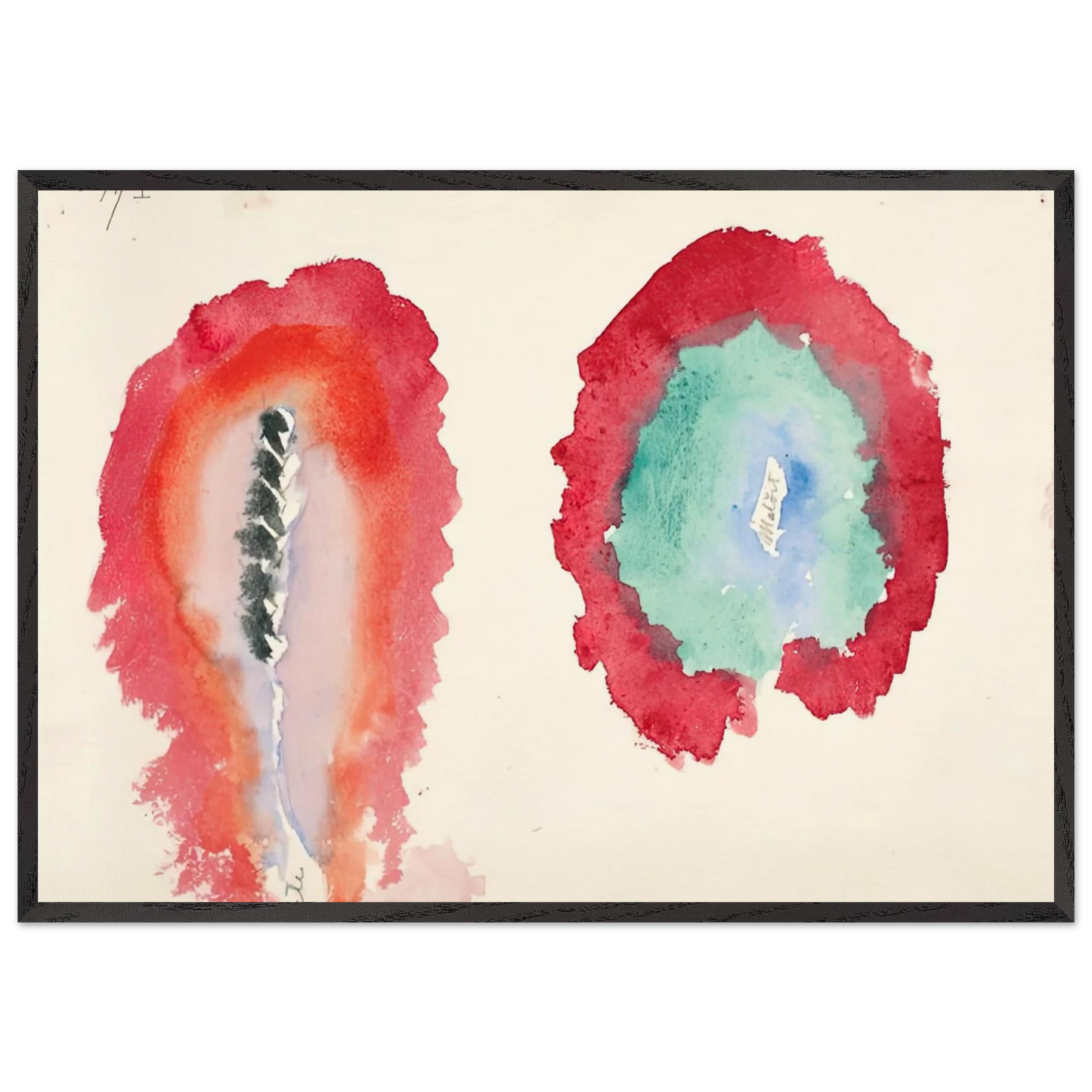
WHEAT AND WORMWOOD 1922 - Hilma af Klint 70x100 cm / 28x40 inches Framed Art Print – Black Wooden Frame
WHEAT AND WORMWOOD 1922 - Hilma af Klint 70x100 cm / 28x40 inches Framed Art Print – Black Wooden Frame
Couldn't load pickup availability
Wheat and Wormwood 1922 by Hilma af Klint: A Mystical Masterpiece
Discover Wheat and Wormwood 1922, a profound work by the visionary Swedish artist Hilma af Klint. Created in 1922, this painting is a testament to af Klint's pioneering role in abstract art, predating many of her male contemporaries. The title evokes biblical symbolism—wheat representing sustenance and life, wormwood signifying bitterness and revelation—reflecting her deep spiritual explorations through Theosophy and natural science. This piece captures a harmonious yet enigmatic balance, blending geometric forms with organic shapes to convey themes of duality and cosmic order, making it a captivating addition for collectors of modern and esoteric art.
RedKalion presents this museum-quality reproduction as a framed art print, meticulously crafted to honor af Klint's original vision. Our archival-grade print is produced on 250 gsm (110 lb) matte, uncoated, natural white paper with a thickness of 0.29 mm (11.4 mils), ensuring vibrant color fidelity and longevity. The print is elegantly housed in a black wooden frame made from responsibly sourced oak and ash wood, measuring 20mm (0.79") thick and wide for a substantial, gallery-worthy presence. Protection is provided by shatterproof plexiglass, safeguarding your investment against damage. This 70x100 cm / 28x40 inches piece arrives ready-to-hang with an included hanging kit, allowing you to elevate your space with an archival masterpiece that endures.
As a leader in fine art prints, RedKalion combines expertise in art history with premium materials, including FSC-certified sustainable paper or equivalent, to deliver reproductions that resonate with authenticity and quality. Own a piece of art history with this framed print, perfect for enhancing modern interiors, offices, or personal sanctuaries.
Discover Unlimited Art Possibilities
At RedKalion, you can find virtually any artwork from any artist, available in a wide range of sizes to perfectly match your space.
If you didn’t find what you’re looking for, contact us at support@redkalion.com . We will source any artwork and produce it in any size and format you need, including art prints, posters, canvas, framed pieces, framed canvas, and more.
For dedicated art enthusiasts, we also offer handcrafted replicas of any artwork, carefully painted by highly skilled artists using traditional techniques.
For custom requests, contact us at support@redkalion.com .
What is the significance of Wheat and Wormwood 1922 by Hilma af Klint?
Wheat and Wormwood 1922 is a key abstract work by Hilma af Klint, reflecting her spiritual themes and pioneering role in early 20th-century art, using symbolism from nature and Theosophy.
What materials are used in this framed art print?
This museum-quality reproduction features 250 gsm archival paper, a black wooden frame from oak and ash, shatterproof plexiglass, and FSC-certified sustainable materials for durability.
Is this print ready to hang upon delivery?
Yes, this fine art print includes a hanging kit and is ready-to-hang directly on your wall for immediate display in your home or office.
How does the frame quality compare to standard frames?
The frame is 20mm thick and wide, offering a sturdier and more substantial look than classic 14mm frames, enhancing the artwork's presence.
What makes the paper archival and museum-quality?
The 250 gsm matte, uncoated paper is acid-free and designed for longevity, ensuring vibrant colors and resistance to fading over time.
What inspired Hilma af Klint's use of geometric forms in this piece?
Af Klint's geometric forms were influenced by her spiritual beliefs and scientific studies, aiming to visualize cosmic structures and metaphysical concepts.
How does the symbolism of wheat and wormwood relate to the artwork's meaning?
Wheat symbolizes life and abundance, while wormwood represents bitterness and revelation, reflecting af Klint's exploration of dualities in nature and spirituality.