RedKalion
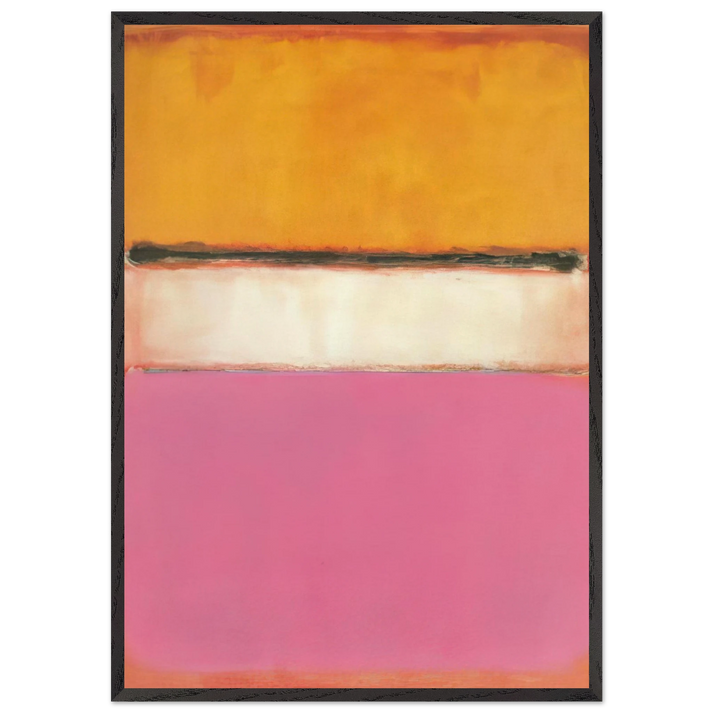
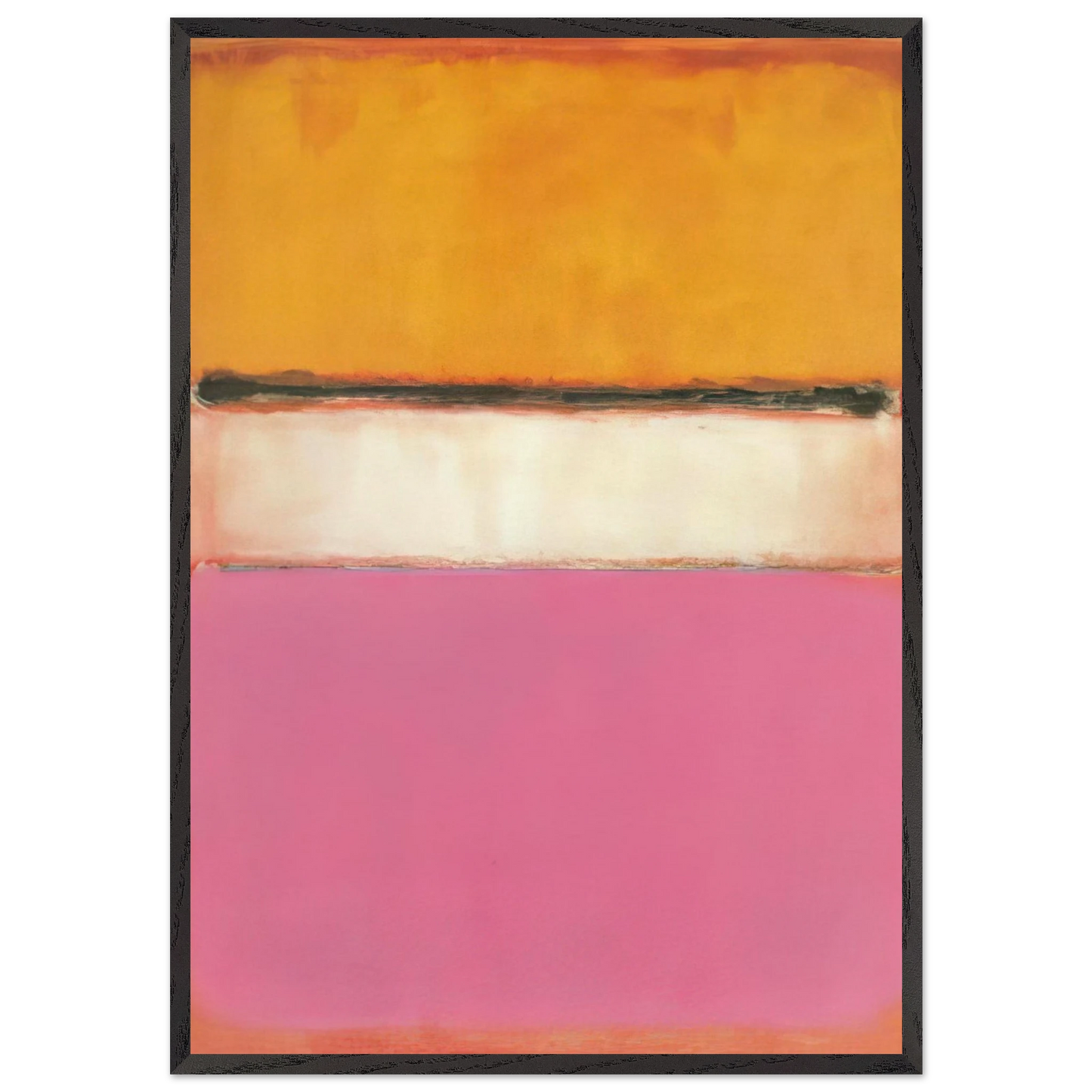
White Center Yellow Pink and Lavender on Rose - 1950 - Mark Rothko 70x100 cm / 28x40 inches Framed Art Print – Black Wooden Frame
White Center Yellow Pink and Lavender on Rose - 1950 - Mark Rothko 70x100 cm / 28x40 inches Framed Art Print – Black Wooden Frame
Couldn't load pickup availability
White Center Yellow Pink and Lavender on Rose (1950) by Mark Rothko
Immerse your space in the profound emotional resonance of Mark Rothko's White Center Yellow Pink and Lavender on Rose, a quintessential masterpiece from his iconic Color Field period. This 1950 painting exemplifies Rothko's revolutionary approach to abstraction, where luminous, soft-edged rectangles of color—white, yellow, pink, and lavender—float ethereally against a deep rose ground. Rothko sought to evoke pure emotional and spiritual experience, stripping away representational form to communicate directly through color's sublime power. This museum-quality reproduction captures every subtle gradient and atmospheric glow, allowing you to experience the meditative depth of Rothko's vision in your own environment.
RedKalion presents this archival fine art print as a ready-to-hang framed art print, meticulously crafted to honor the artwork's legacy. The print is produced on premium, 250 gsm (110 lb) matte, uncoated, natural white archival museum-quality paper with a thickness of 0.29 mm (11.4 mils), ensuring exceptional durability and color fidelity. It is protected by shatterproof plexiglass and elegantly framed in a black wooden frame made from responsibly sourced oak and ash wood, with frame measurements of 20mm (0.79") thick and wide—offering a substantial, gallery-worthy presence that enhances the artwork's immersive scale. The sustainable paper is FSC-certified or equivalent, reflecting our commitment to quality and environmental stewardship.
Elevate your home or office with this 70x100 cm / 28x40 inches framed art print, a timeless piece that invites contemplation and transforms any room into a sanctuary of modern art. RedKalion ensures each reproduction meets the highest standards of archival excellence, delivering a piece that endures as a testament to Rothko's enduring influence.
Discover Unlimited Art Possibilities
At RedKalion, you can find virtually any artwork from any artist, available in a wide range of sizes to perfectly match your space.
If you didn’t find what you’re looking for, contact us at support@redkalion.com . We will source any artwork and produce it in any size and format you need, including art prints, posters, canvas, framed pieces, framed canvas, and more.
For dedicated art enthusiasts, we also offer handcrafted replicas of any artwork, carefully painted by highly skilled artists using traditional techniques.
For custom requests, contact us at support@redkalion.com .
What are the dimensions of this Mark Rothko framed print?
This framed art print measures 70x100 cm (28x40 inches), including the black wooden frame, making it a statement piece ideal for prominent wall spaces.
What type of paper is used for this fine art reproduction?
We use 250 gsm (110 lb) matte, uncoated, natural white archival museum-quality paper with a thickness of 0.29 mm (11.4 mils), ensuring premium durability and color accuracy for this Mark Rothko print.
Is this framed print ready to hang upon delivery?
Yes, this ready-to-hang framed art print includes a hanging kit, allowing for immediate installation on your wall without additional assembly.
How does the frame enhance this Rothko reproduction?
The black wooden frame, made from responsibly sourced oak and ash wood, is 20mm (0.79") thick and wide, providing a sturdy, gallery-style presentation that complements the artwork's modern aesthetic.
What protection does the print have against damage?
It features shatterproof plexiglass, offering clear, durable protection against impacts and UV light, preserving your Mark Rothko fine art print for years.
What is the historical significance of White Center Yellow Pink and Lavender on Rose?
Created in 1950, this painting is a key example of Rothko's Color Field style, using soft, layered rectangles to evoke emotional and spiritual depth, marking a pivotal moment in abstract expressionism.
How does Rothko's technique influence the mood of this artwork?
Rothko applied thin, translucent layers of paint to create luminous, floating color fields that absorb light, producing a meditative, immersive atmosphere that invites personal reflection.