RedKalion
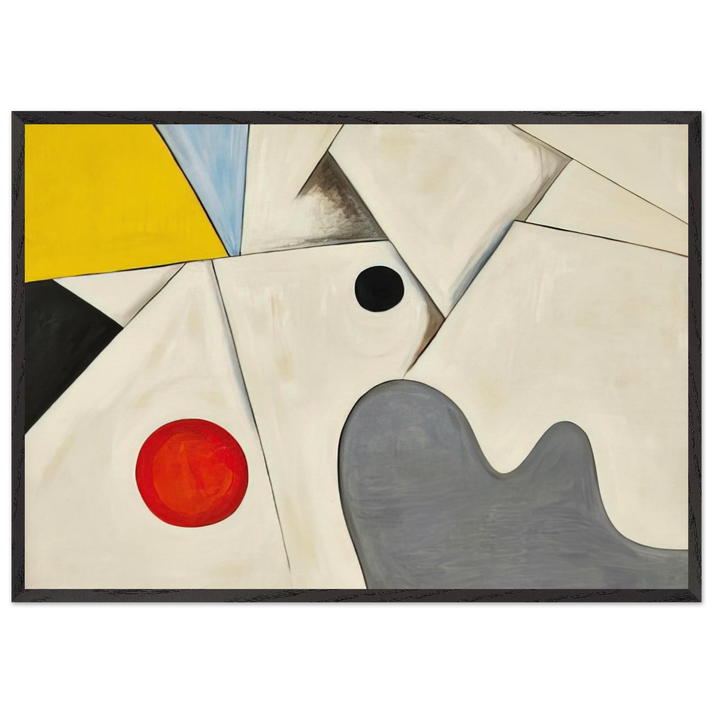
WHITE FIELDS 1955 - Alexander Calder 70x100 cm / 28x40 inches Framed Art Print – Black Wooden Frame
WHITE FIELDS 1955 - Alexander Calder 70x100 cm / 28x40 inches Framed Art Print – Black Wooden Frame
Couldn't load pickup availability
White Fields, 1955 by Alexander Calder: A Monumental Kinetic Masterpiece
Introducing White Fields, 1955, a seminal work by the legendary American sculptor Alexander Calder, now available as an exclusive museum-quality framed art print from RedKalion. This iconic piece, measuring 70x100 cm (28x40 inches), captures Calder's revolutionary approach to abstract art through his pioneering mobiles and stabiles, blending playful forms with profound spatial harmony. Created during his mature period, White Fields exemplifies Calder's mastery of balance, movement, and minimalist color—here, the stark white elements dance against an implied background, evoking a sense of whimsical elegance and modern sophistication. At RedKalion, we honor this artistic legacy with a premium reproduction that meets the highest archival standards, ensuring every detail from Calder's dynamic composition is preserved for generations.
Our framed art print is meticulously crafted to elevate any interior, from contemporary living rooms to corporate offices. The artwork is presented in a black wooden frame made from responsibly sourced oak and ash wood, with a substantial 20mm (0.79") thickness that provides a bold, gallery-worthy presence—wider than classic 14mm frames for enhanced visual impact. It features shatterproof plexiglass for durable protection against dust and damage, while the print itself is produced on 250 gsm (110 lb) archival museum-quality paper with a matte, uncoated finish that replicates the texture of original artworks. This sustainable paper is FSC-certified, reflecting our commitment to eco-conscious practices. Ready-to-hang with an included kit, this piece arrives prepared for immediate display, offering a seamless blend of art history and modern craftsmanship.
As your trusted curator of fine art, RedKalion combines decades of expertise in art history with cutting-edge printing technology. Alexander Calder's White Fields is not just a decoration but a conversation piece that embodies mid-century innovation—ideal for collectors and design enthusiasts seeking to infuse spaces with timeless creativity. Elevate your environment with an archival masterpiece that endures, backed by our unwavering dedication to quality and authenticity.

Discover Unlimited Art Possibilities
At RedKalion, you can find virtually any artwork from any artist, available in a wide range of sizes to perfectly match your space.
If you didn’t find what you’re looking for, contact us at support@redkalion.com . We will source any artwork and produce it in any size and format you need, including art prints, posters, canvas, framed pieces, framed canvas, and more.
For dedicated art enthusiasts, we also offer handcrafted replicas of any artwork, carefully painted by highly skilled artists using traditional techniques.
For custom requests, contact us at support@redkalion.com .
What are the dimensions and details of this Alexander Calder framed print?
This framed art print measures 70x100 cm (28x40 inches) and features Alexander Calder's White Fields, 1955, a key work from his abstract kinetic series, reproduced on premium archival paper.
What type of paper is used for this museum-quality reproduction?
We use 250 gsm (110 lb) matte, uncoated archival paper with a thickness of 0.29 mm (11.4 mils), FSC-certified for sustainability, ensuring vibrant color and long-lasting fine art quality.
How is the framed print shipped and installed?
It arrives ready-to-hang with a pre-installed kit, securely packaged for safe delivery, allowing for easy wall mounting without additional tools or framing needed.
What makes this frame durable and high-quality?
The black wooden frame is crafted from responsibly sourced oak and ash, 20mm (0.79") thick, with shatterproof plexiglass for protection, offering a sturdy, gallery-style presentation.
How long will this archival print last without fading?
Our archival materials resist fading for decades under normal conditions, making this a lasting investment in fine art decor that maintains its museum-quality appearance.
What artistic significance does White Fields, 1955 hold in Calder's career?
White Fields, 1955 represents Calder's mature exploration of kinetic abstraction, blending playful mobiles with minimalist forms to redefine modern sculpture in the mid-20th century.
How does Calder's use of white in this piece affect its visual impact?
Calder's stark white elements in White Fields create dynamic contrast and spatial harmony, evoking lightness and movement that enhance the abstract, whimsical mood of the artwork.