
RedKalion
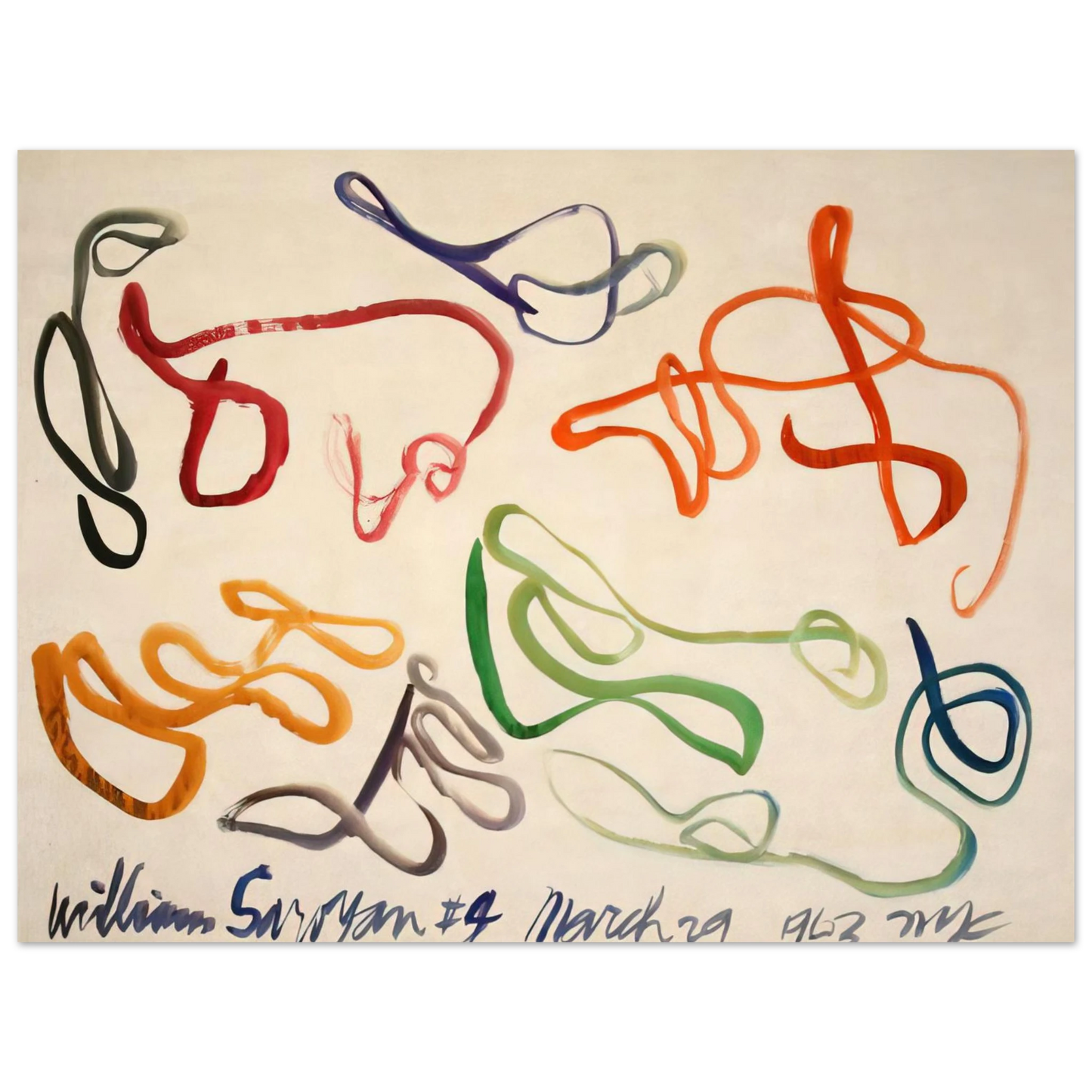
William Saroyan - #4 March 29, 1963 NYC - 1963 75x100 cm / 30x40inches Fine Art Poster
William Saroyan - #4 March 29, 1963 NYC - 1963 75x100 cm / 30x40inches Fine Art Poster
Couldn't load pickup availability
William Saroyan - #4 March 29, 1963 NYC - 1963 Fine Art Print
Immerse yourself in the vibrant energy of 1960s New York City with this museum-quality reproduction of William Saroyan's #4 March 29, 1963 NYC. This archival fine art poster captures the raw, expressive spirit of Saroyan's work, offering a window into a pivotal moment in American cultural history. Measuring 75x100 cm (30x40 inches), this piece is perfectly scaled to command attention in any modern interior.
Saroyan, renowned for his Pulitzer Prize-winning literature, also left a profound mark as a visual artist. This 1963 piece reflects his spontaneous, diary-like approach to art—blending abstract forms with urban impressions to evoke the chaotic beauty of NYC. It's a testament to his multidisciplinary genius, where every brushstroke tells a story of time and place.
RedKalion presents this masterpiece on Master's Edition archival paper, ensuring a premium, gallery-worthy finish. The matte, uncoated surface in a natural white hue enhances the artwork's depth and texture, while its acid-free composition (pH above 7) guarantees it resists yellowing for generations. Crafted from FSC-certified, 250 gsm (110 lb) paper with a thickness of 0.29 mm (11.4 mils), this print combines durability with an eco-conscious ethos.
Elevate your space with an archival masterpiece that endures—each print is meticulously produced on demand, reflecting RedKalion's commitment to curating world-class reproductions that honor artistic legacy.
Discover Unlimited Art Possibilities
At RedKalion, you can find virtually any artwork from any artist, available in a wide range of sizes to perfectly match your space.
If you didn’t find what you’re looking for, contact us at support@redkalion.com . We will source any artwork and produce it in any size and format you need, including art prints, posters, canvas, framed pieces, framed canvas, and more.
For dedicated art enthusiasts, we also offer handcrafted replicas of any artwork, carefully painted by highly skilled artists using traditional techniques.
For custom requests, contact us at support@redkalion.com .
What are the dimensions of this William Saroyan fine art print?
This museum-quality reproduction measures 75x100 cm (30x40 inches), ideal for large wall displays and creating a focal point in any room with its archival-grade paper.
What type of paper is used for this archival fine art poster?
It's printed on Master's Edition archival paper, featuring a matte, uncoated finish in natural white for a luxurious texture that enhances Saroyan's 1963 artwork.
How does the acid-free paper ensure longevity for this fine art print?
The acid-free paper (pH above 7) prevents yellowing over time, making this 250 gsm FSC-certified print a durable, museum-quality reproduction that lasts for generations.
What is the shipping process for this on-demand fine art poster?
RedKalion prints and ships each order on demand with no minimums, ensuring your William Saroyan artwork arrives carefully packaged and ready to display.
Can you describe the weight and thickness of this archival paper?
The paper is 250 gsm (110 lb) with a thickness of 0.29 mm (11.4 mils), offering a sturdy, premium feel for this 75x100 cm fine art print.
What inspired William Saroyan's #4 March 29, 1963 NYC artwork?
Created in 1963, this piece reflects Saroyan's spontaneous, diary-like visual style, capturing the vibrant energy and abstract impressions of New York City during a culturally rich era.
How does this print reflect Saroyan's multidisciplinary artistry?
As a Pulitzer-winning writer and visual artist, Saroyan blended abstract forms with urban themes in this work, showcasing his unique approach to documenting time and place through art.