
RedKalion
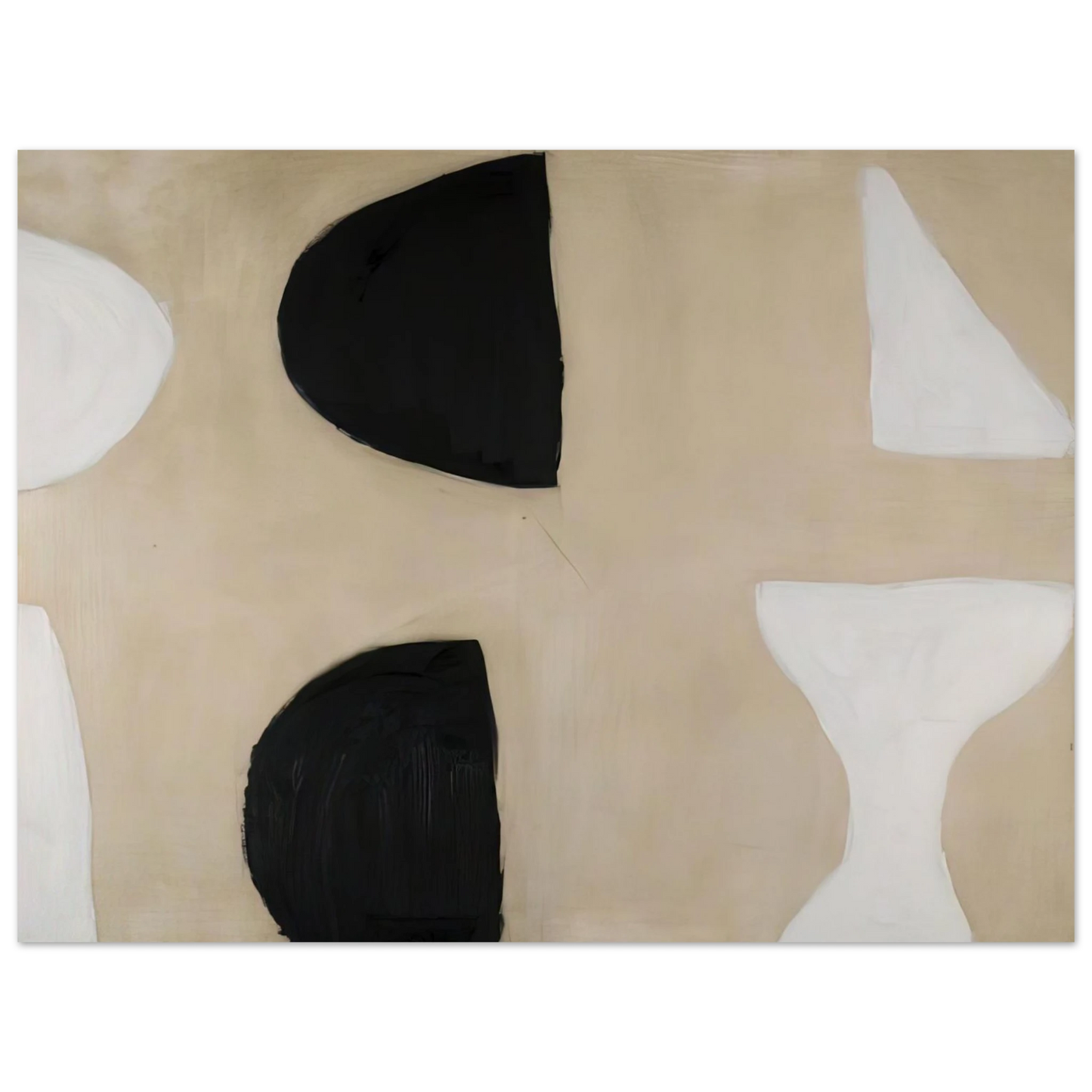
William Scott - Angle - 1963 75x100 cm / 30x40inches Fine Art Poster
William Scott - Angle - 1963 75x100 cm / 30x40inches Fine Art Poster
Couldn't load pickup availability
William Scott - Angle (1963) - Museum-Quality Fine Art Print
Elevate your space with William Scott's iconic 1963 masterpiece, Angle, now available as an archival-grade reproduction from RedKalion. This fine art print captures the essence of Scott's minimalist abstraction, where geometric forms and subtle tonal variations evoke a serene, contemplative mood. As a leading figure in post-war British art, Scott's work bridges the gap between still life and pure abstraction, making Angle a timeless addition to modern interiors.
Our museum-quality reproduction is meticulously printed on Master's Edition archival paper, featuring a luxurious matte, uncoated finish in a natural white hue that enhances texture and depth. With dimensions of 75x100 cm (30x40 inches), this piece commands attention while maintaining archival integrity—crafted from acid-free, FSC-certified paper at 250 gsm (0.29 mm thickness) to prevent yellowing and ensure longevity. RedKalion's commitment to excellence means each print is produced on-demand, offering a sustainable, premium art experience without compromise.
- Artwork: William Scott - Angle (1963)
- Dimensions: 75x100 cm / 30x40 inches
- Paper: Master's Edition archival, matte uncoated, natural white
- Archival Quality: Acid-free (pH above 7), 250 gsm, 0.29 mm thickness
- Sustainability: FSC-certified paper, printed on-demand
Discover Unlimited Art Possibilities
At RedKalion, you can find virtually any artwork from any artist, available in a wide range of sizes to perfectly match your space.
If you didn’t find what you’re looking for, contact us at support@redkalion.com . We will source any artwork and produce it in any size and format you need, including art prints, posters, canvas, framed pieces, framed canvas, and more.
For dedicated art enthusiasts, we also offer handcrafted replicas of any artwork, carefully painted by highly skilled artists using traditional techniques.
For custom requests, contact us at support@redkalion.com .
What is the historical significance of William Scott's 'Angle' from 1963?
William Scott's 'Angle' (1963) is a key work from his abstract period, blending geometric minimalism with subtle tonal shifts to explore form and space in post-war British art, reflecting his transition from still life to pure abstraction.
How does the matte finish enhance the viewing experience of this fine art print?
The matte, uncoated finish on our Master's Edition archival paper reduces glare, providing a luxurious texture that mimics original artwork and highlights the subtle details in Scott's minimalist composition for an authentic display.
What are the specifications of the paper used for this museum-quality reproduction?
This print uses Master's Edition archival paper: matte uncoated, natural white, acid-free (pH above 7), 250 gsm weight, 0.29 mm thickness, and FSC-certified for sustainability and longevity in fine art prints.
How is shipping handled for this on-demand fine art poster?
We print and ship on-demand with no minimum orders, ensuring careful packaging and efficient delivery worldwide for your 75x100 cm William Scott 'Angle' fine art poster.
What ensures the archival longevity of this William Scott print?
Archival longevity is guaranteed by acid-free paper (pH above 7) that prevents yellowing, combined with 250 gsm weight and FSC-certification for durable, museum-quality reproductions that endure over time.
Why did William Scott focus on geometric forms in his later works like 'Angle'?
In the 1960s, William Scott shifted towards geometric abstraction to simplify forms and explore spatial relationships, moving away from figurative still lifes to create serene, minimalist compositions like 'Angle'.
How does the 75x100 cm size impact the display of this artwork?
The 75x100 cm (30x40 inches) size offers a commanding presence ideal for modern spaces, balancing scale with Scott's minimalist aesthetic to create a focal point without overwhelming the room.