
RedKalion
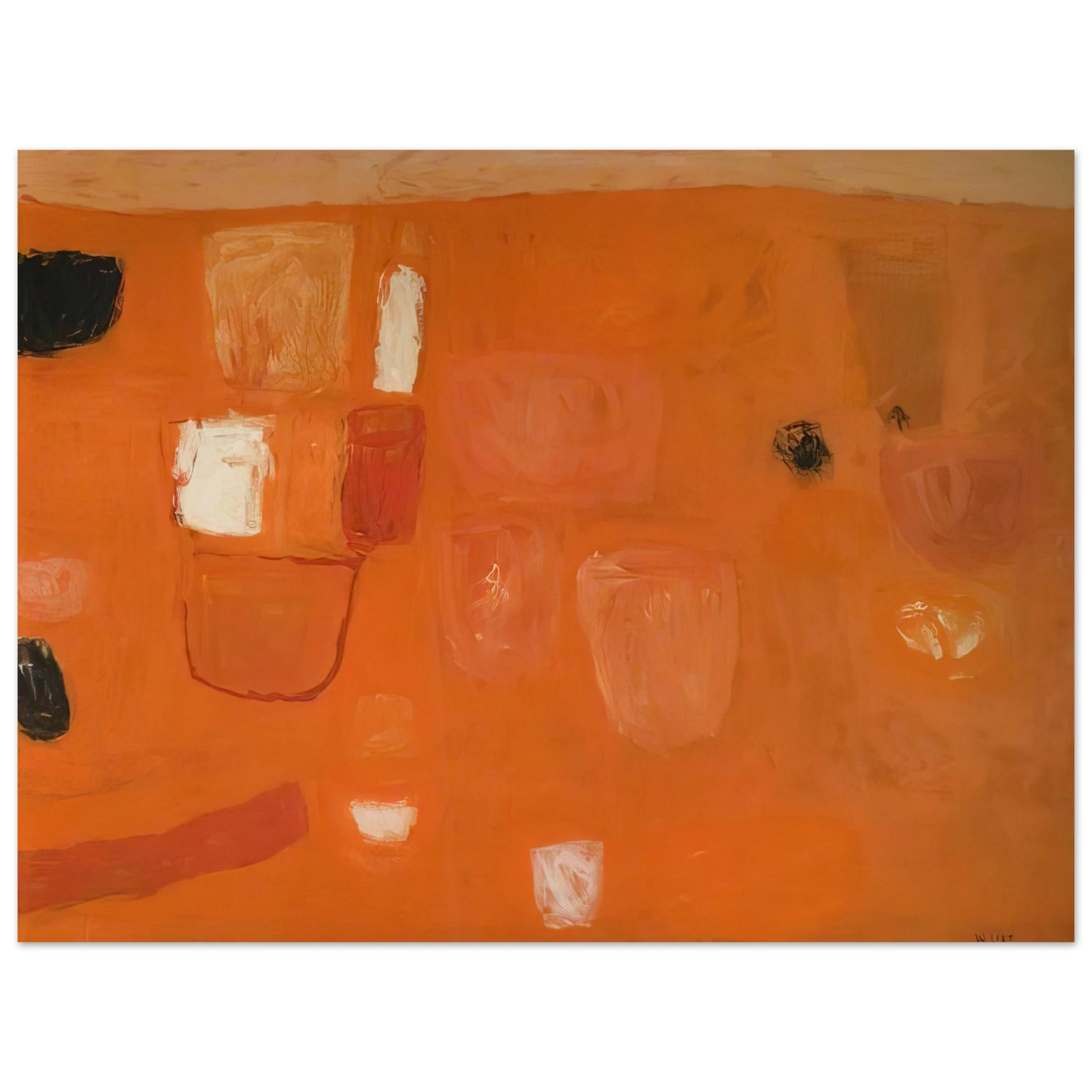
William Scott - Orange and Red - 1957 75x100 cm / 30x40inches Fine Art Poster
William Scott - Orange and Red - 1957 75x100 cm / 30x40inches Fine Art Poster
Couldn't load pickup availability
William Scott - Orange and Red - 1957: A Masterpiece of Abstract Expressionism
Immerse yourself in the bold, minimalist elegance of William Scott's "Orange and Red" (1957), a defining work from the British abstract art movement. This museum-quality fine art print captures the artist's masterful exploration of form and color, where vibrant orange and deep red shapes interact on a neutral ground, evoking a sense of serene yet dynamic energy. Scott, a pivotal figure in 20th-century art, distilled everyday objects into pure abstraction, creating compositions that balance simplicity with profound emotional depth. Our archival reproduction ensures every subtle brushstroke and tonal variation is preserved, allowing you to bring this iconic piece into your home or office.
Printed on our exclusive Master's Edition archival paper, this fine art poster features a matte, uncoated finish in a natural white hue that enhances the artwork's luminosity without glare. The acid-free paper (pH above 7) guarantees it resists yellowing, while its substantial 250 gsm (110 lb) weight and 0.29 mm (11.4 mils) thickness provide a luxurious, durable feel. Crafted from FSC-certified sustainable materials, this print is produced on-demand, ensuring a personalized, eco-conscious acquisition. Elevate your space with a 75x100 cm (30x40 inches) reproduction that honors Scott's legacy and endures as a timeless statement piece.
Discover Unlimited Art Possibilities
At RedKalion, you can find virtually any artwork from any artist, available in a wide range of sizes to perfectly match your space.
If you didn’t find what you’re looking for, contact us at support@redkalion.com . We will source any artwork and produce it in any size and format you need, including art prints, posters, canvas, framed pieces, framed canvas, and more.
For dedicated art enthusiasts, we also offer handcrafted replicas of any artwork, carefully painted by highly skilled artists using traditional techniques.
For custom requests, contact us at support@redkalion.com .
What are the dimensions of this William Scott fine art print?
This museum-quality reproduction measures 75x100 cm (30x40 inches), perfectly sized to make a bold statement in any room while capturing the original artwork's scale and impact.
What type of paper is used for this archival print?
It's printed on Master's Edition archival paper, featuring a matte, uncoated finish in natural white for a luxurious texture that enhances the artwork's colors without glare.
How durable and long-lasting is this print?
Made from acid-free paper (pH above 7) with a weight of 250 gsm (110 lb) and thickness of 0.29 mm (11.4 mils), it resists yellowing and ensures archival longevity for decades.
Is this print produced sustainably?
Yes, it uses FSC-certified paper and is printed on-demand, minimizing waste and supporting eco-friendly practices in fine art reproduction.
What is the shipping and fulfillment process?
We offer no minimum orders; each print is custom-made and shipped directly to you, ensuring fresh, high-quality results with careful packaging.
Why is William Scott's "Orange and Red" significant in art history?
Created in 1957, it exemplifies Scott's shift toward abstraction, blending everyday forms with bold color to influence the British abstract expressionist movement.
What artistic techniques did William Scott use in this piece?
Scott employed simplified shapes and contrasting hues like orange and red to create dynamic balance, reflecting his focus on essential forms and emotional resonance.