RedKalion
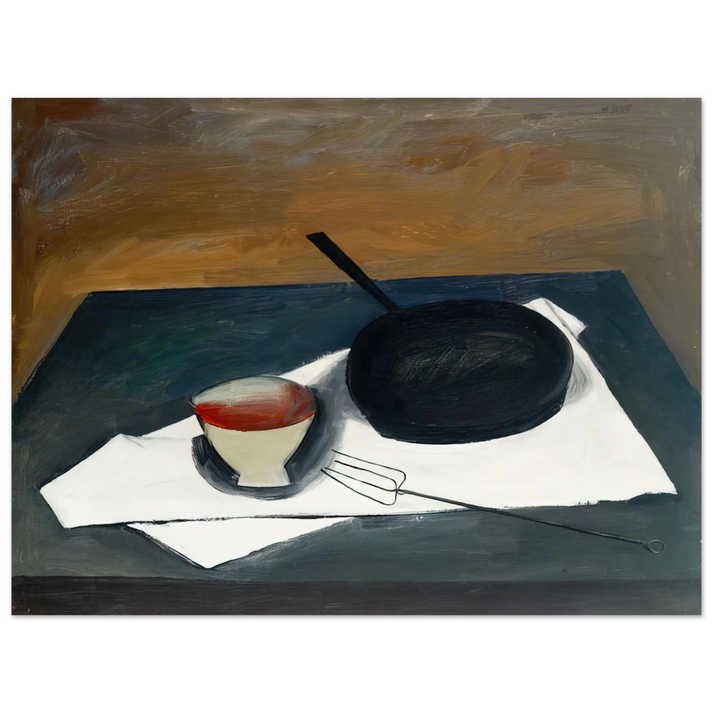
William Scott - The Frying Pan - 1946 75x100 cm / 30x40inches Fine Art Poster
William Scott - The Frying Pan - 1946 75x100 cm / 30x40inches Fine Art Poster
Couldn't load pickup availability
William Scott - The Frying Pan (1946) - Museum-Quality Fine Art Print
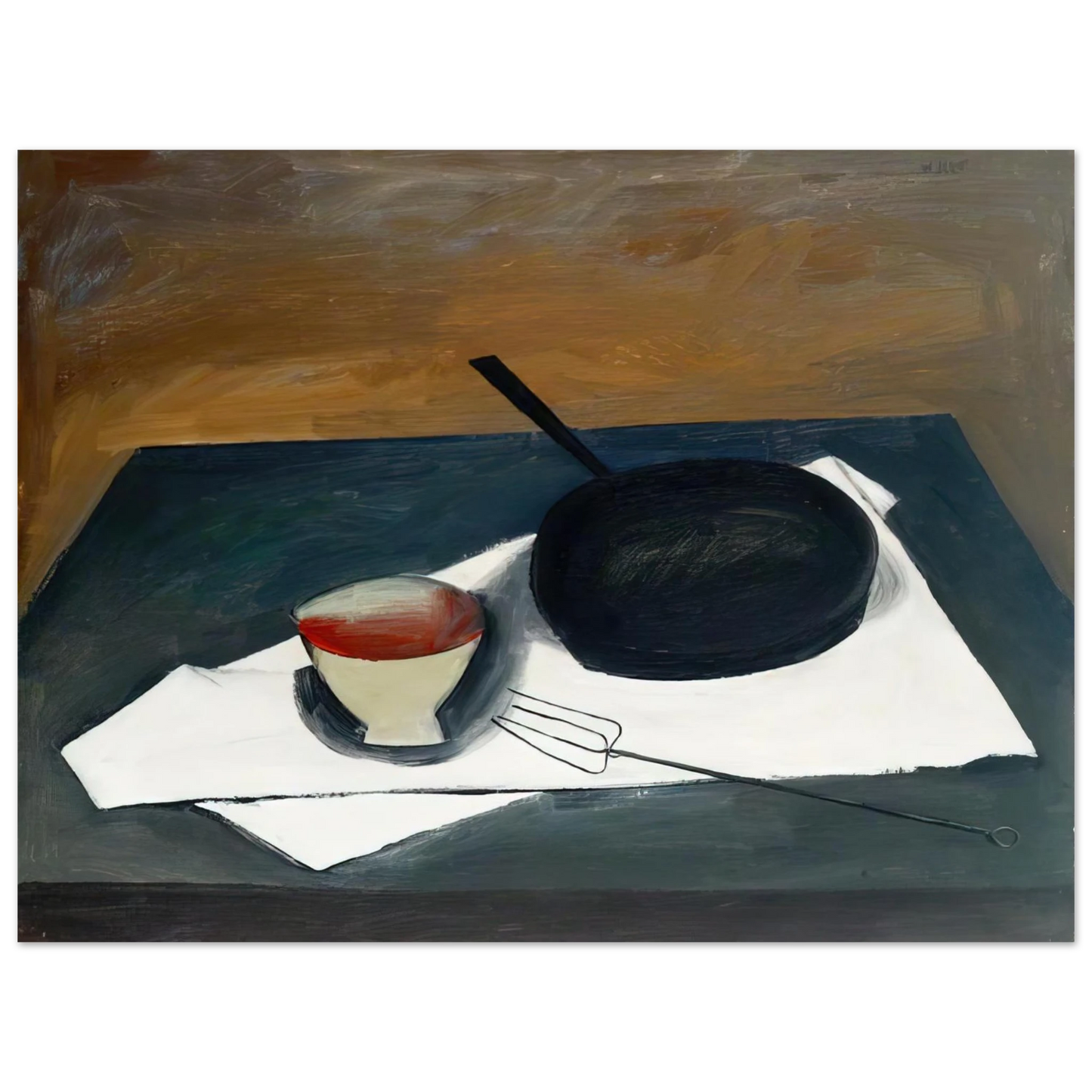
Immerse yourself in the bold, modernist vision of British painter William Scott with this exquisite reproduction of his iconic 1946 work, The Frying Pan. Measuring 75x100 cm (30x40 inches), this fine art poster captures the essence of Scott's post-war exploration of domestic still life, transformed through a lens of abstraction and raw emotional power. The composition—a stark, almost sculptural rendering of a simple kitchen utensil—evokes a mood of quiet introspection and primal simplicity, bridging the gap between everyday object and timeless symbol.
RedKalion presents this archival masterpiece on our premium Master's Edition archival paper, ensuring a museum-quality reproduction that honors Scott's original intent. The matte, uncoated finish and natural white (off-white) hue provide a luxurious texture that enhances the artwork's tactile depth, while the acid-free composition (pH above 7) guarantees resistance to yellowing for generations. Crafted from FSC-certified paper at 250 gsm (110 lb) with a thickness of 0.29 mm (11.4 mils), this print combines sustainability with enduring elegance. Printed and shipped on demand with no minimum orders, it offers a seamless way to elevate your space with a piece of art history.
Art Historical Insight: William Scott, a key figure in 20th-century British art, developed The Frying Pan during a period of intense creative renewal after World War II. His technique involved reducing forms to their essential geometric shapes, influenced by European modernists like Braque and Picasso, yet infused with a distinctly British sensibility. This work exemplifies his mastery of balancing abstraction with recognizable subject matter, making it a cornerstone of mid-century modernist print collections.
Discover Unlimited Art Possibilities
At RedKalion, you can find virtually any artwork from any artist, available in a wide range of sizes to perfectly match your space.
If you didn’t find what you’re looking for, contact us at support@redkalion.com . We will source any artwork and produce it in any size and format you need, including art prints, posters, canvas, framed pieces, framed canvas, and more.
For dedicated art enthusiasts, we also offer handcrafted replicas of any artwork, carefully painted by highly skilled artists using traditional techniques.
For custom requests, contact us at support@redkalion.com .
What are the dimensions of this William Scott fine art print?
This museum-quality reproduction measures 75x100 cm (30x40 inches), perfect for creating a focal point in any room with its bold modernist aesthetic.
What type of paper is used for this archival print?
It's printed on Master's Edition archival paper, featuring a matte, uncoated finish and natural white hue for a luxurious texture that enhances the artwork's depth.
How durable is this fine art poster against aging?
Our acid-free paper (pH above 7) prevents yellowing over time, ensuring this William Scott reproduction remains vibrant for generations as a lasting investment.
What is the weight and thickness of the paper?
The paper is 250 gsm (110 lb) with a thickness of 0.29 mm (11.4 mils), offering a premium feel and durability for your fine art display.
Is this print sustainably produced?
Yes, it uses FSC-certified paper, reflecting RedKalion's commitment to eco-friendly practices in our museum-quality reproductions.
What was the historical context of The Frying Pan by William Scott?
Created in 1946, this work reflects post-war British modernism, where Scott abstracted everyday objects to explore primal forms and emotional resonance.
How does William Scott's technique influence The Frying Pan?
Scott reduced the frying pan to geometric shapes, blending abstraction with realism, influenced by European modernists to create a timeless still life.