
RedKalion
Zen Rocks Fine Art Print | Museum-Quality Reproduction | RedKalion
Zen Rocks Fine Art Print | Museum-Quality Reproduction | RedKalion
Couldn't load pickup availability
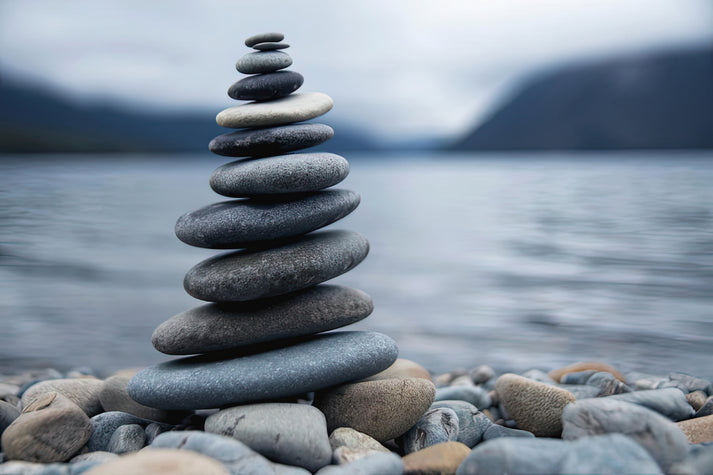
This Zen Rocks fine art print captures the serene essence of East Asian ink painting, where natural forms become meditative symbols. Created by an anonymous master of the Muromachi period (1336–1573), the artwork exemplifies suibokuga (ink wash painting) techniques, using minimalist brushstrokes to evoke the timeless balance of stone and void. The composition, likely influenced by Zen Buddhist principles of wabi-sabi (imperfect beauty), invites contemplation through its restrained palette and asymmetrical harmony.
Artistic Analysis of Zen Rocks
Stylistically, the Zen Rocks print showcases the haboku (broken ink) method, where wet and dry brushwork creates textured, organic surfaces. The rocks, rendered with varying ink densities, appear both weighty and ethereal, a duality central to Zen philosophy. This reproduction preserves the original's subtle gradations, from deep sumi-e blacks to delicate grey washes, ensuring each detail—like the moss-like accents—retains its artistic integrity.
Historical Context of Zen Rock Imagery
In Japanese art, rock gardens and painted stones served as kanso (simplicity) motifs, often found in temple settings. This Zen Rocks artwork aligns with the karesansui (dry landscape) tradition, where arranged stones symbolize mountains or islands in a sea of gravel. By the 15th century, such imagery was popular among Zen monks and literati, reflecting a shift from ornate decor to spiritual austerity.
Print Specifications & Materials
- Available Sizes: 75×100 cm / 30×40″, 40×50 cm / 16×20″, 21×29.7 cm / 8×12″
- Paper Finishing: Matte, uncoated, natural white (off-white)
- Acid-Free: pH above 7 to prevent yellowing over time
- Paper Weight: 250 gsm (110 lb) | Thickness: 0.29 mm (11.4 mils)
- Sustainable Paper: FSC-certified
RedKalion's premium Zen Rocks art print offers a museum-quality reproduction, ideal for enhancing spaces with its tranquil, philosophical depth. Our archival materials ensure longevity, making it a thoughtful addition for collectors and design enthusiasts seeking authentic East Asian art.

Discover Unlimited Art Possibilities
At RedKalion, you can find virtually any artwork from any artist, available in a wide range of sizes to perfectly match your space.
If you didn’t find what you’re looking for, contact us at support@redkalion.com . We will source any artwork and produce it in any size and format you need, including art prints, posters, canvas, framed pieces, framed canvas, and more.
For dedicated art enthusiasts, we also offer handcrafted replicas of any artwork, carefully painted by highly skilled artists using traditional techniques.
For custom requests, contact us at support@redkalion.com .
What is the historical period of the original Zen Rocks artwork?
The original Zen Rocks artwork dates to the Muromachi period (1336–1573) in Japan, a time when Zen Buddhism heavily influenced ink painting styles like suibokuga.
What artistic technique is used in the Zen Rocks painting?
The artwork employs the haboku (broken ink) technique, a suibokuga method using varied ink washes and brushstrokes to create textured, minimalist forms characteristic of Zen rock imagery.
What paper is used for the Zen Rocks fine art print?
We use FSC-certified, acid-free paper with a matte finish, 250 gsm weight, and natural white color to ensure archival quality and accurate color reproduction for your Zen art print.
How is the Zen Rocks print shipped to prevent damage?
Prints are shipped in sturdy, flat packaging with protective layers to prevent bending or creasing, ensuring your Zen Rocks art arrives in perfect condition for framing.
How long will the Zen Rocks print last without fading?
With acid-free paper and archival inks, the Zen Rocks fine art print resists fading and yellowing, maintaining its quality for decades under proper display conditions.
What does the Zen Rocks composition symbolize in Zen philosophy?
The composition symbolizes wabi-sabi and kanso, reflecting Zen principles of impermanence and simplicity through balanced, asymmetrical rock forms that evoke meditation and natural harmony.
Why are the rocks depicted with varying ink densities in this print?
Varying ink densities mimic the haboku technique, creating depth and texture to convey the rocks' weight and ethereal quality, enhancing the spiritual and aesthetic impact of the Zen artwork.