
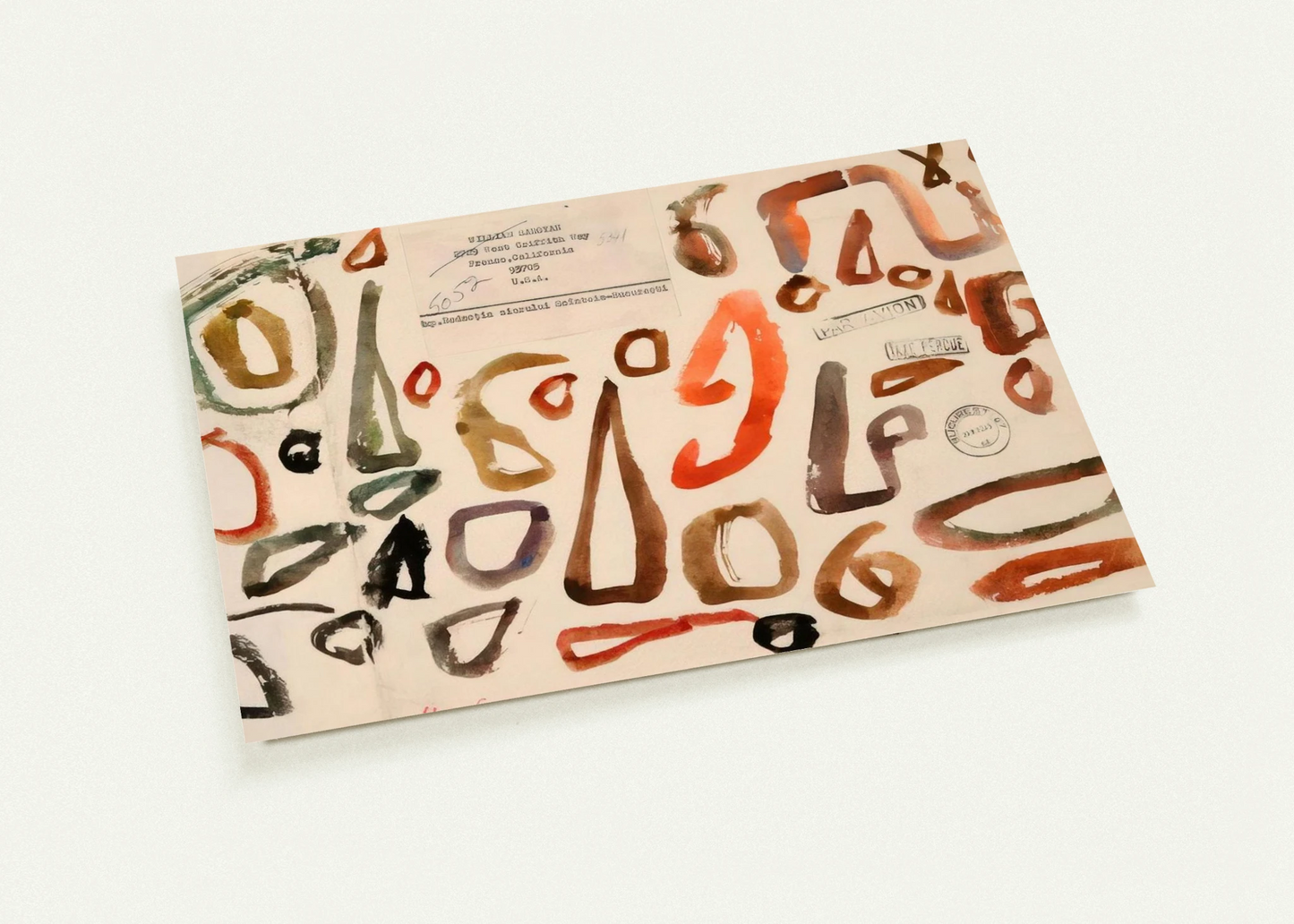
What distinguishes RedKalion’s 12-color printing for these postcards?
Our 12-color fine art printing uses a wider gamut of pigment-based inks compared to standard 4-color processes. This results in superior color accuracy, smoother gradients, and a stunning depth that captures the true essence of Saroyan’s original 1972 artwork.
What are the specific dimensions and weight of the cards?
Each card in this pack of 10 is A6 size (10.5 x 14.8 cm / 4.1 x 5.8 inches). They are printed on premium 200 gsm (80 lb) paper with a thickness of 0.26 mm, providing a sturdy, high-quality feel.
Is the paper archival and environmentally friendly?
Yes. We use FSC-certified paper, ensuring it is sourced from responsibly managed forests. The combination of acid-free paper and pigment inks ensures these postcards serve as lasting museum-quality reproductions without fading over time.
How does RedKalion handle shipping and production?
To maintain our commitment to sustainability, these postcards are printed on demand. This reduces overstock and waste. Your order is carefully packaged and shipped promptly, ensuring the cards arrive in pristine, gallery-ready condition.
What is the expected longevity of these prints?
Thanks to our archival-grade materials and 12-color printing technology, these prints are designed to last for decades. The pigment inks are highly resistant to UV light, preventing the yellowing or fading common in standard inkjet prints.
What is the historical significance of William Saroyan's 1972 series?
In 1972, William Saroyan was intensely focused on a series of daily visual meditations. These works reflect his move toward abstract expressionism, where he used art as a rhythmic, non-verbal extension of his literary storytelling and Armenian-American identity.
How does Saroyan's literary background influence his visual art style?
Saroyan’s art often mirrors the 'stream of consciousness' style found in his writing. His visual works, like October 3 1972, utilize calligraphic lines and impulsive gestures that mimic the movement of a pen across a page, blending drawing and writing.