
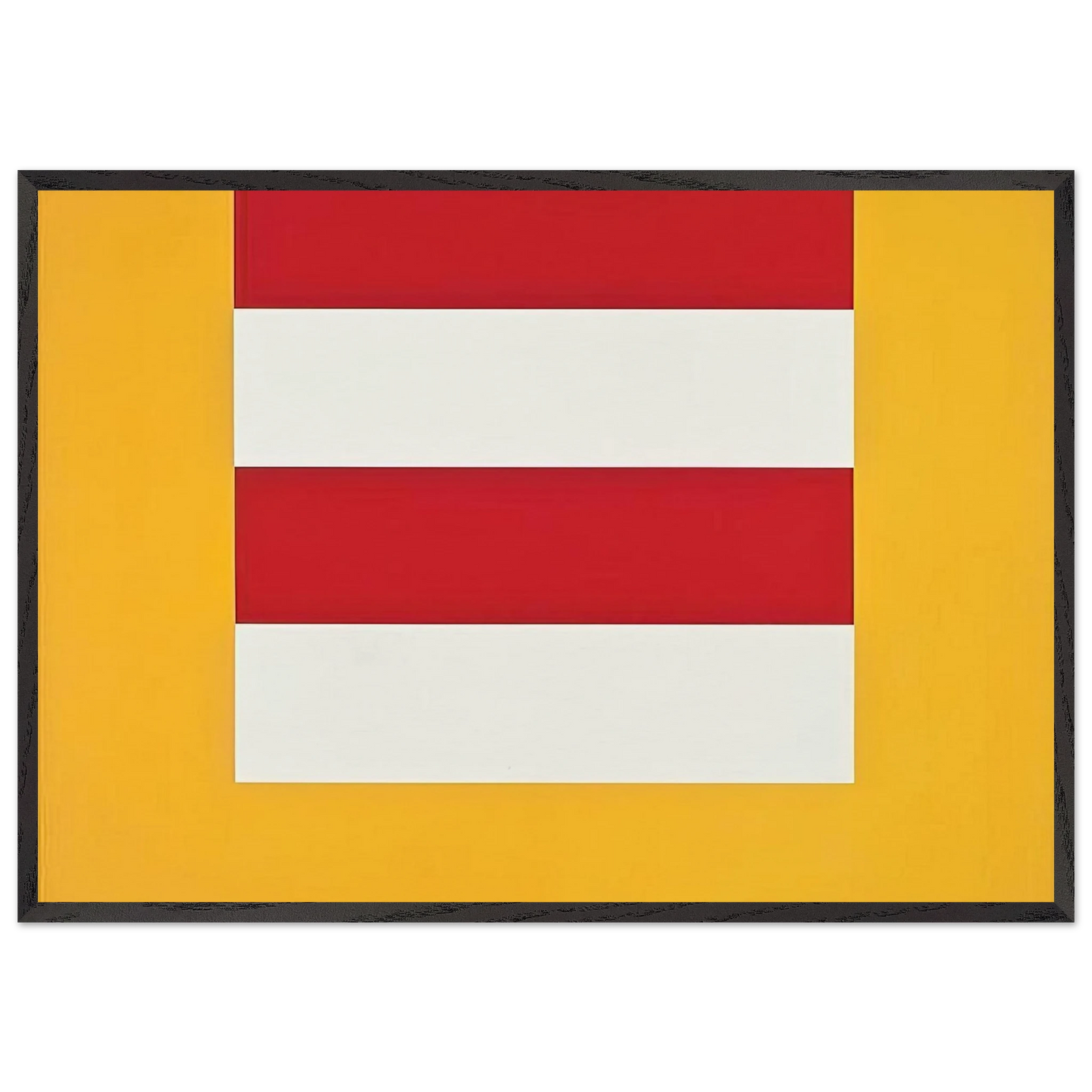
What are the specific paper and print quality standards for this Karl Benjamin piece?
We use 250 gsm (110 lb) archival, museum-quality paper. It is a natural white, matte, and uncoated paper with a thickness of 0.29 mm, ensuring your fine art print maintains its vibrant colors and structural integrity without yellowing over time.
How does the frame construction differ from standard commercial frames?
Our frames are 20mm (0.79") thick and wide, providing a more robust and premium aesthetic than standard 14mm frames. They are crafted from solid, responsibly sourced oak and ash wood, finished in a sophisticated black.
Is the artwork protected against damage during shipping and display?
Yes, each print is protected by shatterproof, transparent plexiglass. The frame arrives fully assembled with a hanging kit included, packaged in specialized protective materials to ensure it reaches your wall in pristine condition.
Does RedKalion prioritize environmental sustainability in its production?
Absolutely. We use FSC-certified (Forest Stewardship Council) wood and paper or equivalent sustainable materials. This ensures that your museum-quality reproduction is produced with respect for global forest conservation efforts.
Will the print be ready to hang upon arrival?
Every Karl Benjamin framed print from RedKalion arrives ready-to-hang. We include a dedicated hanging kit with each order, allowing you to elevate your interior space with this archival masterpiece immediately.
What is the historical significance of Karl Benjamin’s 1965 period?
By 1965, Karl Benjamin was a master of Hard-edge painting. This era represents the height of West Coast geometric abstraction, where he explored complex color relationships and structural symmetry that influenced modern graphic design and architecture.
How should I maintain this framed art print to ensure its longevity?
The combination of 250 gsm archival paper and shatterproof plexiglass makes this piece very durable. Simply dust the frame with a soft, dry microfiber cloth. Avoid direct, harsh sunlight to maximize the life of the archival pigments.