RedKalion
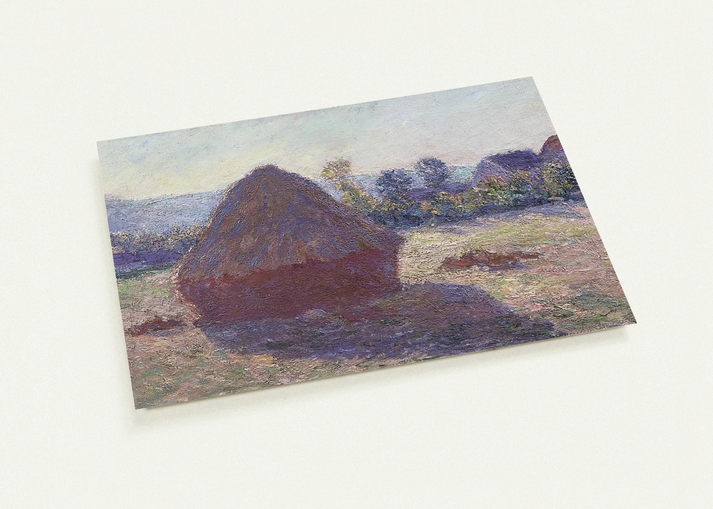
A Haystack in the Evening Sun By claude monet Pack of 10 Post Cards | claude monet Post Cards | A6 (10.5 x 14.8 cm) - 4.1 x 5.8 inches
A Haystack in the Evening Sun By claude monet Pack of 10 Post Cards | claude monet Post Cards | A6 (10.5 x 14.8 cm) - 4.1 x 5.8 inches
Não foi possível carregar a disponibilidade de recolha
Elevate Your Correspondence with Monet’s 'A Haystack in the Evening Sun'
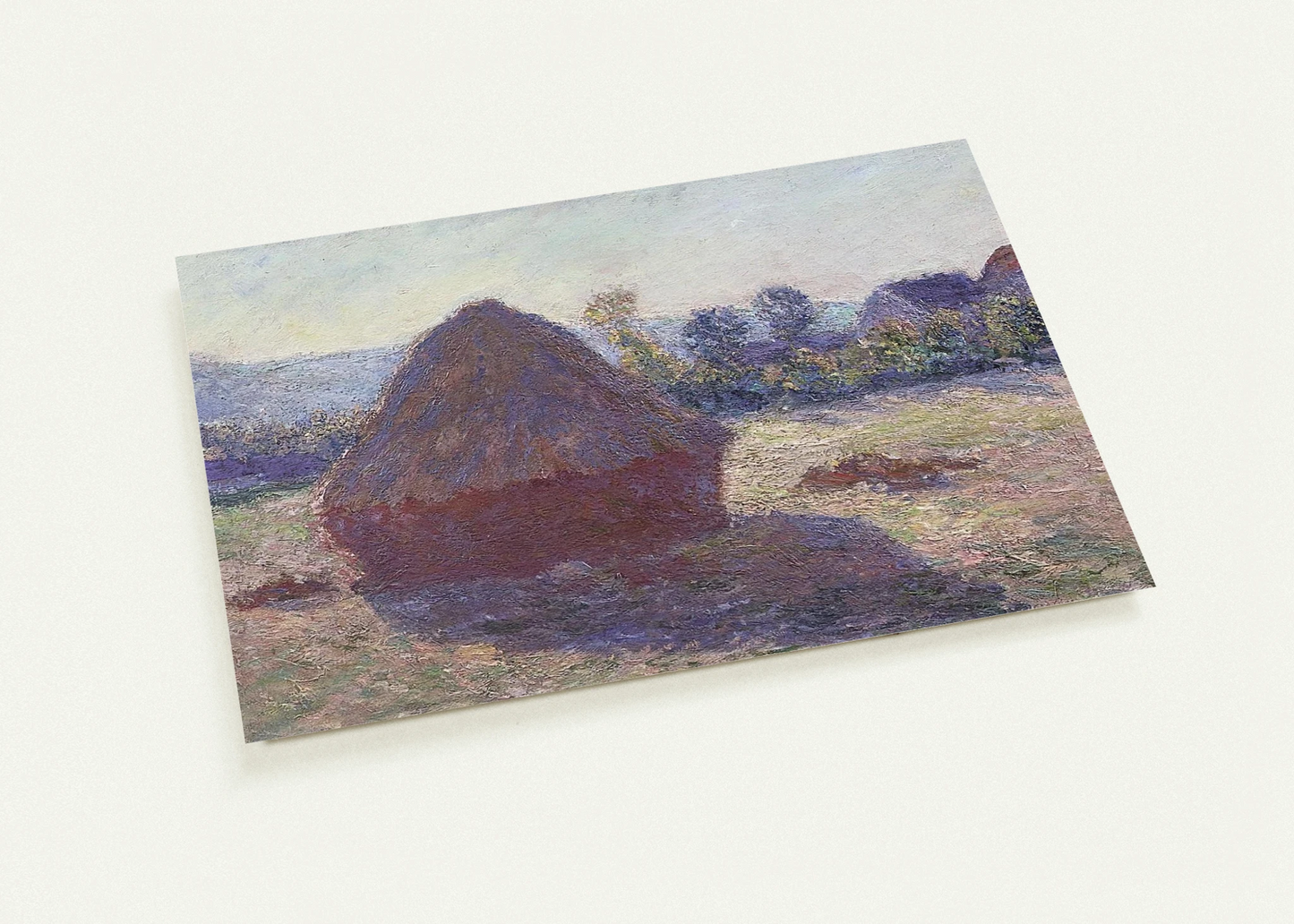
Experience the ephemeral beauty of Giverny with this exquisite pack of 10 postcards, featuring Claude Monet’s 1891 masterpiece, A Haystack in the Evening Sun. Part of his revolutionary Les Meules (Grainstacks) series, this work captures the precise moment when the setting sun bathes the landscape in a fleeting, copper-toned glow. At RedKalion, we preserve the integrity of Monet’s impressionist brushwork through museum-quality reproductions designed for the discerning art lover.
Unrivaled Print Quality and Material Excellence
Unlike standard commercial stationery, our postcards are produced using 12-color fine art printing technology. This advanced process ensures that the subtle shifts in color—from the deep lavender shadows to the brilliant amber highlights—are rendered with stunning depth and accuracy. Each card is printed on 200 gsm (80 lb) FSC-certified paper, offering a substantial, premium feel and a thickness of 0.26 mm (10.3 mils).
To ensure the artwork remains the focal point, we utilize a smooth matte finish. This non-reflective surface eliminates glare, allowing the viewer to appreciate the texture of Monet’s technique without distraction. Whether used for personal notes or as miniature framed art, these archival-grade postcards bring a touch of the Musée d'Orsay into your daily life.
- Historical Significance: A definitive example of Monet's study of light and atmosphere.
- Premium Stationery: Smooth matte, 200 gsm paper for a professional aesthetic.
- Eco-Conscious: Sustainably sourced, FSC-certified materials.
- Vibrant Detail: 12-color printing captures the true essence of the original oil painting.
Discover Unlimited Art Possibilities
At RedKalion, you can find virtually any artwork from any artist, available in a wide range of sizes to perfectly match your space.
If you didn’t find what you’re looking for, contact us at support@redkalion.com . We will source any artwork and produce it in any size and format you need, including art prints, posters, canvas, framed pieces, framed canvas, and more.
For dedicated art enthusiasts, we also offer handcrafted replicas of any artwork, carefully painted by highly skilled artists using traditional techniques.
For custom requests, contact us at support@redkalion.com .
What printing technology is used for these postcards?
We use 12-color fine art printing, which offers significantly greater color vibrancy and depth than standard 4-color inkjet processes, ensuring a museum-quality reproduction.
What is the weight and finish of the paper?
The postcards are printed on 200 gsm (80 lb) paper with a 0.26 mm thickness and a smooth matte finish for a sophisticated, glare-free display.
Are the materials used for these art prints eco-friendly?
Yes, all our Claude Monet postcards are printed on environmentally conscious, FSC-certified paper, ensuring responsible forestry practices.
How are these postcards shipped and produced?
Our postcards are printed on demand to reduce waste and are typically shipped in protective packaging to ensure they arrive in pristine condition.
What size are the postcards in this pack?
This specific set features A6 sizing (10.5 x 14.8 cm / 4.1 x 5.8 inches), though we offer a variety of sizes for our fine art prints.
Why did Monet paint so many haystacks?
Monet created the Haystacks series to study the transition of light and atmosphere on a single subject at different times of day and across various seasons.
Is this specific artwork representative of Impressionism?
Yes, 'A Haystack in the Evening Sun' is a hallmark of Impressionism, focusing on the sensory effect of a scene rather than precise detail.