
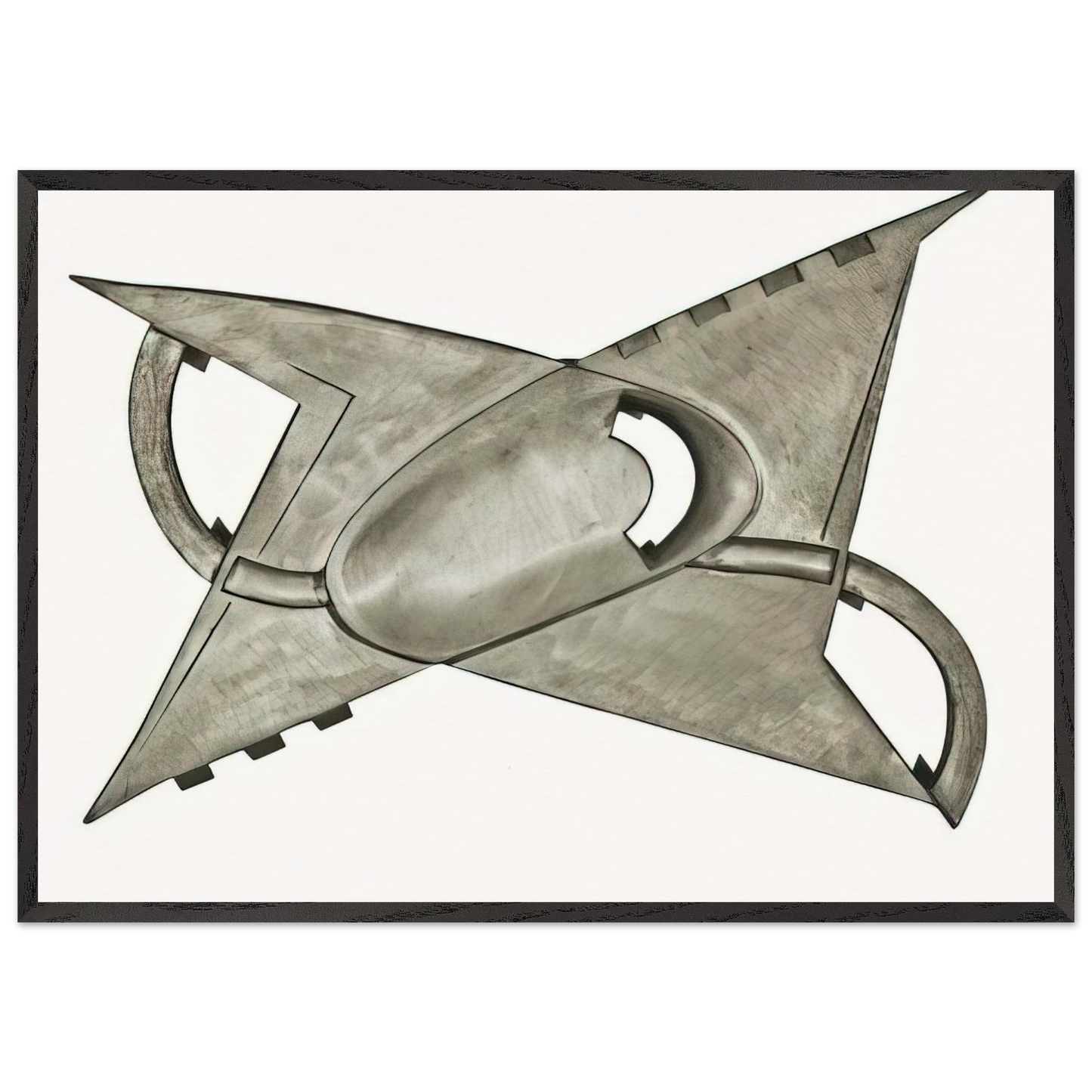
What defines the quality of this Gyula Kosice fine art print?
The print features 250 gsm museum-quality paper with a 0.29 mm thickness. This heavyweight, archival paper ensures exceptional color depth and longevity, mirroring the standards found in the world’s leading art galleries.
How is the black wooden frame constructed?
Our frames are made from responsibly sourced oak and ash wood. They measure 20mm (0.79") in thickness and width, providing a premium, sturdy profile that is significantly more durable than standard 14mm frames.
Is the artwork ready to hang upon arrival?
Yes, each framed print comes with a pre-installed hanging kit. It is ready to be displayed on your wall immediately upon unboxing, ensuring a seamless experience from gallery to home.
How does RedKalion ensure the archival longevity of the print?
We use FSC-certified, natural white archival paper and shatterproof plexiglass. These materials prevent yellowing and protect the artwork from environmental degradation, ensuring it remains an enduring part of your collection.
What are the shipping and protection protocols for this piece?
We prioritize the safety of your art. Each piece is secured with shatterproof plexiglass and shipped in reinforced packaging designed to withstand transit while maintaining the frame's pristine condition.
Who was Gyula Kosice and why is he significant?
Gyula Kosice was a co-founder of the Madí movement. He was a visionary who pioneered Kinetic Art, being the first artist globally to use neon and water as primary mediums in artistic sculpture.
What does the title 'A partir d’un centre concave' represent in his work?
The title refers to Kosice’s exploration of spatialism. It suggests that art should expand from a central point (the concave), breaking away from traditional frame constraints to interact directly with the surrounding space.