Saltar para a informação do produto
1 de 1

RedKalion

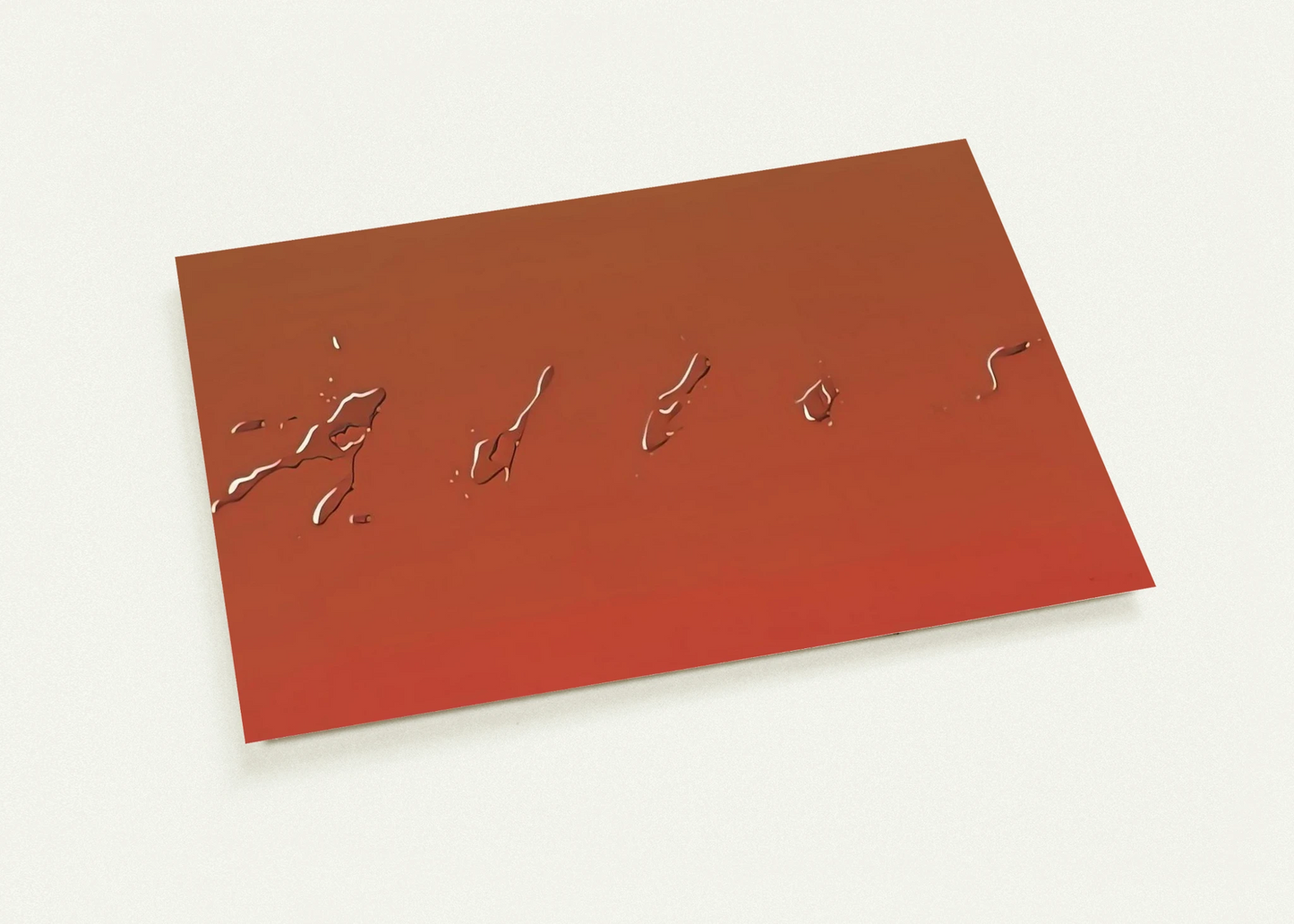
ADIOS 1969 By Edward Ruscha Pack of 10 Post Cards | Edward Ruscha Post Cards | A6 (10.5 x 14.8 cm) - 4.1 x 5.8 inches

ADIOS 1969 By Edward Ruscha Pack of 10 Post Cards | Edward Ruscha Post Cards | A6 (10.5 x 14.8 cm) - 4.1 x 5.8 inches

Preço normal $35.99 USD
Preço normal $61.49 USD Preço de saldo $35.99 USD
Em promoção Esgotado
Quantidade

An Icon of Conceptual Pop: Adios (1969) by Edward Ruscha

Experience the intersection of linguistics and visual art with this premium pack of 10 postcards featuring Edward Ruscha’s seminal work, Adios (1969). A quintessential figure in the Los Angeles Pop Art scene, Ruscha revolutionized the way we perceive the written word, transforming simple text into evocative, atmospheric landscapes. This particular piece belongs to his acclaimed 'Liquid Word' series, where typography appears as if spilled, pooled, or delicately formed from viscous fluid—a masterclass in 20th-century conceptualism.

At RedKalion, we bridge the gap between museum archives and your personal collection. Each postcard is a testament to our commitment to quality, utilizing advanced 12-color fine art printing technology. Unlike standard 4-color inkjet reproductions, our process captures the subtle gradients and precise tonal shifts of Ruscha’s original palette, ensuring every drop of the 'liquid' typography resonates with clarity and depth.

Product Specifications & Archival Quality

  • Color Vibrancy: Giclée-quality 12-color printing for stunning, museum-grade color accuracy.
  • Paper Finishing: A sophisticated smooth matte finish that eliminates glare, allowing the artwork to be appreciated under any lighting.
  • Premium Weight: Sturdy 200 gsm (80 lb) paper with a thickness of 0.26 mm (10.3 mils), providing a tactile, high-end feel.
  • Eco-Conscious Curation: Printed on FSC-certified paper, aligning artistic appreciation with environmental responsibility.
  • Versatile Format: Pack of 10 flat postcards, sized perfectly at A6 (10.5 x 14.8 cm) for correspondence or framing as a miniature gallery wall.

Whether used for sophisticated correspondence or displayed as a series of archival-grade miniatures, these Edward Ruscha fine art prints offer an enduring connection to the legacy of American Conceptualism. Elevate your space with a masterpiece curated by RedKalion, where every print is produced on demand to ensure perfection.

Ver detalhes completos
What printing process is used for these Edward Ruscha postcards?

We use 12-color fine art printing technology. This advanced method provides superior color vibrancy and depth compared to standard 4-color prints, ensuring the nuances of Ruscha’s original 1969 work are accurately preserved.

What are the specific paper qualities of this set?

The postcards are printed on 200 gsm (80 lb) paper with a 0.26 mm thickness. They feature a smooth matte finish, providing a clean, glare-free surface that is ideal for both writing and display.

Are these postcards environmentally friendly?

Yes. All RedKalion prints are produced on FSC-certified paper, ensuring the materials are sourced from responsibly managed forests that provide environmental, social, and economic benefits.

How does RedKalion ensure color accuracy for the Adios print?

By utilizing a 12-color gamut, we achieve precise color matching. This is essential for Edward Ruscha’s work, where the subtle play between the typography and the background requires high-fidelity reproduction.

What is the shipping and order minimum for these prints?

These postcards are printed on demand with no minimum order requirements. This allows us to maintain high quality control while reducing waste by only producing what is requested.

What is the significance of the liquid typography in Ruscha's Adios (1969)?

Ruscha’s 'liquid' style represents a shift toward Conceptual Art. By depicting words as physical substances (like spilled syrup or water), he challenges the viewer to see language as a visual object rather than just a carrier of meaning.

Is Adios (1969) considered Pop Art or Conceptual Art?

It sits at the intersection of both. While its bold, graphic nature aligns with Pop Art aesthetics, its focus on the semiotics of language and the deconstruction of words is a hallmark of Conceptualism.