Saltar para a informação do produto
1 de 1

RedKalion

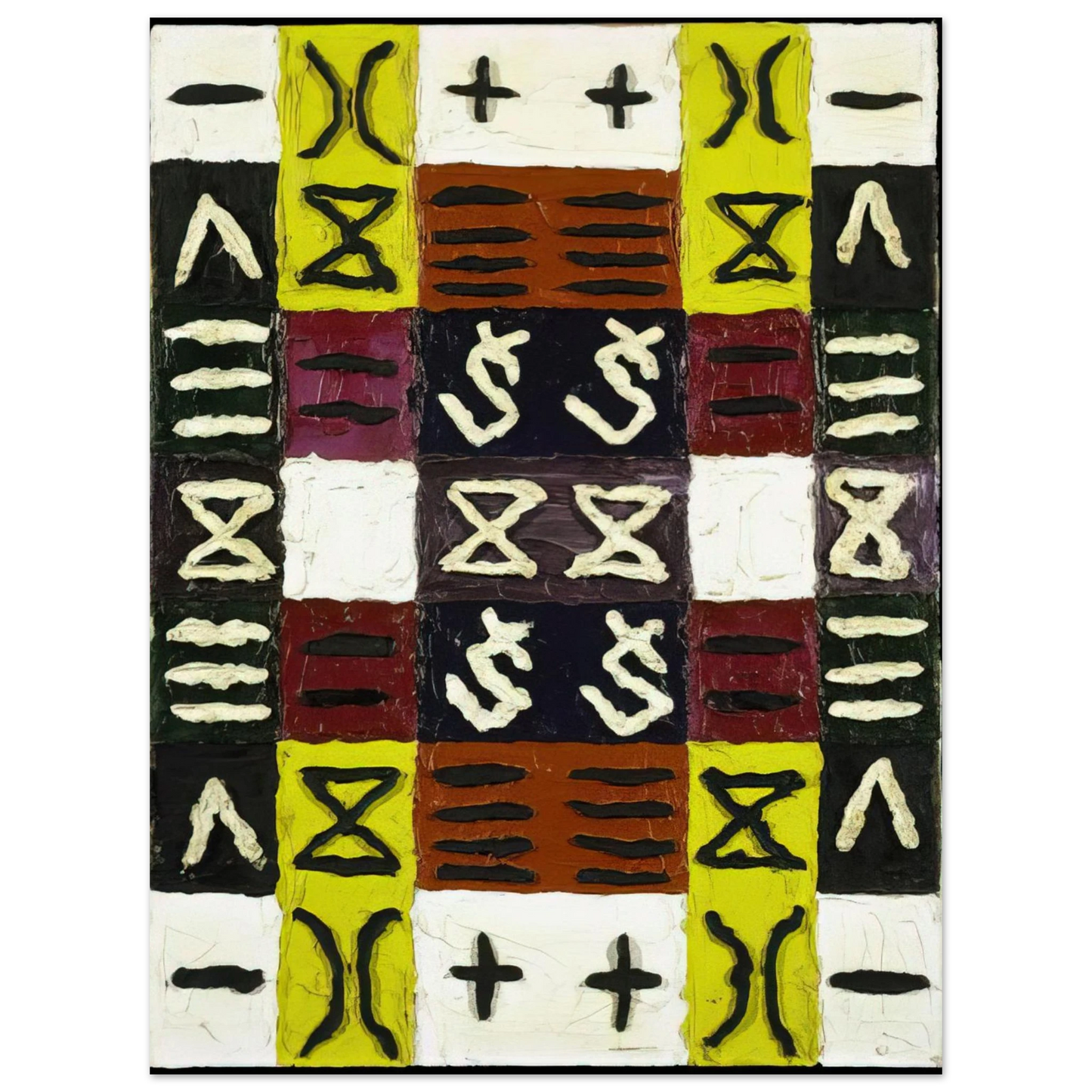
Alfred Jensen - A Perfect Equal Area I - 1960 75x100 cm / 30x40inches Fine Art Poster

Alfred Jensen - A Perfect Equal Area I - 1960 75x100 cm / 30x40inches Fine Art Poster

Preço normal $207.99 USD
Preço normal $311.00 USD Preço de saldo $207.99 USD
Em promoção Esgotado
Quantidade

Elevate Your Space with the Mathematical Brilliance of Alfred Jensen’s 'A Perfect Equal Area I' (1960)

Step into the complex, cosmological world of Alfred Jensen with this museum-quality reproduction of 'A Perfect Equal Area I' (1960). As an elite curator of fine art prints, RedKalion presents this masterpiece on our signature Master's Edition archival paper. This work is not merely an abstract composition; it is a profound exploration of ancient numerical systems, color theory, and the philosophical concept of symmetry that defined Jensen’s career.

Jensen’s unique position in the 20th-century canon stems from his rejection of pure gesture in favor of a rigorous, systematic approach. This 1960 piece reflects his fascination with the Pythagorean school and ancient calendars, translated into a vibrant grid that pulses with intellectual energy. Our reproduction captures every nuance of the original’s systematic color application, ensuring that the 75x100 cm (30x40 inches) format commands presence in any sophisticated interior.

The RedKalion Archival Standard

  • Premium Paper: We utilize 250 gsm (110 lb) Master's Edition paper, offering a heavy, luxurious feel and a thickness of 0.29 mm (11.4 mils) that signifies true gallery quality.
  • Sophisticated Finish: The natural white (off-white) matte finish provides a non-reflective surface, perfect for high-light environments where visual clarity is paramount.
  • Enduring Beauty: Our prints are acid-free (pH above 7), preventing the yellowing or degradation that plagues standard posters, ensuring your investment retains its integrity for decades.
  • Ethical Curation: All prints are produced on FSC-certified paper, supporting sustainable forest management without compromising on aesthetic excellence.

By choosing RedKalion, you are acquiring an archival-grade artifact that honors the legacy of Alfred Jensen. This piece is printed and shipped on demand with no minimum orders, representing the perfect intersection of sustainable luxury and art historical expertise.

Ver detalhes completos
What are the specific paper qualities of this Alfred Jensen print?

We use Master's Edition archival paper, which is 250 gsm (110 lb) with a 0.29 mm thickness. It features a natural white, matte finish that provides a luxurious, uncoated texture suitable for premium fine art displays.

How long will this fine art reproduction last without fading?

The paper is acid-free (pH above 7), meaning it is chemically stable and resistant to yellowing over time. Combined with archival-grade inks, this print is designed to remain vibrant for generations under standard indoor conditions.

Is the paper used for this artwork environmentally responsible?

Yes, we use FSC-certified paper or equivalent certifications depending on regional availability. This ensures that the material for your Alfred Jensen reproduction is sourced from responsibly managed forests.

How is the artwork packaged for shipping?

Each print is produced on demand and packaged using robust, protective materials to ensure it arrives in pristine condition. We handle fulfillment with a focus on archival safety and global reliability.

Does the print include a border or frame?

This 75x100 cm (30x40 inches) poster is delivered as a high-quality print on Master's Edition paper. It does not include a frame, allowing you to choose a custom mounting solution that fits your specific decor.

What inspired Alfred Jensen to create 'A Perfect Equal Area I' in 1960?

Jensen was deeply influenced by ancient mathematics, Mayan calendars, and Greek philosophy. This piece is a manifestation of his 'Equal Area' theory, where he sought to balance numerical logic with visual color harmony.

Why is Alfred Jensen's work considered important in the history of abstraction?

Jensen bridged the gap between Abstract Expressionism and Minimalism. His work is celebrated for its intellectual depth, using geometric grids to represent complex cosmological and mathematical concepts rather than pure emotion.