
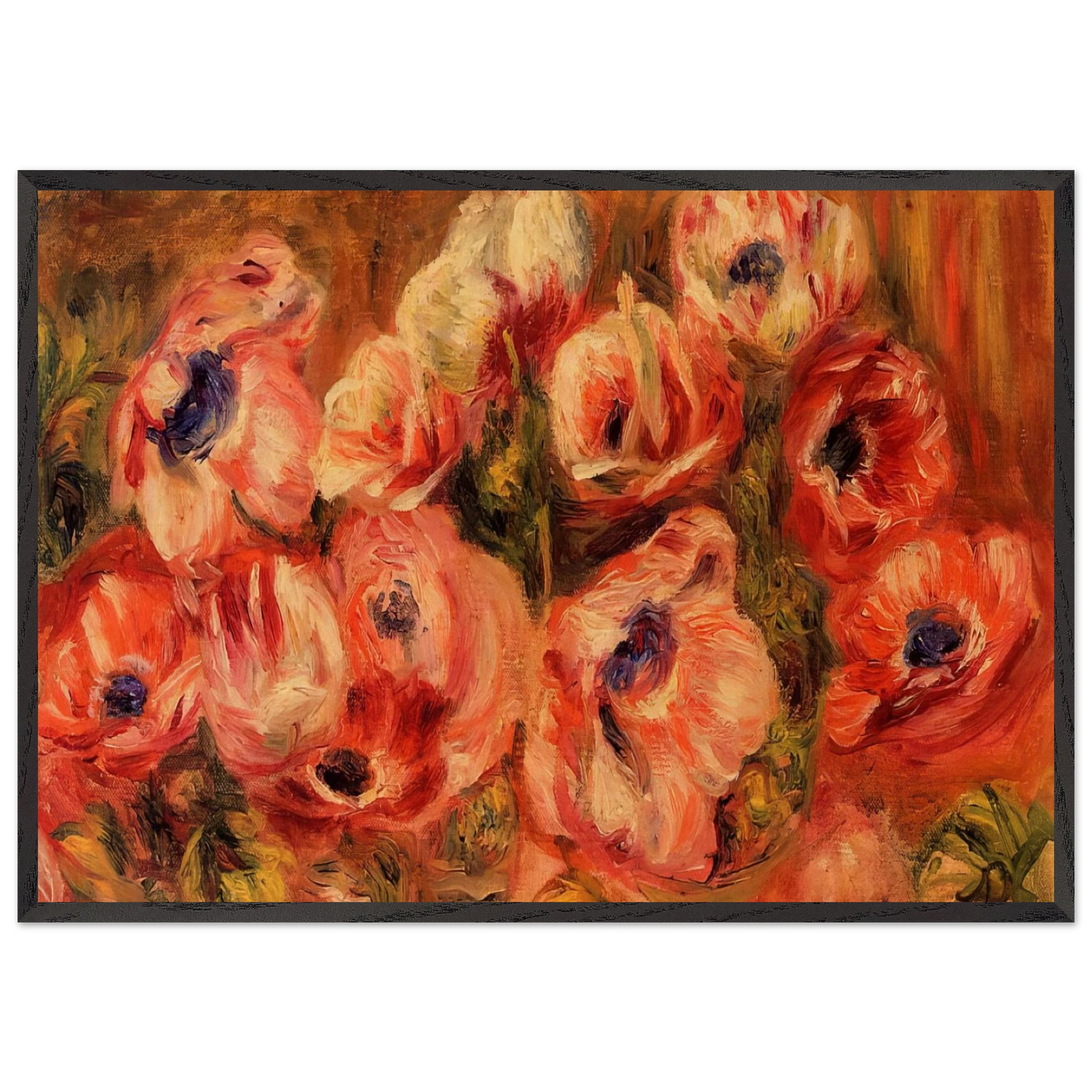
What are the specifications of the paper used for this Renoir print?
We use 250 gsm (110 lb) archival museum-quality paper. It is a natural white, uncoated, matte paper with a thickness of 0.29 mm, ensuring high-definition detail and long-term durability for your fine art print.
Is the frame made of real wood?
Yes, our frames are crafted from responsibly sourced, solid oak and ash wood. They are 20mm (0.79") thick and wide, providing a premium, sturdy profile that surpasses the industry standard of 14mm.
How is the artwork protected during shipping and on the wall?
Each print is protected by shatterproof, transparent plexiglass and shipped in secure packaging. The plexiglass offers superior clarity while ensuring the artwork remains safe from impacts and UV exposure.
Is the framed art print ready to hang upon arrival?
Absolutely. Your Renoir print comes with a pre-installed hanging kit. It is designed to be hung directly on your wall the moment it arrives, requiring no additional framing or assembly.
Are the materials used in this print sustainable?
RedKalion is committed to sustainability. We use FSC-certified materials or equivalent, ensuring that the wood and paper used in your framed art print meet rigorous environmental and social standards.
Why did Pierre-Auguste Renoir frequently paint anemones?
Renoir was fascinated by the varied textures and vibrant colors of anemones. He used floral still lifes to refine his Impressionist technique, focusing on how light interacts with organic forms and delicate surfaces.
What is the archival life expectancy of this reproduction?
By utilizing acid-free archival paper and pigment-based inks, our museum-quality reproductions are designed to resist yellowing and fading, preserving the masterpiece's integrity for decades in standard indoor conditions.