
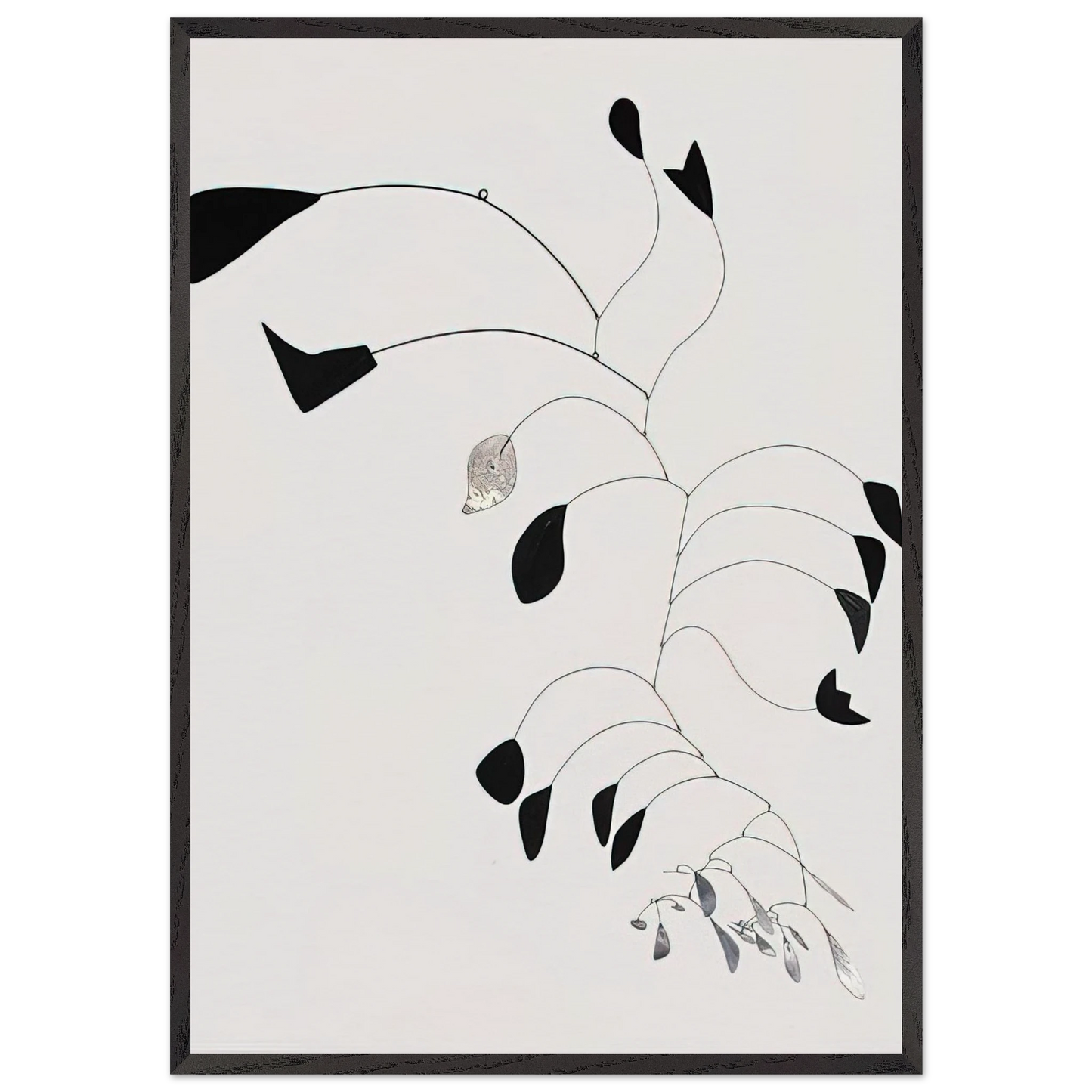
What materials are used for the Arc of Petals 1941 fine art print?
We use 250 gsm (110 lb) natural white, archival museum-quality paper. This heavy-weight, uncoated matte paper ensures your Alexander Calder reproduction remains vibrant and free from yellowing for decades.
Is the black wooden frame sustainably sourced?
Yes. Our frames are crafted from responsibly sourced oak and ash wood (FSC-certified). The 20mm profile provides a sturdy, elegant border that is wider and more durable than standard commercial frames.
How is the artwork protected during shipping and display?
Each framed print is shielded by shatterproof plexiglass, which is more durable and safer than traditional glass. We ship our products in specialized protective packaging to ensure they arrive in pristine condition.
Does the print come ready to hang?
Absolutely. Your Calder framed art print arrives fully assembled with a hanging kit included. You can elevate your space immediately without the need for additional hardware or professional framing services.
What makes this an archival museum-quality reproduction?
RedKalion utilizes archival-grade, acid-free paper and specialized inks. Combined with our premium 20mm wooden frames and shatterproof protection, this print meets the high standards required for museum-level display and longevity.
What inspired Alexander Calder’s Arc of Petals in 1941?
Created during Calder's transition toward kinetic sculpture, Arc of Petals reflects his fascination with biomorphic forms and the delicate equilibrium of nature, influenced by the Surrealist movement and his background in engineering.
How does this work represent Calder's contribution to modern art?
Arc of Petals 1941 exemplifies Calder's invention of the mobile. It demonstrates how negative space and abstract shapes can interact with the environment, revolutionizing sculpture by introducing the concept of art in motion.