


RedKalion
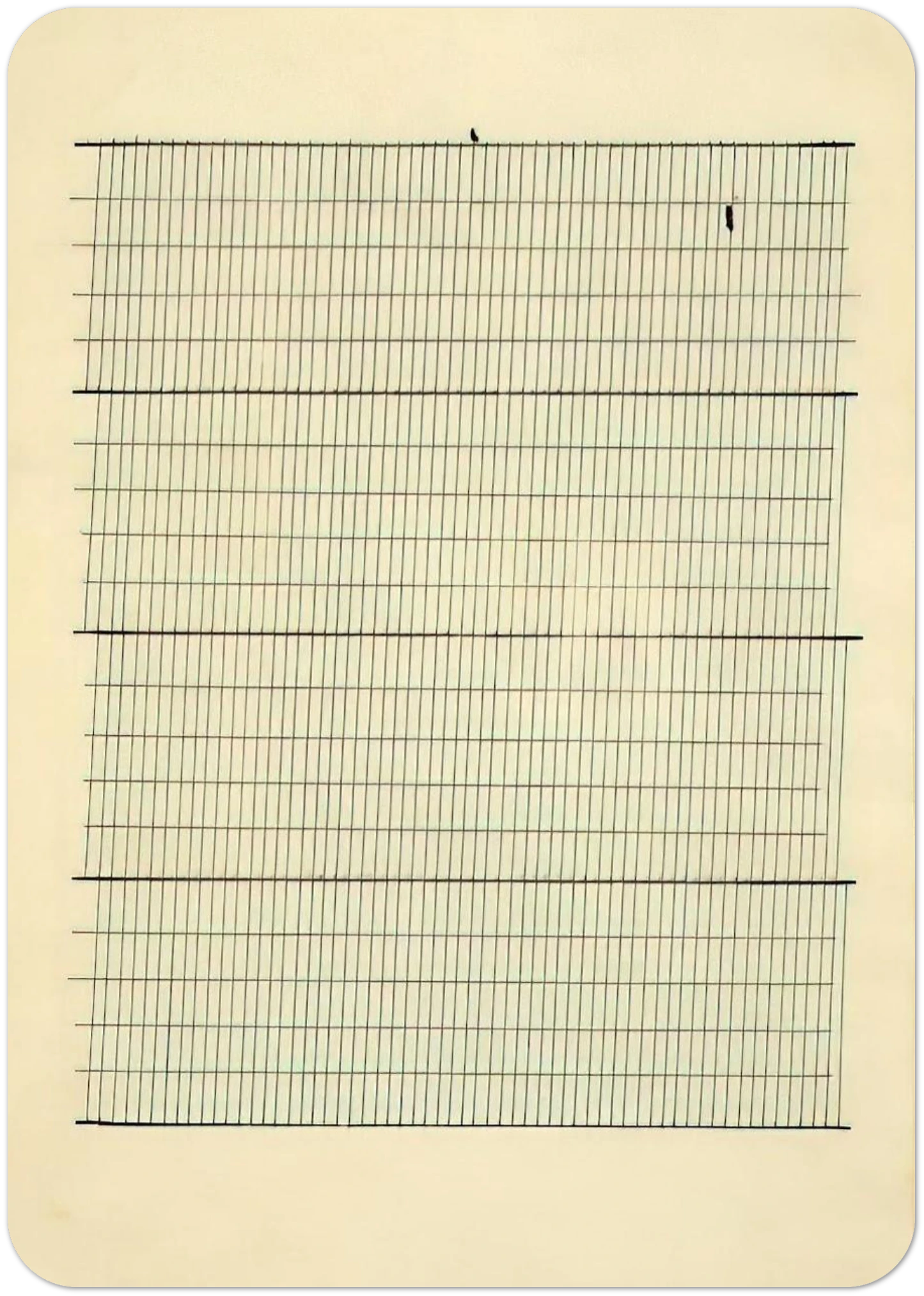
Aspiration By Agnes Martin Pack of 10 Post Cards | Agnes Martin Post Cards | A6 (10.5 x 14.8 cm) - 4.1 x 5.8 inches
Aspiration By Agnes Martin Pack of 10 Post Cards | Agnes Martin Post Cards | A6 (10.5 x 14.8 cm) - 4.1 x 5.8 inches
Não foi possível carregar a disponibilidade de recolha
Elevate Your Correspondence with Agnes Martin’s 'Aspiration'
Immerse yourself in the serene, meditative world of Agnes Martin with this exclusive pack of 10 museum-quality postcards. Featuring her 1960 masterpiece, Aspiration, these cards embody the transition of a pioneer who bridge Abstract Expressionism and Minimalism. Martin’s work is not merely a collection of lines; it is a profound exploration of humility, innocence, and spiritual joy. By integrating this fine art print into your personal stationery, you share a piece of art history that values quietude over clamor.
Museum-Quality Reproductions for the Modern Collector
At RedKalion, we believe that even the smallest format deserves the highest standards of production. These postcards are crafted using advanced 12-color fine art printing technology. Unlike standard 4-color commercial prints, our process captures the subtle shifts in tone and the ethereal geometry of Martin’s grids with stunning accuracy and depth. The smooth matte finish ensures a glare-free experience, allowing the viewer to appreciate the delicate nuances of the composition.
Premium Specifications and Sustainable Craftsmanship
Every set is printed on demand, ensuring that your Agnes Martin postcards meet our rigorous quality control standards while minimizing waste. Each card is printed on 200 gsm (80 lb) FSC-certified paper, offering a substantial, premium feel that reflects the archival quality of a true gallery reproduction. Whether sent as a thoughtful note or displayed as a miniature minimalist art print, these cards are designed to endure.
- Artist: Agnes Martin
- Title: Aspiration (1960)
- Paper Weight: 200 gsm / 0.26 mm thickness
- Sustainability: FSC-certified environmentally conscious paper
- Print Tech: 12-color pigment-based archival inks


Discover Unlimited Art Possibilities
At RedKalion, you can find virtually any artwork from any artist, available in a wide range of sizes to perfectly match your space.
If you didn’t find what you’re looking for, contact us at support@redkalion.com . We will source any artwork and produce it in any size and format you need, including art prints, posters, canvas, framed pieces, framed canvas, and more.
For dedicated art enthusiasts, we also offer handcrafted replicas of any artwork, carefully painted by highly skilled artists using traditional techniques.
For custom requests, contact us at support@redkalion.com .
What makes the 12-color printing technology superior for fine art?
Our 12-color printing uses archival pigment inks to provide a wider color gamut and smoother gradients than standard 4-color printing. This ensures that the subtle, pale hues in Agnes Martin’s work are reproduced with museum-level fidelity.
What are the specific dimensions and paper weight of these cards?
Each card is A6 size (10.5 x 14.8 cm / 4.1 x 5.8 inches). We use premium 200 gsm (80 lb) paper with a thickness of 0.26 mm, providing a sturdy, high-end feel for your correspondence.
Is the paper finish suitable for writing and framing?
Yes, the smooth matte finish is specifically chosen for its clean, glare-free display and excellent writability. It prevents reflections, making it ideal for both personalized messages and small-scale wall displays.
How does RedKalion ensure environmental sustainability?
We print all postcards on demand to eliminate overstock waste. Furthermore, we use FSC-certified paper, ensuring that the materials are sourced from responsibly managed forests that provide environmental and social benefits.
How long will these prints last without fading?
By utilizing archival-grade inks and high-quality matte paper, these reproductions are designed for longevity. When kept out of direct sunlight, the 12-color pigment prints maintain their vibrancy for decades.
What is the significance of 'Aspiration' in Agnes Martin's career?
'Aspiration' (1960) represents a pivotal moment in Martin's shift toward her signature grid style. It reflects her search for a pure, non-objective language to convey emotional states rather than physical landscapes.
Why did Agnes Martin focus so heavily on the grid motif?
Martin viewed the grid as a representation of innocence and perfection. For her, these repetitive, subtle structures were a way to achieve a state of 'detached' expression, free from the ego and the distractions of the world.