
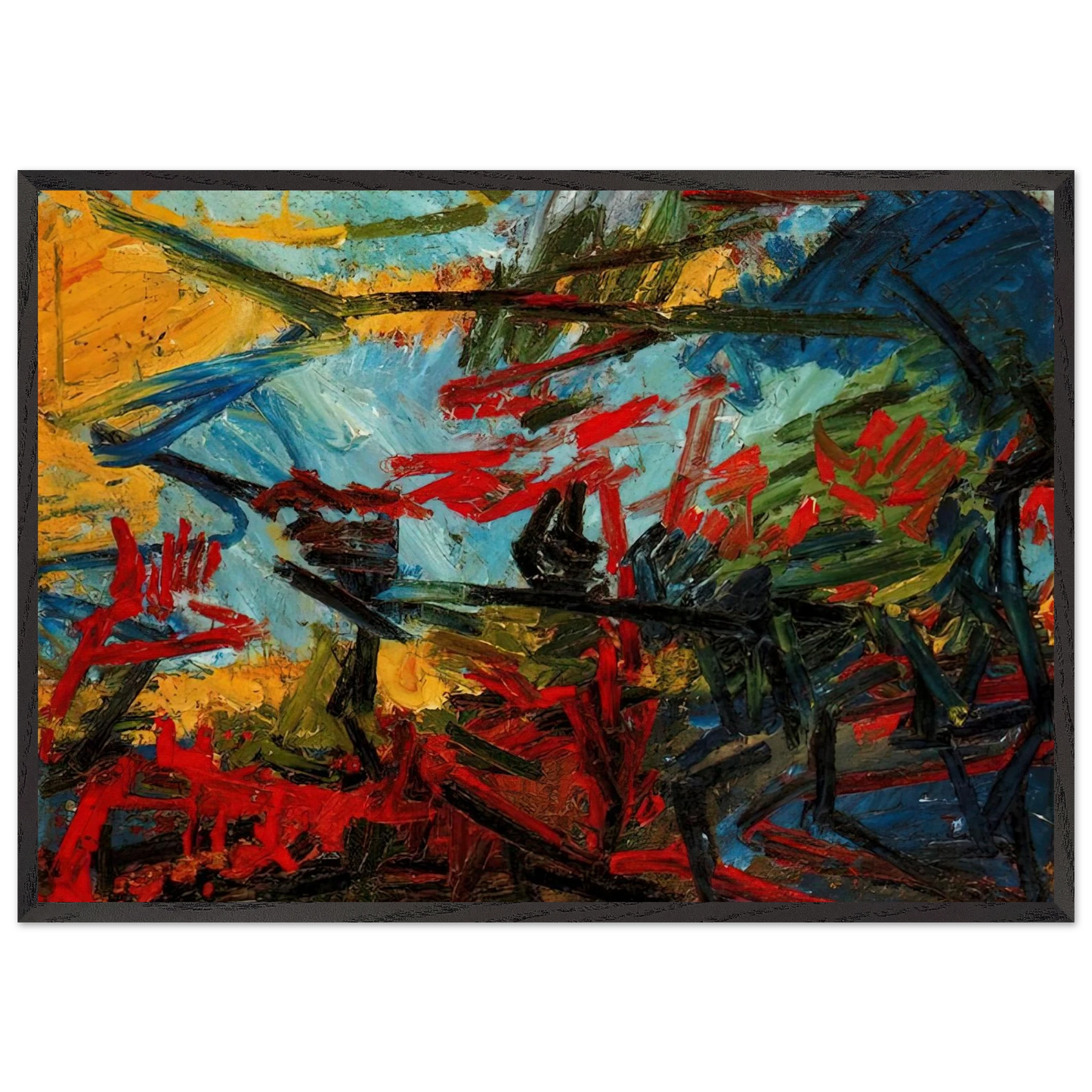
What defines the quality of this Frank Auerbach print?
We use 250 gsm (110 lb) archival, museum-quality paper. This natural white, matte finish paper is acid-free, ensuring the artwork maintains its color integrity and structural depth for decades without yellowing or fading.
Is the frame made of sustainable materials?
Yes, all frames are crafted from FSC-certified, responsibly sourced oak and ash wood. The black wooden frame measures 20mm thick, providing a premium, high-end gallery look that is both durable and environmentally conscious.
How is the artwork protected from damage?
Each print is shielded by shatterproof plexiglass. This provides the clarity of traditional glass with significantly higher durability and safety, protecting your Frank Auerbach reproduction from UV rays and physical impact during transit and display.
What paper is used for this fine art reproduction?
This print uses 250 gsm uncoated, natural white paper. With a thickness of 0.29 mm (11.4 mils), it is designed specifically for high-end fine art applications, offering a substantial weight and luxurious tactile feel.
How will the print be shipped and is it ready to hang?
Your framed art print is shipped in robust packaging to ensure its arrival in pristine condition. It includes a pre-installed hanging kit, allowing you to mount the artwork directly onto your wall upon arrival.
What is the significance of Auerbach's reinterpretation of Titian?
Auerbach’s Bacchus and Ariadne is a radical translation of Titian’s classical composition. He uses gestural marks to capture the psychological intensity and movement of the original, emphasizing the visceral experience over literal representation.
Why does Auerbach use such aggressive, gestural lines?
Auerbach’s lines are a search for structure. By using rapid, expressive marks, he attempts to find the essential form of his subjects, creating a sense of immediacy and life that static images often lack.