Saltar para a informação do produto
1 de 1

RedKalion

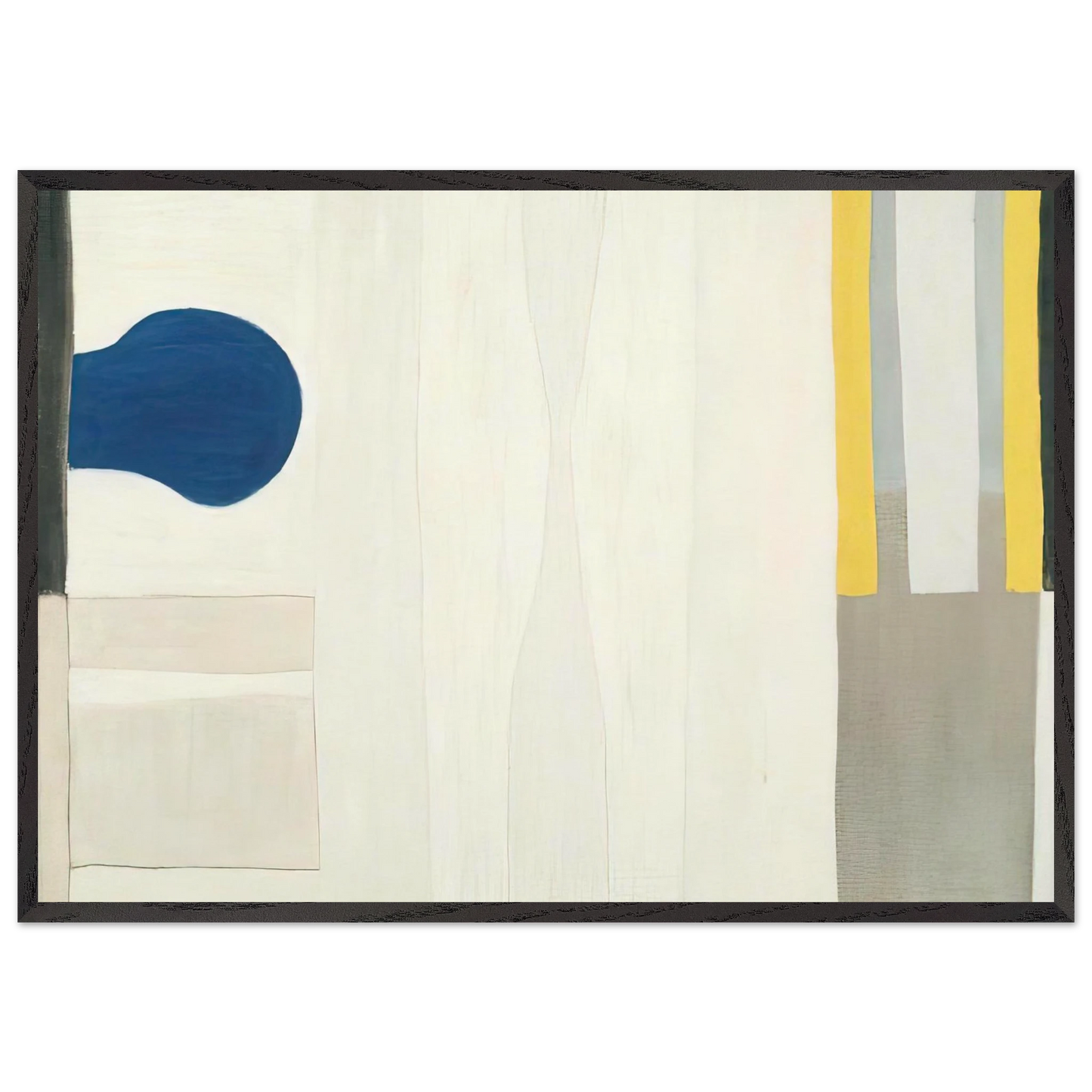
Blue Form on White - 1964 - William Scott 70x100 cm / 28x40 inches Framed Art Print – Black Wooden Frame

Blue Form on White - 1964 - William Scott 70x100 cm / 28x40 inches Framed Art Print – Black Wooden Frame

Preço normal $449.99 USD
Preço normal $999.99 USD Preço de saldo $449.99 USD
Em promoção Esgotado
Quantidade

Elevate Your Space with William Scott’s Blue Form on White (1964)

Experience the profound simplicity of post-war British abstraction with this museum-quality reproduction of William Scott’s Blue Form on White (1964). As an artist who bridged the gap between traditional still life and hard-edge abstraction, Scott used his 1960s period to explore the tension between organic shapes and negative space. This 70x100 cm (28x40 inches) framed art print captures the subtle textures and authoritative presence of the original, making it a definitive statement piece for sophisticated modern interiors.

Archival Excellence and Curated Craftsmanship

At RedKalion, we believe a masterpiece deserves a presentation that mirrors its historical weight. This reproduction is printed on 250 gsm (110 lb) archival museum-quality paper. The natural white, uncoated, matte finish ensures that the deep cerulean tones of Scott’s 'Blue Form' are rendered with exceptional depth and clarity, free from the distracting glare of lower-grade finishes. With a thickness of 0.29 mm, this paper provides the structural integrity required for high-end fine art displays.

Premium Frame and Sustainable Construction

Your artwork arrives in a meticulously crafted black wooden frame made from responsibly sourced oak and ash. Unlike standard retail frames, our frames measure 20mm (0.79") in both thickness and width, providing a more substantial and luxurious profile than the common 14mm alternatives. To protect your investment, we use shattherproof plexiglass, offering the clarity of glass with superior durability. Each print is ready-to-hang, including a professional hanging kit, allowing you to transform your gallery wall immediately.

Art Historical Context: The 1964 Transition

William Scott is renowned for his ability to find the 'monumental in the mundane.' By 1964, his work moved away from the recognizable kitchen utensils of his earlier career toward pure, flat color forms. This piece represents a pinnacle of his minimalist period, where the boundary between the object and its environment is blurred. By choosing this archival-grade framed print, you are not just purchasing decor; you are preserving a legacy of 20th-century modernism through RedKalion’s commitment to quality and sustainability.

Ver detalhes completos
What paper quality is used for this William Scott print?

We use 250 gsm (110 lb) archival museum-quality paper. This natural white, matte, and uncoated paper ensures the longevity of the Blue Form on White print while maintaining the textural integrity and color depth of the original 1964 masterpiece.

What are the specifications of the black wooden frame?

Our frames are crafted from responsibly sourced oak and ash wood. They measure 20mm (0.79") in both width and thickness, providing a premium, robust profile that is significantly sturdier than standard 14mm frames, finished in a sophisticated black.

Is the artwork ready to hang upon arrival?

Yes. Your framed art print includes a professional hanging kit. It is delivered fully assembled and ready to hang directly on your wall, ensuring a seamless transition from our gallery to your home or office space.

How does RedKalion ensure the sustainability of its prints?

RedKalion is committed to ethical curation. We use FSC-certified materials or equivalent sustainable certifications for our paper and wood frames, ensuring that your fine art reproduction supports responsible forest management and environmental stewardship.

Will the colors of Blue Form on White fade over time?

No. By utilizing archival-grade, acid-free paper and shatterproof plexiglass protection, this museum-quality reproduction is designed to resist yellowing and fading, ensuring the vibrant blue and crisp white remain pristine for decades.

What was the artistic significance of William Scott's 1964 period?

In 1964, William Scott reached a peak in minimalist abstraction. He moved away from domestic subjects toward 'Hard Edge' painting, focusing on the spatial relationship between organic forms and the canvas, a transition captured perfectly in this piece.

What does the 'Blue Form' represent in Scott's abstraction?

While entirely abstract, Scott's forms often retain an 'organic ghost' of his previous still-life subjects. The blue form represents a balance between austerity and sensuality, a hallmark of mid-century British modernism and Scott's unique visual vocabulary.