
Discover Unlimited Art Possibilities
At RedKalion, you can find virtually any artwork from any artist, available in a wide range of sizes to perfectly match your space.
If you didn’t find what you’re looking for, contact us at support@redkalion.com . We will source any artwork and produce it in any size and format you need, including art prints, posters, canvas, framed pieces, framed canvas, and more.
For dedicated art enthusiasts, we also offer handcrafted replicas of any artwork, carefully painted by highly skilled artists using traditional techniques.
For custom requests, contact us at support@redkalion.com .
What are the specifications of the paper used for this Matisse print?
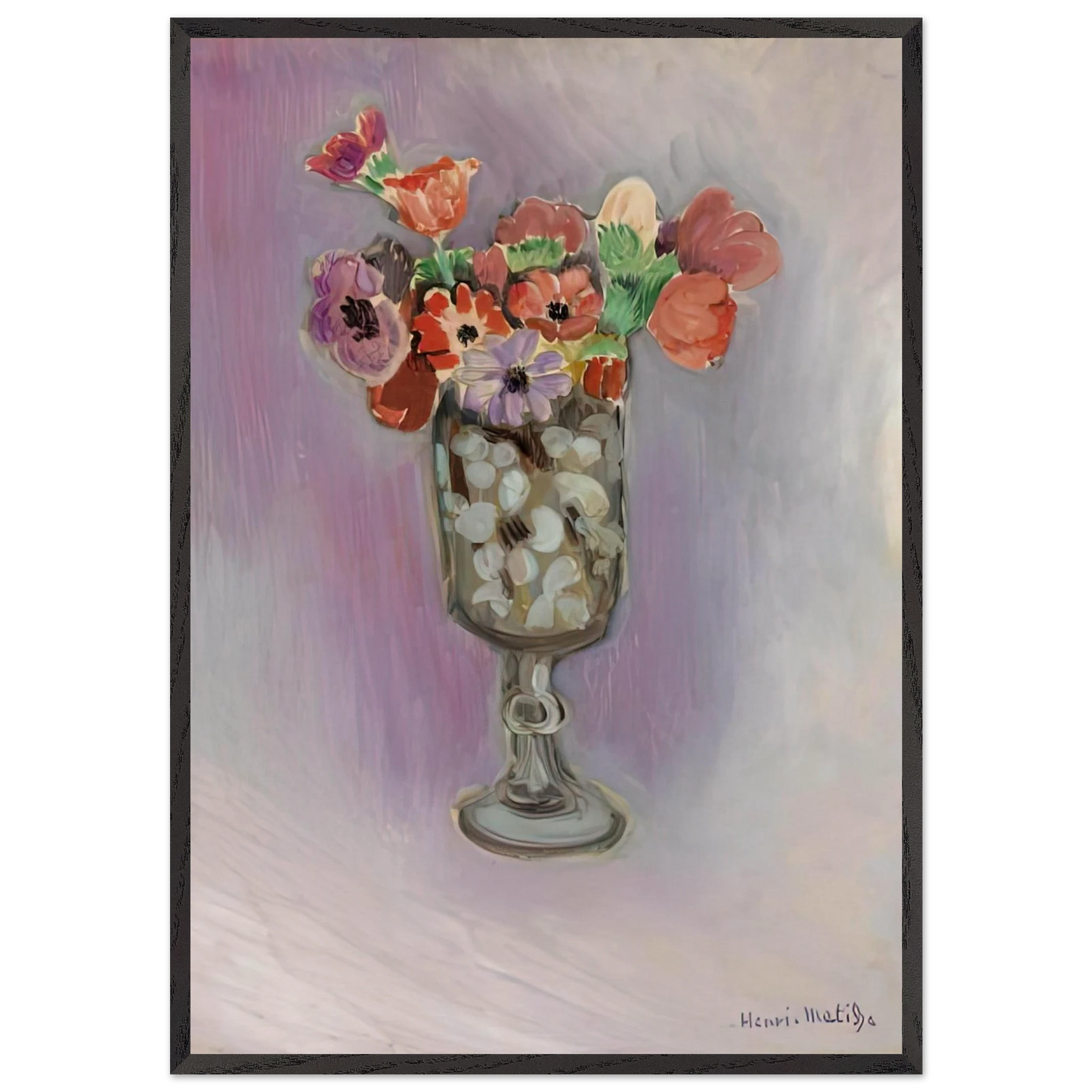
This Henri Matisse reproduction is printed on 250 gsm (110 lb) archival-grade, natural white paper. The uncoated matte finish ensures no glare, preserving the museum-quality look and feel of the original Bouquet of Anemones 1918.
Is the framing material sustainable and durable?
Yes, we use responsibly sourced FSC-certified oak and ash wood. The black frame is 20mm thick and wide, providing superior structural integrity compared to standard thin frames, ensuring your fine art print remains secure and elegant.
Does the print arrive ready to be displayed?
Absolutely. Your Bouquet of Anemones framed art print comes fully assembled with a high-quality hanging kit included. It is ready to hang directly on your wall the moment it arrives at your door.
How is the artwork protected from damage and fading?
We use archival-quality, acid-free paper to prevent yellowing over time. The print is shielded by shatterproof plexiglass, which offers excellent clarity while protecting the artwork from dust, moisture, and physical impact.
What is the shipping and logistics process for this large format print?
Each 70x100 cm framed print is securely packaged in reinforced materials to ensure safe transit. We partner with reliable global carriers to provide tracked shipping, ensuring your museum-quality reproduction arrives in perfect condition.
What is the significance of the year 1918 in Matisse’s work?
1918 was the year Matisse moved to Nice, a transition that softened his Fauvist intensity into a more luminous, decorative style. Bouquet of Anemones reflects this shift toward light-filled interiors and refined floral studies.
Why did Matisse choose anemones as a frequent subject?
Matisse was drawn to anemones for their diverse color palette and the graphic quality of their dark centers. This specific 1918 piece exemplifies his ability to use flowers as vessels for exploring color relationships and composition.