
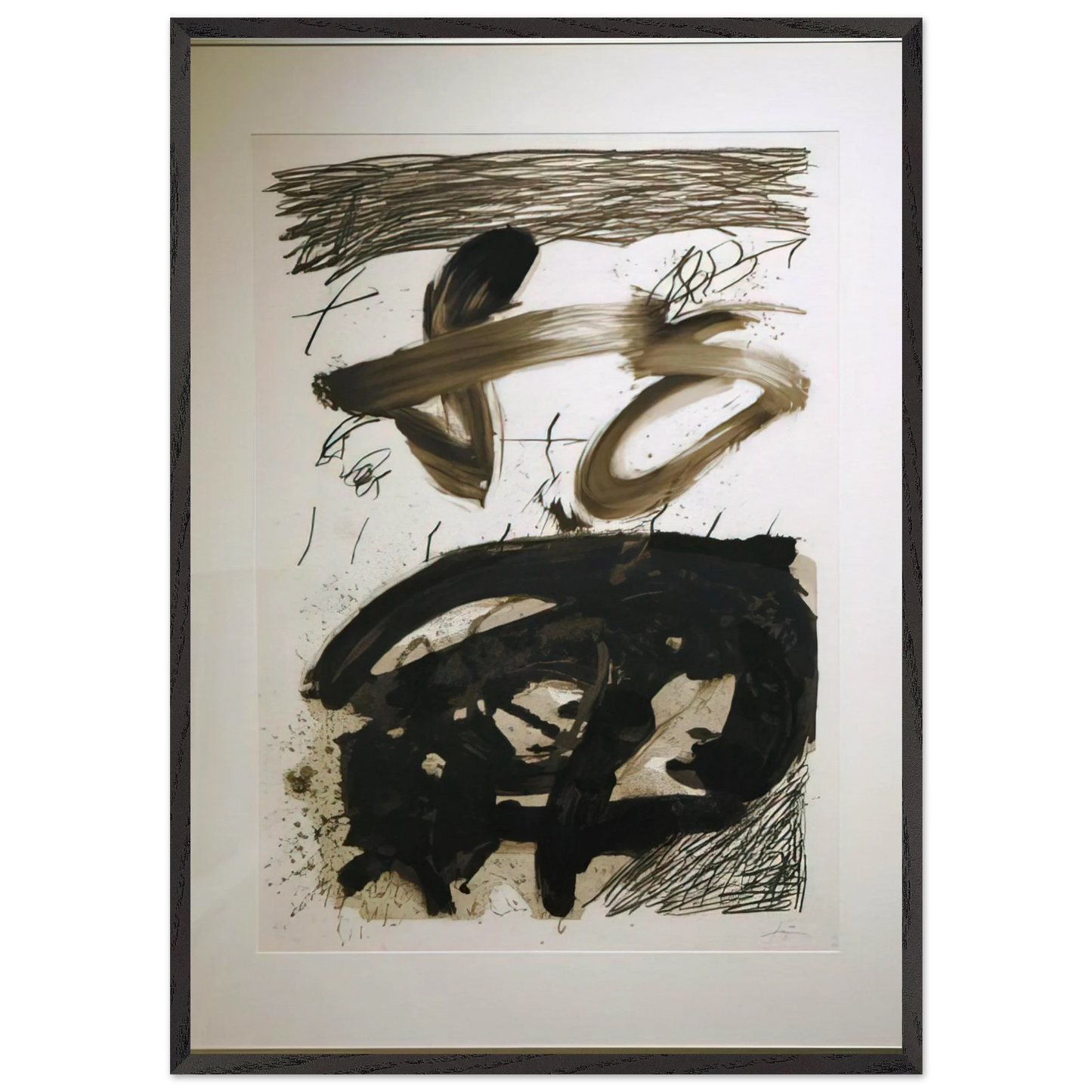
What are the specific paper qualities of this Tàpies print?
The artwork is printed on 250 gsm (110 lb) natural white, uncoated matte paper. This archival museum-quality paper is acid-free and FSC-certified, ensuring long-term durability and color accuracy without yellowing.
How is the black wooden frame constructed?
Our frames are made from responsibly sourced oak and ash. They feature a premium 20mm (0.79") width and thickness, providing a more robust and elegant profile than standard 14mm frames.
Is the Calligraphique 1987 print ready to hang upon arrival?
Yes, your framed art print arrives fully assembled. It includes a high-quality hanging kit, allowing you to elevate your interior space immediately with this archival masterpiece.
How is the artwork protected during shipping and display?
We use shatterproof plexiglass to protect the print surface while maintaining exceptional clarity. Each piece is securely packaged to ensure it arrives at your door in pristine condition.
Are the materials used for this print sustainable?
Sustainability is core to RedKalion. We use FSC-certified wood and paper or equivalent sustainable materials, ensuring that your fine art reproduction supports responsible forest management.
What is the significance of the calligraphic marks in Tàpies' 1987 work?
In 1987, Tàpies was deeply influenced by Zen philosophy. His calligraphic marks are not just symbols but physical traces of a gesture, representing the intersection between the spiritual and the material world.
Does the matte finish affect the visibility of the details?
The natural white, matte finishing is specifically chosen for fine art. It eliminates glare and reflections, allowing the intricate details and subtle textures of Tàpies' composition to be viewed clearly from any angle.