
RedKalion
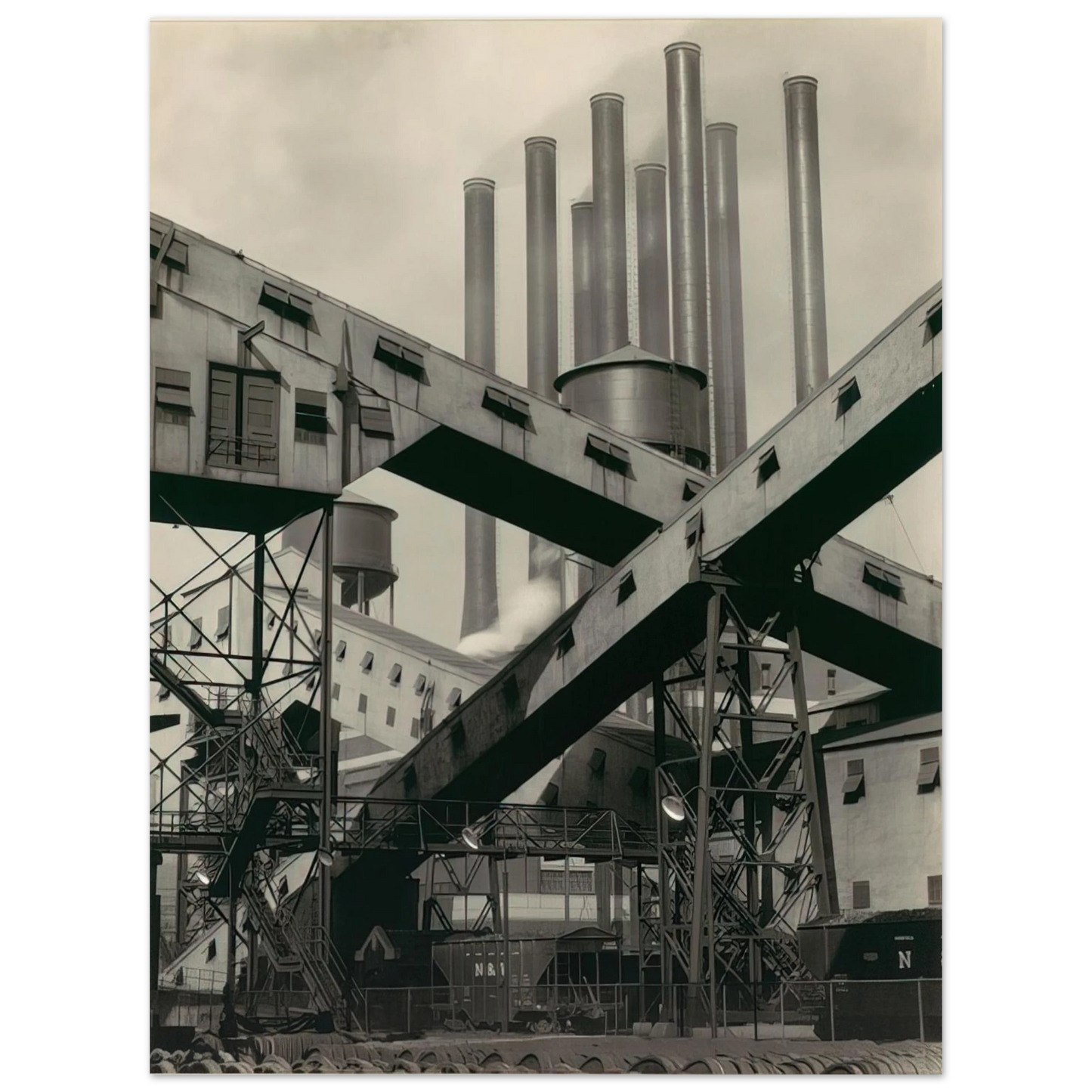
Charles Sheeler - Criss-Crossed Conveyors, River Rouge Plant, Ford Motor Company - 1927 75x100 cm / 30x40inches Fine Art Poster
Charles Sheeler - Criss-Crossed Conveyors, River Rouge Plant, Ford Motor Company - 1927 75x100 cm / 30x40inches Fine Art Poster
Não foi possível carregar a disponibilidade de recolha
Industrial Majesty: Charles Sheeler's Criss-Crossed Conveyors
Experience the definitive icon of the American Machine Age with this museum-quality reproduction of Charles Sheeler's Criss-Crossed Conveyors, River Rouge Plant, Ford Motor Company (1927). As a pioneer of Precisionism, Sheeler found a spiritual clarity in the geometric rigor of industry. This specific piece, commissioned by Edsel Ford, captures the soaring scale of the River Rouge plant, transforming functional architecture into a cathedral of progress.
Our RedKalion fine art print brings this historical masterpiece to life with unparalleled fidelity. Printed on our Master's Edition archival paper, the reproduction captures every subtle tonal shift and razor-sharp line that Sheeler originally intended. This is not merely a poster; it is a meticulously crafted museum-quality reproduction designed for the discerning collector.
The RedKalion Standard of Excellence
- Archival Longevity: We utilize acid-free paper with a pH above 7, ensuring your print remains vibrant and resists yellowing for generations.
- Sublime Texture: The 250 gsm (110 lb) paper features a matte, uncoated finish that eliminates glare while providing a luxurious, natural white (off-white) backdrop.
- Uncompromising Depth: With a thickness of 0.29 mm (11.4 mils), this print offers a weighted, premium feel that reflects its artistic stature.
- Sustainable Artistry: Our commitment to the planet matches our commitment to art; all paper used is FSC-certified.
By integrating Sheeler's vision of industrial harmony into your space, you are not just hanging a picture—you are honoring an era where art and industry converged. Elevate your interior with an archival masterpiece that endures, curated and fulfilled on demand by RedKalion.
Discover Unlimited Art Possibilities
At RedKalion, you can find virtually any artwork from any artist, available in a wide range of sizes to perfectly match your space.
If you didn’t find what you’re looking for, contact us at support@redkalion.com . We will source any artwork and produce it in any size and format you need, including art prints, posters, canvas, framed pieces, framed canvas, and more.
For dedicated art enthusiasts, we also offer handcrafted replicas of any artwork, carefully painted by highly skilled artists using traditional techniques.
For custom requests, contact us at support@redkalion.com .
What are the specifications of this Charles Sheeler print?
This print is produced on 250 gsm Master's Edition archival paper. It features a matte, natural white finish and a thickness of 0.29 mm, ensuring a premium, museum-quality feel for your fine art collection.
How is the color accuracy maintained over time?
We use acid-free paper with a pH above 7. This archival-grade material prevents yellowing and degradation, ensuring the sharp industrial contrasts of Sheeler's work remain crisp for decades.
Is the paper used for this Ford Motor Company print sustainable?
Yes, RedKalion uses FSC-certified (Forest Stewardship Council) paper. This ensures that your museum-quality reproduction is sourced from responsibly managed forests that provide environmental, social, and economic benefits.
How is my fine art poster shipped?
Each print is produced on demand with no minimum order requirements. We use robust, protective packaging to ensure your 75x100 cm print arrives in pristine condition, ready for framing.
Can I get this print in different sizes?
While the 75x100 cm (30x40 inches) is a signature size for this piece, we offer various dimensions to suit your space. Every size maintains the same 250 gsm archival standards.
What is the historical significance of 'Criss-Crossed Conveyors'?
Created in 1927, this work is a cornerstone of Precisionism. It reflects Charles Sheeler's fascination with industrial order and his ability to find aesthetic beauty in the Ford Motor Company's functional architecture.
Was this artwork originally a photograph or a painting?
Sheeler first captured the River Rouge Plant through photography. This 1927 image became the basis for several of his later paintings, bridging the gap between mechanical documentation and fine art.