
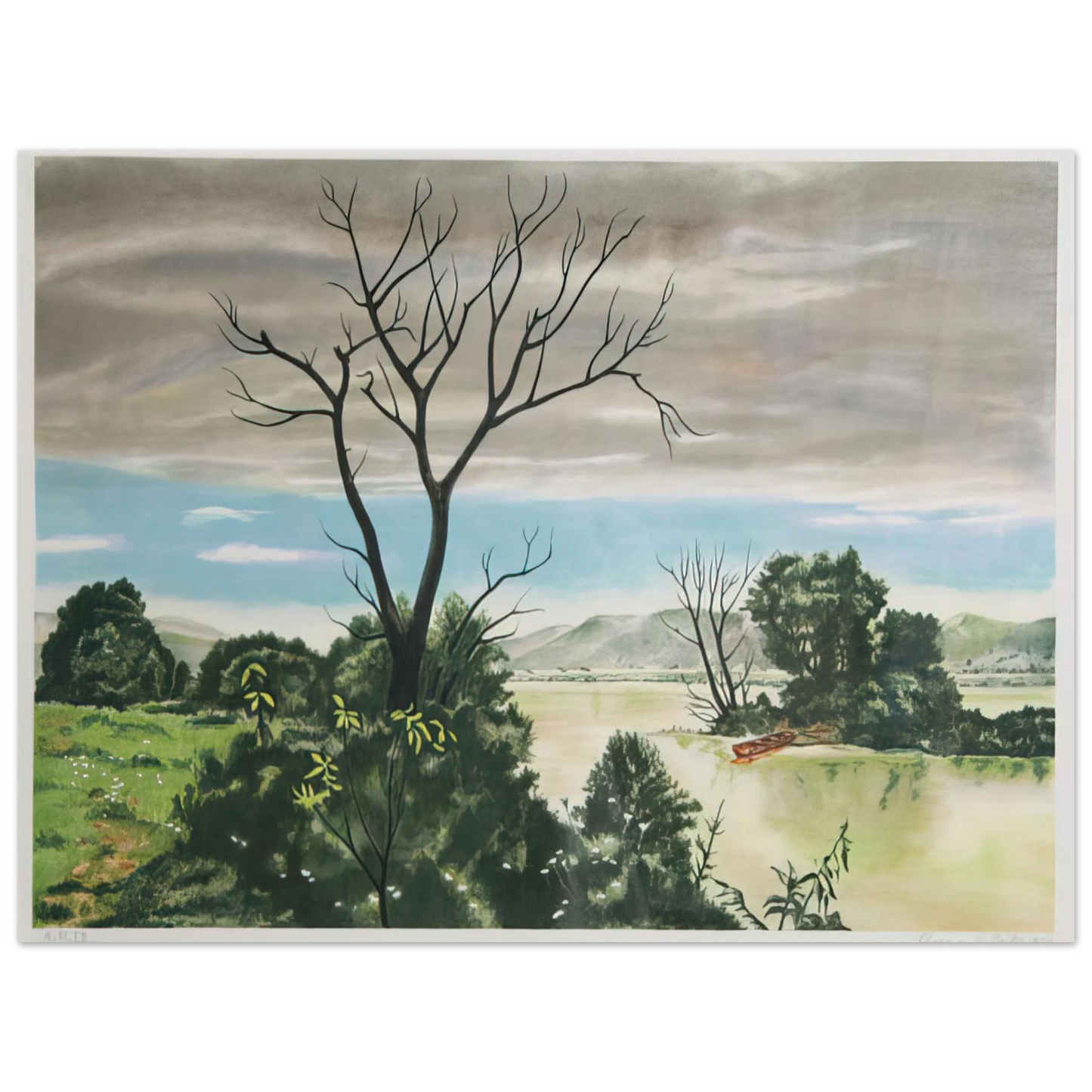
What makes the Master's Edition paper used for this Clarence Holbrook Carter print special?
Our Master's Edition paper is a 250 gsm archival-grade substrate. It features a matte, uncoated, natural white finish that provides a luxurious texture and exceptional color depth, making it the definitive choice for museum-quality fine art prints.
How does RedKalion ensure the longevity of the 'Early Spring Landscape' reproduction?
We use acid-free paper with a pH above 7, which prevents the yellowing and degradation associated with standard posters. This archival process ensures your Clarence Holbrook Carter print remains vibrant for generations.
Is the paper used for this 1979 landscape print environmentally friendly?
Yes, all our prints utilize FSC-certified paper (Forest Stewardship Council). This certification guarantees that the materials are sourced from responsibly managed forests, supporting environmental sustainability alongside aesthetic excellence.
What are the shipping and fulfillment details for this 75x100 cm print?
RedKalion operates on a print-on-demand basis with no minimum order requirements. Each Clarence Holbrook Carter reproduction is carefully handled, printed, and shipped globally to ensure it arrives in pristine gallery condition.
Does the print come with a frame or specific mounting instructions?
This fine art poster is delivered as a high-quality print on 0.29 mm thick archival paper. While it is sold unframed, its standard 75x100 cm (30x40 inches) dimensions make it compatible with most premium framing options.
What is the significance of the year 1979 in Clarence Holbrook Carter's career?
By 1979, Carter was deeply immersed in his 'Magic Realist' period. His works from this era, like 'Early Spring Landscape,' emphasize the intersection of geometric order and the natural world, showcasing his mature, refined aesthetic.
What art movement does this 'Untitled' landscape belong to?
This piece bridges the gap between Precisionism and Magic Realism. It focuses on the structural clarity of the landscape while imbuing the scene with a dreamlike, transcendental quality characteristic of Carter's later work.