


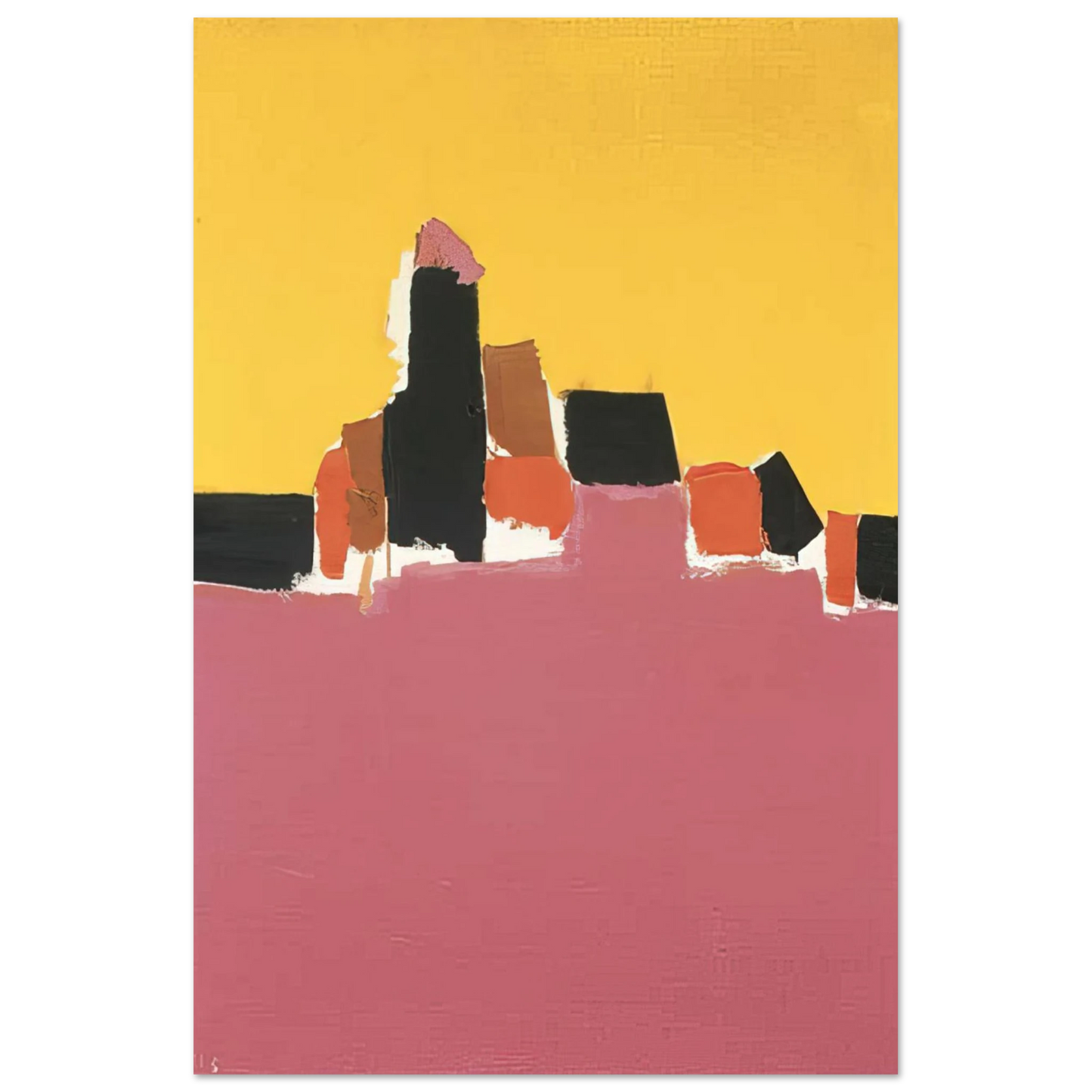
What is the historical significance of Nicolas de Staël's "Syracuse"?
"Syracuse" (1954) is a key work in Nicolas de Staël's Lyrical Abstraction period, blending thick impasto techniques with vibrant color to evoke Mediterranean light and emotion, marking his transition toward more figurative elements before his death in 1955.
How does the paper quality ensure this is a museum-quality reproduction?
Our Master's Edition archival paper is acid-free (pH above 7) and FSC-certified, preventing yellowing and offering a matte, uncoated finish with a natural white hue for authentic texture and longevity in fine art prints.
What are the specifications of the paper used for this fine art print?
The paper is 250 gsm (110 lb) weight and 0.29 mm (11.4 mils) thick, providing a durable, luxurious feel ideal for displaying this Lyrical Abstraction masterpiece as a premium poster.
How is shipping handled for this on-demand print?
We print and ship on demand with no minimum orders, ensuring careful fulfillment to deliver your archival-quality Nicolas de Staël reproduction directly to you.
How long will this archival print last without fading or damage?
With acid-free, pH-balanced paper and museum-quality standards, this print resists yellowing and fading, offering enduring vibrancy for your home or office decor.
What defines Lyrical Abstraction in de Staël's work?
Lyrical Abstraction in de Staël's art involves expressive, gestural brushwork and layered colors that convey emotion and atmosphere, as seen in "Syracuse," where abstraction hints at real-world landscapes.
Can you describe the color palette and texture in "Syracuse"?
"Syracuse" features a rich palette of blues, oranges, and whites applied with thick impasto, creating a textured surface that captures light and movement, characteristic of de Staël's style.