
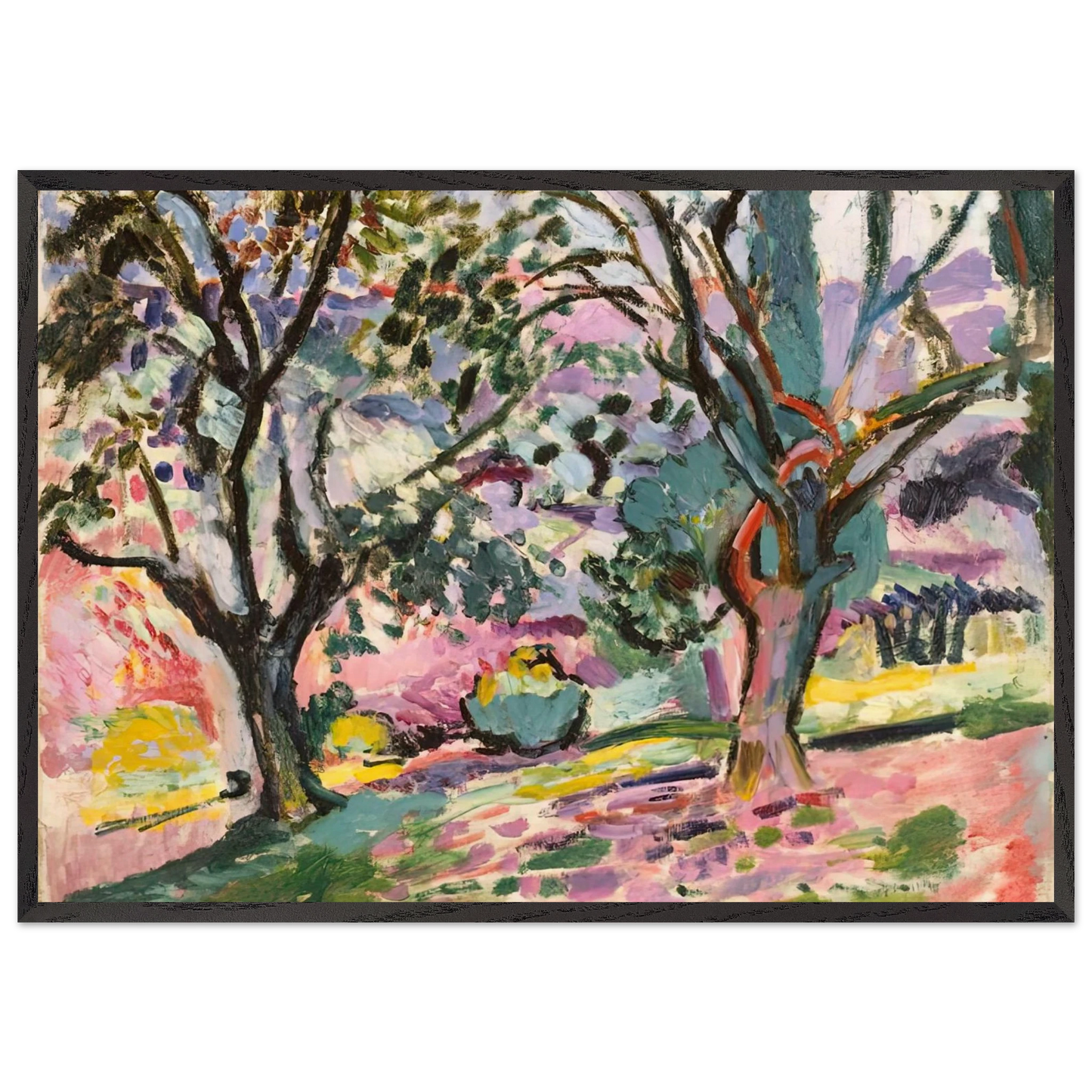
What is the historical significance of Olive Trees at Collioure by Henri Matisse?
Painted in 1906, this work is a landmark of Fauvism, showcasing Matisse's radical use of pure, expressive color to convey emotion over realism, inspired by his time in Collioure with André Derain.
What are the exact dimensions of this framed print?
The framed art print measures 70x100 cm (28x40 inches), with a black wooden frame that is 20mm (0.79 inches) thick and wide, offering a substantial, premium look for your wall decor.
What type of paper is used for this fine art print?
We use 250 gsm (110 lb) matte, uncoated, natural white archival museum-quality paper, which is FSC-certified for sustainability and ensures vibrant, long-lasting color reproduction.
Is this print ready to hang upon delivery?
Yes, this framed art print includes a hanging kit and is ready to hang directly on your wall, making installation simple and immediate for your home or office.
How does the frame protect the artwork?
The frame features shatterproof plexiglass that safeguards the print from damage while maintaining clarity, and it's made from responsibly sourced oak and ash wood for durability.
Why did Matisse choose such bold colors in this painting?
Matisse used intense, non-naturalistic hues in Olive Trees at Collioure to evoke emotional response and light, breaking from tradition to pioneer the Fauvist movement's expressive style.
How archival is this reproduction for long-term display?
Printed on 250 gsm archival paper with fade-resistant inks, this museum-quality reproduction is designed to endure for decades without yellowing or degradation, ideal for fine art collectors.