
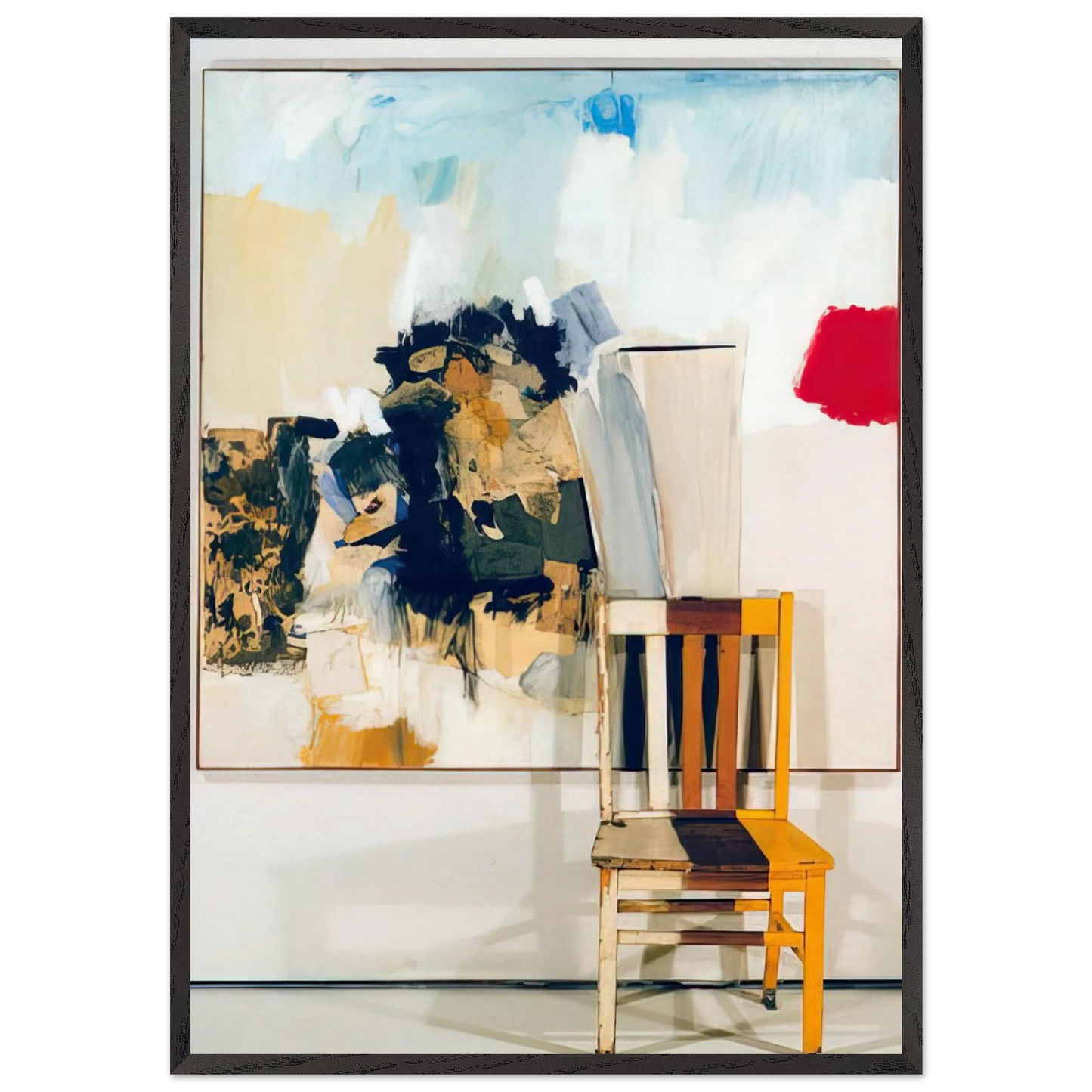
What is the historical significance of Robert Rauschenberg's PILGRIM 1960?
PILGRIM 1960 is a key work from Rauschenberg's Combine series, blending painting, sculpture, and found objects to challenge art norms during the Neo-Dada and Pop Art movements, reflecting his innovative approach to texture and cultural commentary in fine art prints.
What materials are used in this framed art print?
This museum-quality reproduction features a black wooden frame made from responsibly sourced oak and ash wood, archival paper with a 250 gsm weight and matte finish, and shatterproof plexiglass for protection, ensuring a durable and sustainable art piece.
How does the frame enhance the artwork's presentation?
The frame is 20mm thick and wide, providing a gallery-worthy presence that complements the 70x100 cm print size, made from oak and ash wood for a sleek, ready-to-hang display that elevates any interior with archival quality.
Is this print ready to hang upon arrival?
Yes, this framed art print includes a complete hanging kit, allowing for immediate wall display without additional setup, making it a convenient choice for home or office decor with fine art reproductions.
What makes the paper archival and museum-quality?
The paper is 250 gsm, 0.29 mm thick, with a matte uncoated natural white finish, using FSC-certified sustainable materials to ensure longevity, minimal glare, and authentic texture for premium art prints.
How does Rauschenberg's technique in PILGRIM 1960 influence modern art?
Rauschenberg's use of combines in PILGRIM 1960 pioneered mixed-media art, inspiring later artists by breaking traditional boundaries and emphasizing process over perfection in contemporary fine art collections.
What protection does the shatterproof plexiglass offer?
The shatterproof plexiglass safeguards the print from dust, UV light, and damage while maintaining optical clarity, ensuring your archival reproduction remains pristine for years in any setting.