
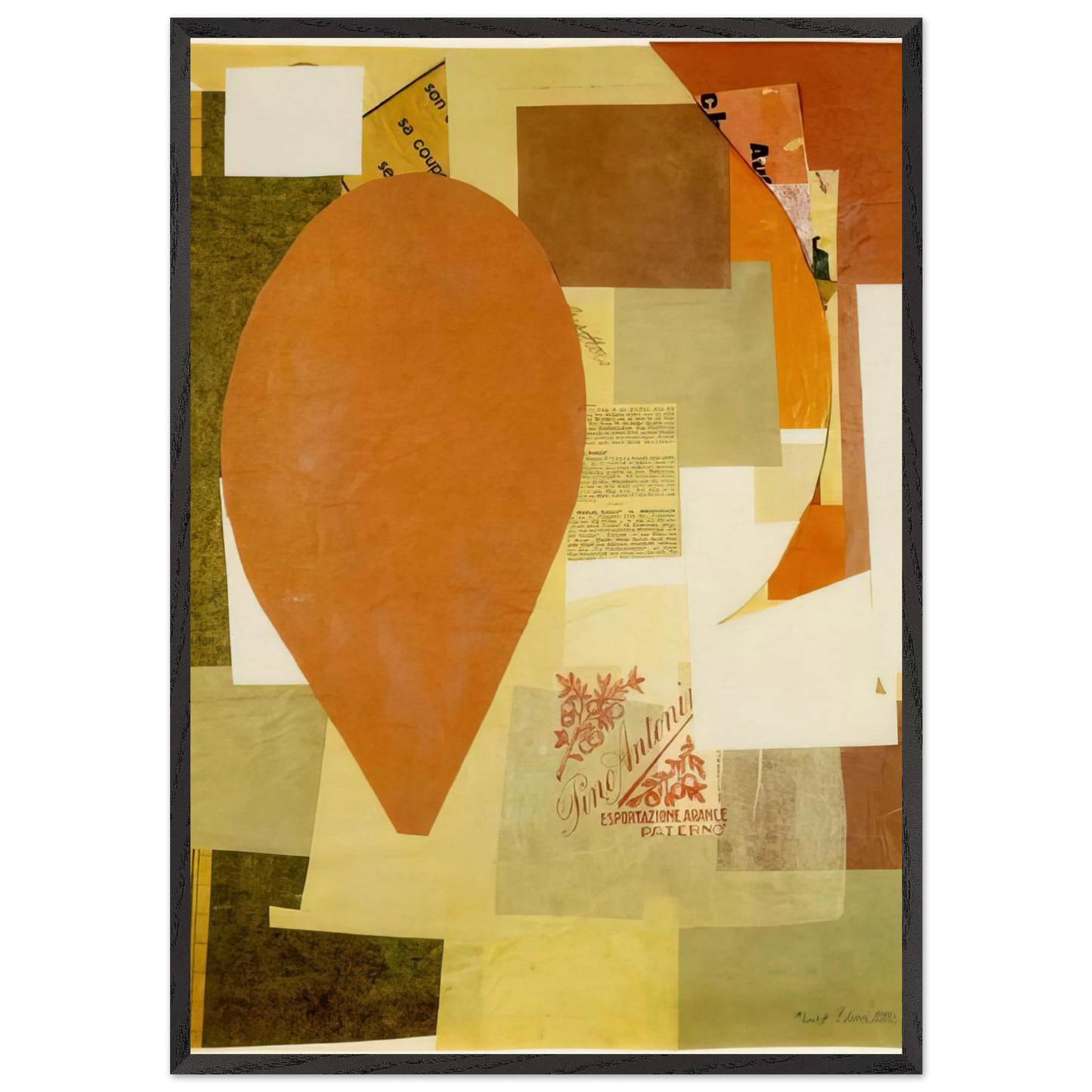
What is the historical significance of Kurt Schwitters' PINO ANTONI 1934?
PINO ANTONI 1934 is a key work from Kurt Schwitters' Merz period, showcasing his avant-garde collage technique using found objects during his exile, reflecting Dadaist innovation in 20th-century art.
What details make this a museum-quality reproduction?
This fine art print uses archival museum-quality paper with a matte finish and natural white hue, ensuring color accuracy and longevity for a premium framed art print experience.
What are the specifications of the black wooden frame?
The frame is made from responsibly sourced oak and ash wood, measuring 20mm thick and wide, and includes shatterproof plexiglass for durable protection of your art print.
How is the print prepared for hanging?
This ready-to-hang framed art print comes with a hanging kit, allowing for easy installation directly on your wall without additional tools.
What sustainable practices are used in this product?
We use FSC-certified materials for the paper and frame, ensuring eco-friendly production in this sustainable fine art print.
How does Schwitters' Merz technique influence this artwork?
Schwitters' Merz technique involved assembling everyday materials into collages, seen in PINO ANTONI 1934, blending typography and objects to challenge artistic norms.
What is the paper weight and why is it ideal for fine art?
The paper is 250 gsm (110 lb) with a 0.29 mm thickness, providing a sturdy, tactile feel that enhances the museum-quality reproduction for long-term display.