
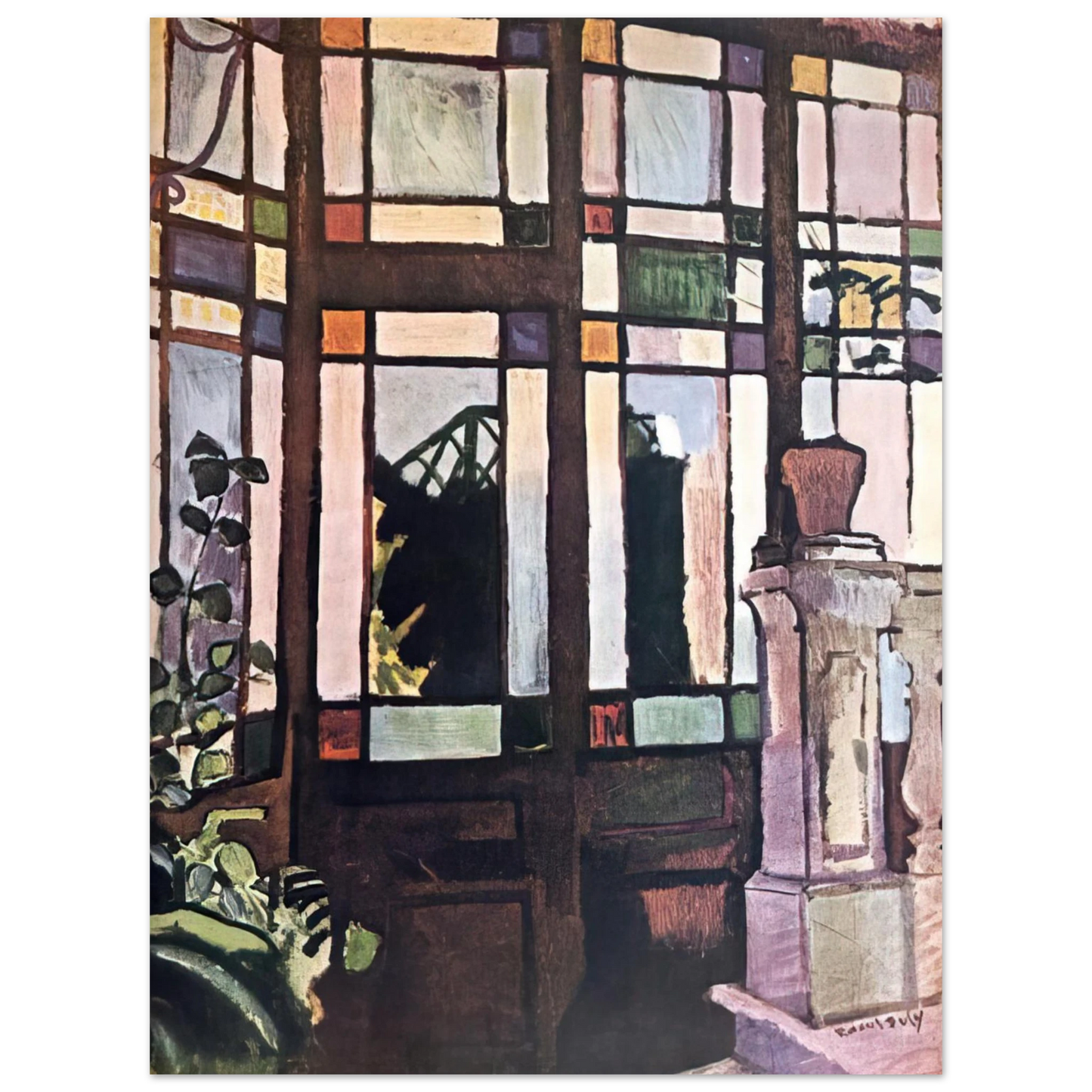
What is the historical significance of Raoul Dufy's Window with Coloured Glasses (1906)?
This artwork is a key example of Dufy's Fauvist period, showcasing bold, non-naturalistic colors and simplified forms that challenged traditional art norms in early 20th-century modernism.
How does Dufy use color in this piece to evoke mood?
Dufy employs vibrant, expressive hues in the stained glass to create a joyful, abstract atmosphere, reflecting Fauvism's focus on emotional impact over realistic depiction.
What are the specifications of the Master's Edition archival paper used for this fine art print?
It features a matte, uncoated finish in natural white, with 250 gsm weight, 0.29 mm thickness, acid-free properties for longevity, and FSC-certified sustainability for museum-quality reproductions.
How is this print shipped and what are the fulfillment options?
It is printed and shipped on demand with no minimum orders, ensuring efficient delivery of your archival art poster directly to your location.
What makes this print archival and how long will it last?
The acid-free paper (pH above 7) prevents yellowing, offering long-term preservation for this durable fine art reproduction to endure for generations.
Why did Dufy choose a window theme for this 1906 artwork?
Windows were a common motif in Dufy's work, symbolizing a portal to light and color, aligning with Fauvist ideals to transform everyday scenes into vibrant expressions.
What techniques did Dufy use to achieve the stained glass effect in this piece?
Dufy applied flat, bold color areas with minimal shading, mimicking stained glass aesthetics to emphasize pure hue and compositional harmony in this Fauvist masterpiece.