RedKalion
SCILLA CALABRIA JANUARY 1931 1931 - MC Escher 70x100 cm / 28x40 inches Framed Art Print – Black Wooden Frame | Maurits Cornelis Escher Prints
SCILLA CALABRIA JANUARY 1931 1931 - MC Escher 70x100 cm / 28x40 inches Framed Art Print – Black Wooden Frame | Maurits Cornelis Escher Prints
Não foi possível carregar a disponibilidade de recolha
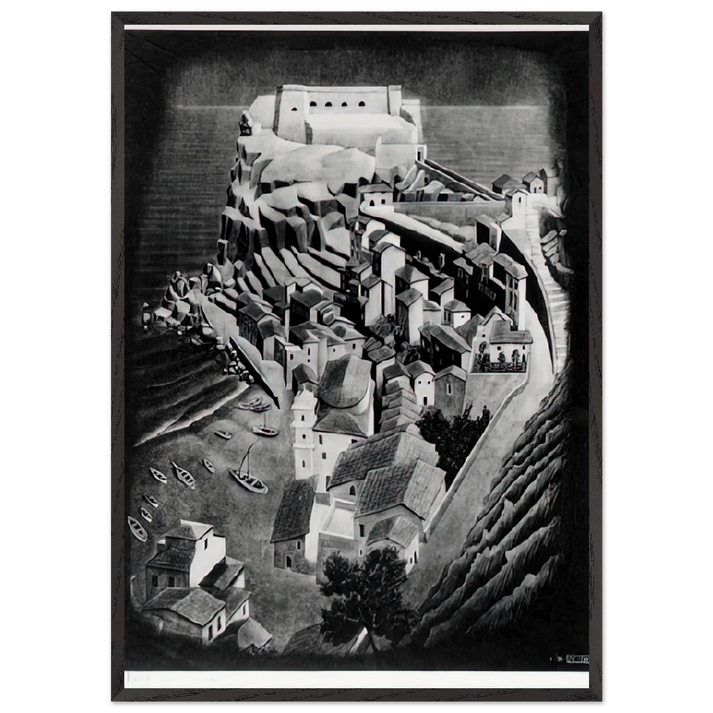
Scilla Calabria January 1931 (1931) by M.C. Escher – Framed Art Print
Immerse yourself in the enigmatic world of Maurits Cornelis Escher with this museum-quality framed art print of Scilla Calabria January 1931. Created in 1931, this early work showcases Escher's masterful command of perspective and geometric precision, capturing the rugged coastal landscape of Calabria, Italy, with a surreal, almost architectural clarity. The piece evokes a mood of timeless mystery and intellectual intrigue, making it a captivating centerpiece for any space dedicated to fine art and optical illusion.
RedKalion presents this archival-grade reproduction on 250 gsm (110 lb) matte, uncoated, natural white paper, ensuring exceptional color fidelity and longevity. The print is elegantly framed in a 20mm (0.79") thick black wooden frame crafted from responsibly sourced oak and ash wood, offering a wider, more substantial profile than standard frames. Protected by shatterproof plexiglass and including a hanging kit for immediate display, this piece is ready to elevate your home or office with a touch of mathematical artistry.
As a premier online gallery, RedKalion specializes in curating museum-quality prints that honor the original artist's vision. Our commitment to sustainable materials, including FSC-certified paper, ensures that your investment supports both artistic heritage and environmental responsibility. Discover the allure of Escher's early explorations with this meticulously crafted reproduction.

Discover Unlimited Art Possibilities
At RedKalion, you can find virtually any artwork from any artist, available in a wide range of sizes to perfectly match your space.
If you didn’t find what you’re looking for, contact us at support@redkalion.com . We will source any artwork and produce it in any size and format you need, including art prints, posters, canvas, framed pieces, framed canvas, and more.
For dedicated art enthusiasts, we also offer handcrafted replicas of any artwork, carefully painted by highly skilled artists using traditional techniques.
For custom requests, contact us at support@redkalion.com .
What are the dimensions of this M.C. Escher framed art print?
This framed art print measures 70x100 cm (28x40 inches), including the black wooden frame, making it a striking statement piece for any wall.
What type of paper is used for this fine art reproduction?
We use 250 gsm (110 lb) matte, uncoated, natural white archival museum-quality paper, ensuring vibrant colors and long-lasting durability for your M.C. Escher print.
Yes, this framed art print includes a hanging kit and is ready to hang directly on your wall upon arrival, with no additional assembly required.
How is the print protected in the frame?
The print is safeguarded by shatterproof plexiglass, which offers clear visibility and protection against damage, ensuring your museum-quality reproduction remains pristine.
What materials are used in the black wooden frame?
The frame is made from responsibly sourced oak and ash wood, with a 20mm (0.79") thickness for a premium, wider look compared to standard frames.
What is the historical significance of Scilla Calabria January 1931?
Created in 1931, this early work by M.C. Escher depicts the coastal town of Scilla in Calabria, Italy, showcasing his evolving interest in perspective and geometric forms before his famous optical illusions.
How does this print reflect Escher's artistic style?
This piece highlights Escher's precise draftsmanship and attention to architectural detail, with a surreal quality that foreshadows his later explorations of impossible spaces and tessellations.