
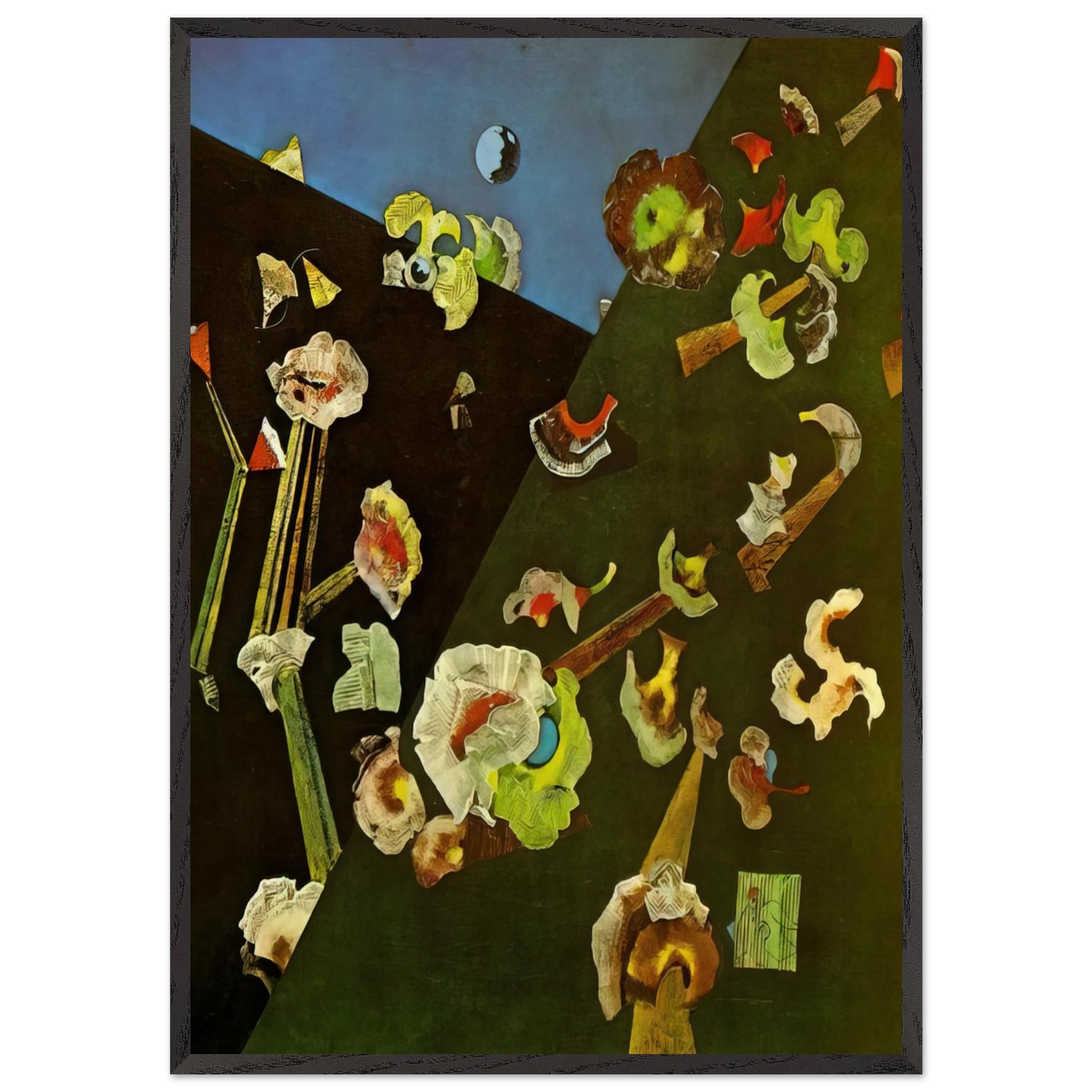
What is the historical significance of Snow Flowers by Max Ernst?
Snow Flowers, created in 1929, showcases Max Ernst's pioneering frottage technique, a key Surrealist method that explores the subconscious through textured, dreamlike imagery, making it a seminal work in 20th-century art history.
How does the frottage technique in Snow Flowers create its unique visual effect?
Ernst used frottage by rubbing graphite over rough surfaces like wood or fabric, resulting in organic, snow-like patterns that evoke natural forms, adding depth and mystery to this fine art print.
What are the specifications of the paper used for this framed art print?
This museum-quality reproduction features 250 gsm (110 lb) archival paper with a matte, uncoated finish and 0.29 mm (11.4 mils) thickness, ensuring durability and vibrant color for your Max Ernst print.
What materials are used in the black wooden frame?
The frame is crafted from responsibly sourced oak and ash wood, measuring 20mm (0.79") thick and wide, providing a sturdy and elegant presentation for your ready-to-hang art piece.
Is this framed print ready to hang upon delivery?
Yes, it includes a hanging kit and is ready-to-hang directly on your wall, offering a convenient setup for displaying your archival-grade Max Ernst reproduction.
How does the shatterproof plexiglass protect the print?
The shatterproof plexiglass safeguards the fine art print from dust, UV light, and physical damage, ensuring long-term preservation without the risk of glass breakage.
What sustainability practices are involved in this product?
We use FSC-certified materials or equivalent for the paper, supporting ethical sourcing and environmental responsibility in our museum-quality reproductions.