
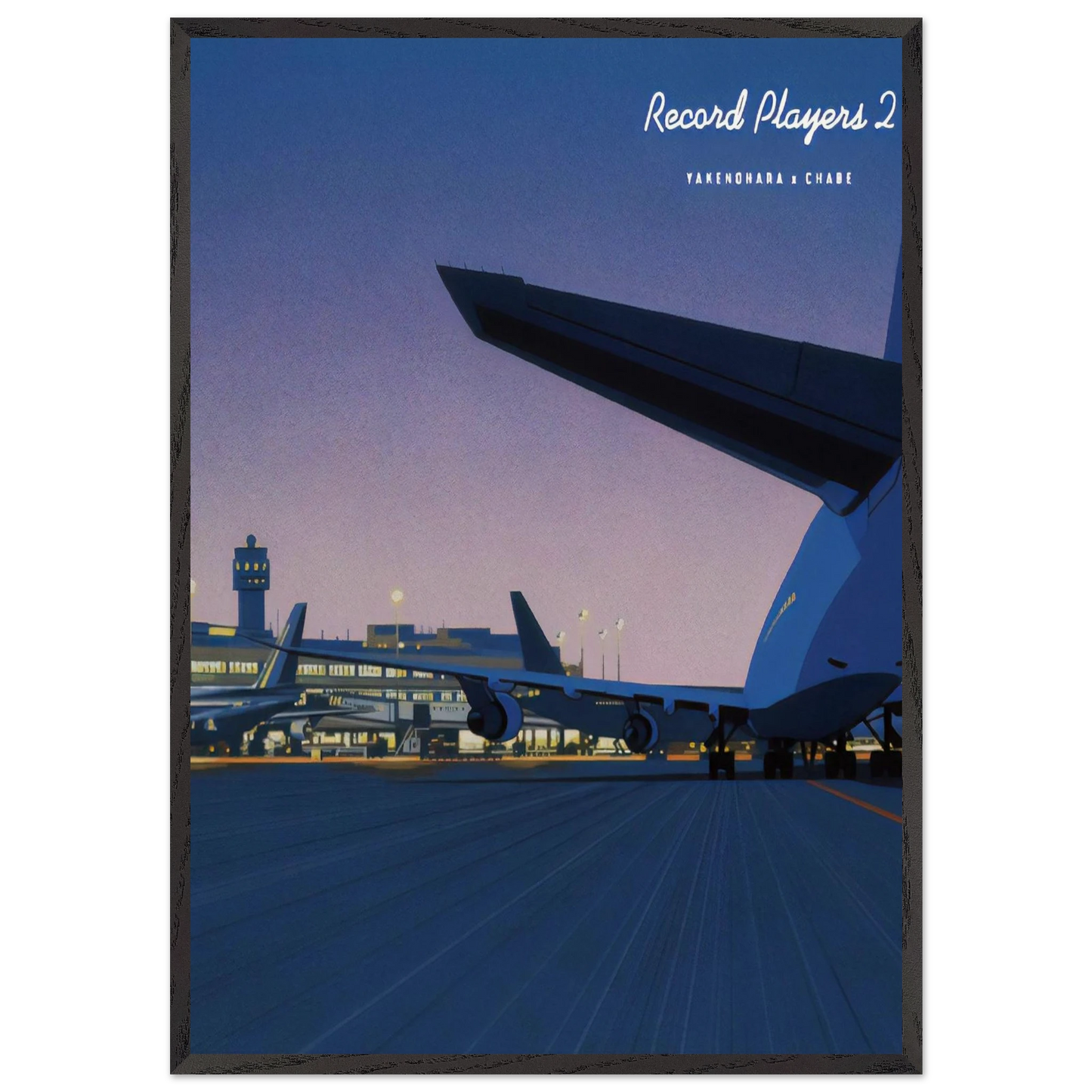
What is the historical significance of Hiroshi Nagai's Taxiway N1?
Taxiway N1 reflects Hiroshi Nagai's 1980s style, blending Japanese aesthetics with American retro-futurism to create iconic, serene scenes that evoke nostalgia and sophistication in fine art prints.
How does the frame enhance this museum-quality reproduction?
The 20mm thick black wooden frame, made from responsibly sourced oak and ash, provides a wider, premium look that complements Nagai's artwork, ensuring durability for your framed art print.
What are the specifications of the archival paper used?
This print uses 250 gsm (110 lb) matte, uncoated archival museum-quality paper, 0.29 mm thick, with FSC-certified materials for sustainable, long-lasting fine art reproductions.
Is the print ready to hang upon delivery?
Yes, this framed art print includes a hanging kit and is ready-to-hang directly on your wall, offering convenience with its shatterproof plexiglass protection.
How does the shatterproof plexiglass protect the artwork?
The shatterproof plexiglass safeguards the print from damage and UV light, ensuring your Hiroshi Nagai reproduction remains pristine in its black wooden frame.
What inspired Hiroshi Nagai's unique artistic style in Taxiway N1?
Nagai drew from 1980s pop culture, minimalist design, and leisure aesthetics, creating dreamlike scenes that blend retro and modern elements in this iconic artwork.
Why is the 20mm frame thickness ideal for this print?
The 20mm frame thickness, wider than classic 14mm frames, adds substantial presence and elegance, enhancing the visual impact of this museum-quality art print.