

Discover Unlimited Art Possibilities
At RedKalion, you can find virtually any artwork from any artist, available in a wide range of sizes to perfectly match your space.
If you didn’t find what you’re looking for, contact us at support@redkalion.com . We will source any artwork and produce it in any size and format you need, including art prints, posters, canvas, framed pieces, framed canvas, and more.
For dedicated art enthusiasts, we also offer handcrafted replicas of any artwork, carefully painted by highly skilled artists using traditional techniques.
For custom requests, contact us at support@redkalion.com .
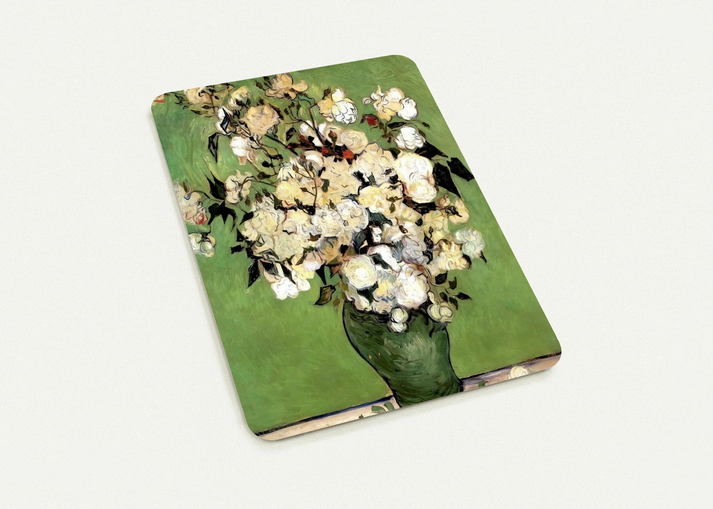
What is the print quality of these Vincent van Gogh postcards?
We use advanced 12-color fine art printing technology. This ensures vivid, accurate colors and stunning depth, significantly exceeding the quality of standard 4-color inkjet printing for a true museum-quality finish.
What kind of paper is used for the 'A Vase of Roses' set?
Each card is printed on 200 gsm (80 lb) paper with a 0.26 mm thickness. The smooth matte finish provides a glare-free surface that highlights the intricate details of Van Gogh’s brushwork.
Is the paper used for these postcards environmentally friendly?
Yes, all our postcards are printed on FSC-certified paper, ensuring the materials are sourced from responsibly managed forests that provide environmental, social, and economic benefits.
How are these postcards packaged and shipped?
Each pack of 10 postcards is printed on demand to reduce waste and is carefully packaged to ensure they arrive in pristine condition, ready for mailing or display.
Are these postcards suitable for framing?
Absolutely. Given their archival-grade quality and 12-color depth, these A6 prints function beautifully as miniature art pieces when placed in a standard 4.1 x 5.8 inch frame.
What is the historical significance of 'A Vase of Roses'?
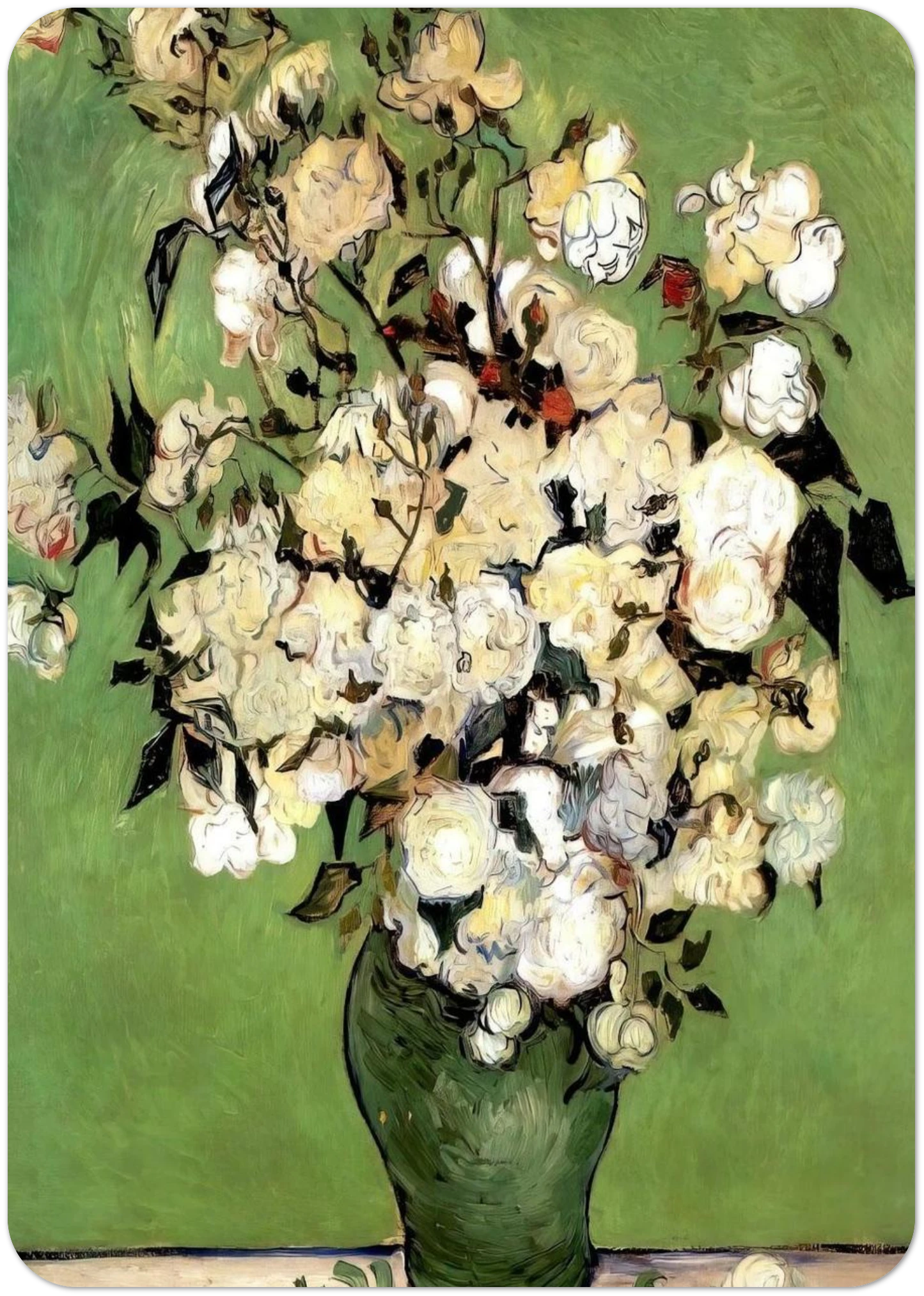
Painted in May 1890, this work represents Van Gogh's sense of renewal before leaving Saint-Rémy. It reflects his fascination with the 'language' of flowers and his mastery of still life.
Why do the roses in this painting appear white rather than pink?
Van Gogh originally used a red lake pigment that was light-sensitive. Over time, the pink hues faded to white, a common occurrence in his Saint-Rémy and Auvers-sur-Oise period works.