Gå vidare till produktinformation
1 av 1

RedKalion

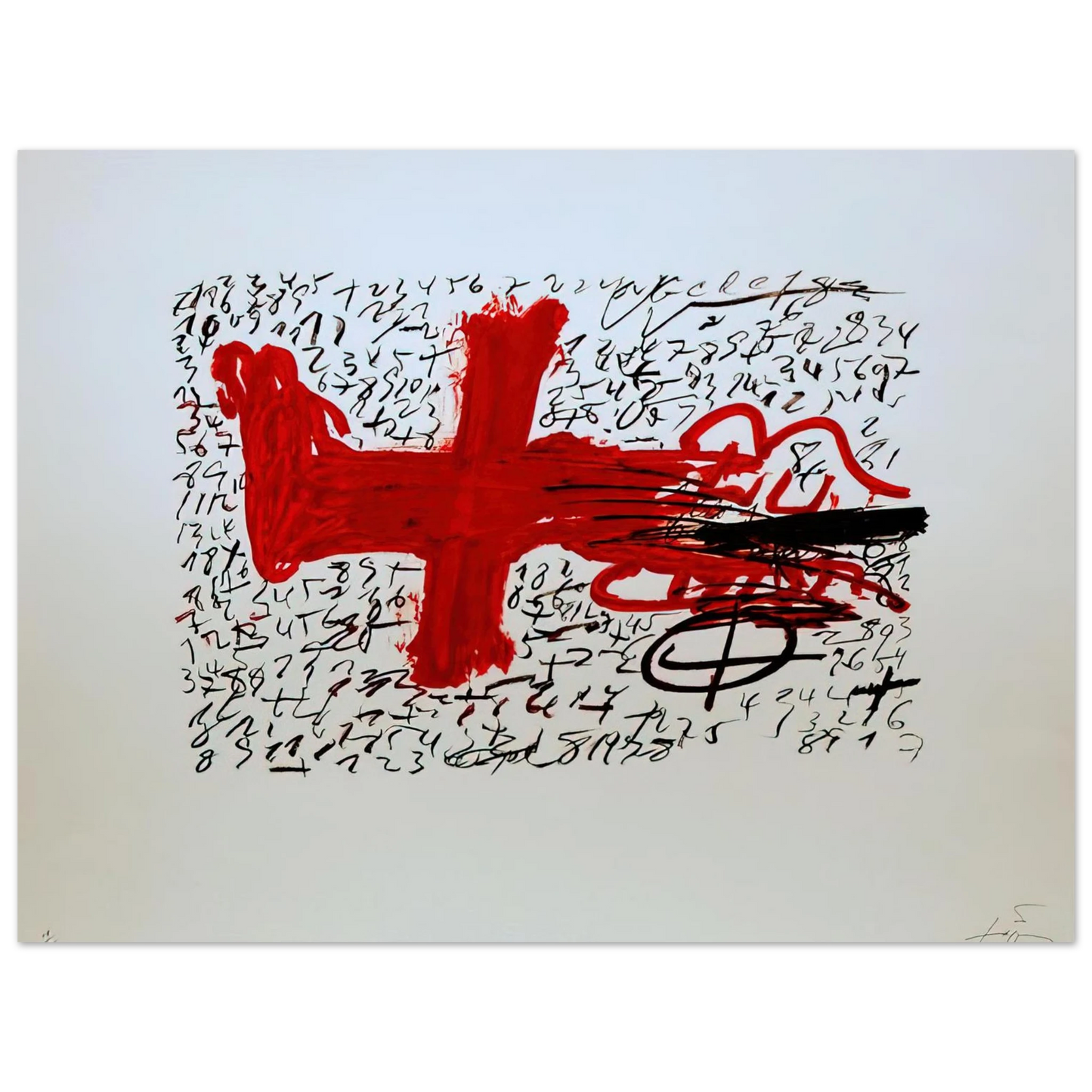
Antoni Tapies - JAMBE ET CHIFFRES 1984 75x100 cm / 30x40inches Fine Art Poster

Antoni Tapies - JAMBE ET CHIFFRES 1984 75x100 cm / 30x40inches Fine Art Poster

Ordinarie pris $207.99 USD
Ordinarie pris $311.00 USD Försäljningspris $207.99 USD
Rea Slutsåld
Kvantitet

Elevate Your Collection with Antoni Tàpies' JAMBE ET CHIFFRES (1984)

Experience the profound materiality of the Spanish avant-garde with this museum-quality reproduction of Antoni Tàpies' JAMBE ET CHIFFRES (1984). As a cornerstone of the Informalism movement, Tàpies transformed the canvas into a tactile landscape of philosophical inquiry. This particular work, featuring his iconic use of human anatomy and cryptic numerology, serves as a powerful testament to the artist's fascination with the human condition and the mystery of the mundane.

Art Historical Context & Artistic Mastery

In JAMBE ET CHIFFRES, Tàpies utilizes the motif of the 'jambe' (leg) and 'chiffres' (numbers) to bridge the gap between the physical body and abstract logic. By 1984, Tàpies had refined his 'Matter Painting' technique, where symbols are etched into the composition as if carved into ancient stone. This fine art print captures the raw, gestural energy and the subtle tonal shifts that define Tàpies' later period, offering a sophisticated focal point for any modern interior.

The RedKalion Standard: Museum-Quality Craftsmanship

RedKalion is proud to offer this archival-grade reproduction, curated for those who demand uncompromising quality. To honor the tactile nature of Tàpies' original work, each piece is produced using our Master's Edition archival paper. This premium substrate offers a luxurious, uncoated matte finish and a natural white (off-white) tone, ensuring that every nuance of the artist's palette is rendered with stunning clarity.

  • Weight & Thickness: A substantial 250 gsm (110 lb) weight with a 0.29 mm (11.4 mils) thickness for a true gallery feel.
  • Archival Longevity: Acid-free and pH-buffered (above 7) to prevent yellowing or degradation over decades.
  • Sustainability: Printed on FSC-certified paper, supporting responsible forest management.
  • Tailored Fulfillment: Each print is produced on demand with no minimum order requirements, ensuring a fresh, pristine delivery.

Transform your space with a work that bridges the gap between mid-century modernism and contemporary abstraction. This Antoni Tàpies poster is more than a decoration; it is an enduring investment in aesthetic excellence.

Visa alla uppgifter
What paper quality is used for the JAMBE ET CHIFFRES reproduction?

We use our Master's Edition archival paper, a premium 250 gsm (110 lb) substrate. It is museum-quality, providing a substantial weight and luxurious feel that far exceeds standard posters.

Is the paper used for this fine art print sustainable?

Yes, all our prints use FSC-certified paper. This ensures the material is sourced from responsibly managed forests that provide environmental, social, and economic benefits.

How long will the colors of this Antoni Tàpies print last?

Designed for longevity, the paper is acid-free with a pH above 7. This prevents yellowing and ensures the ink remains vibrant for decades, making it a true archival masterpiece.

What is the texture and finish of the Master's Edition paper?

The paper features a matte, uncoated finish with a natural white (off-white) color. This provides a sophisticated, glare-free surface that highlights the deep textures of Tàpies' work.

Do you have a minimum order requirement for shipping?

No, RedKalion offers print-on-demand fulfillment with no minimum order requirements. Each order is handled individually and shipped directly to you with meticulous care.

What is the significance of the 'Jambe' (Leg) in Tàpies' 1984 work?

In Tàpies' iconography, body parts like the leg represent human vulnerability and the connection between the physical self and the spiritual world, a key theme in 1980s Spanish Informalism.

How does JAMBE ET CHIFFRES represent the Informalism movement?

The piece exemplifies Informalism through its rejection of traditional form, focusing instead on 'matter,' gestural marks, and the use of numbers as symbolic, non-representational elements.