
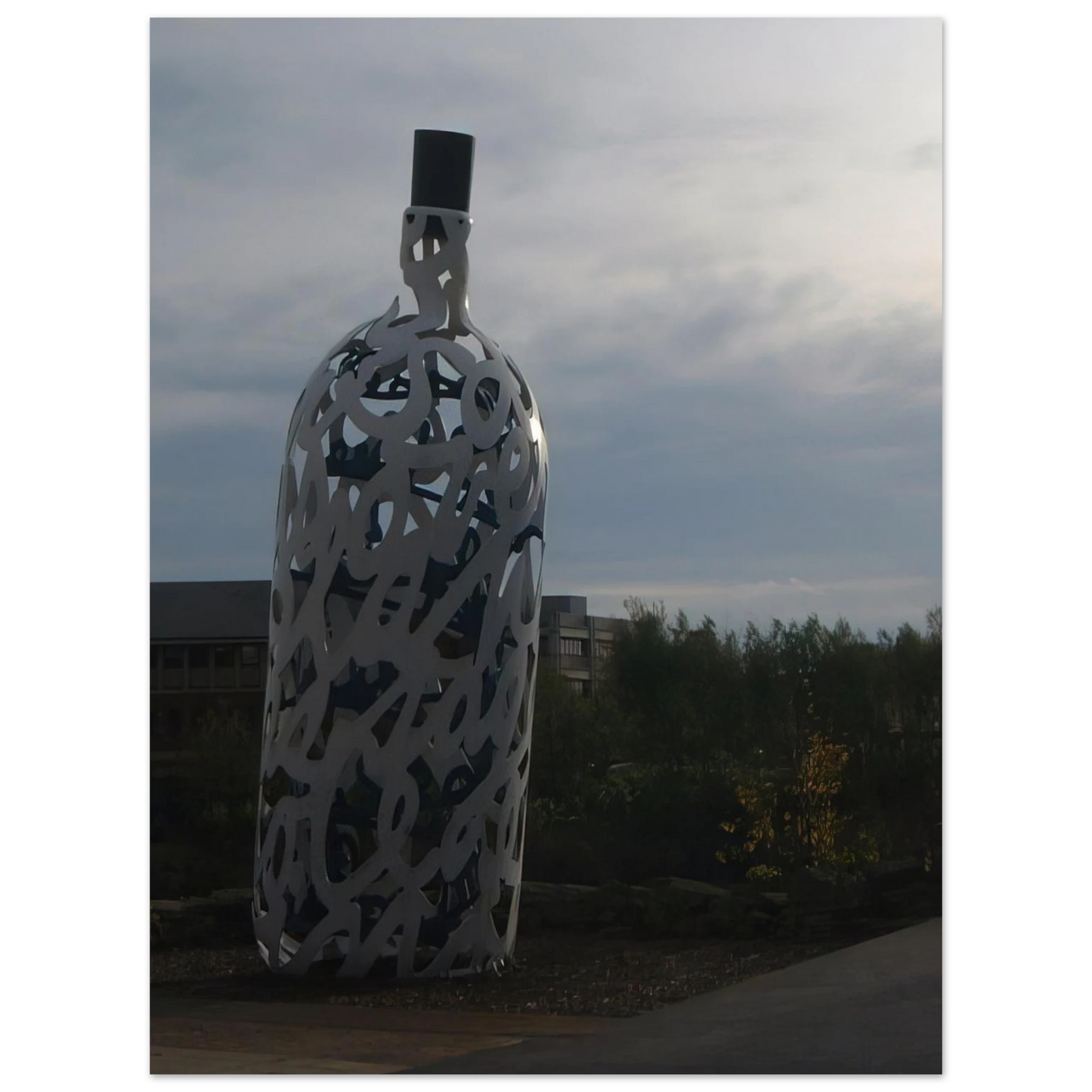
What makes the paper quality of this Oldenburg print ‘Museum-Grade’?
Our Master's Edition archival paper is 250 gsm (110 lb) and acid-free, ensuring the print remains vibrant without yellowing or deteriorating, meeting the strict standards of international art galleries.
Is the paper used for ‘The Bottle of Notes’ resistant to aging?
Yes. The paper is acid-free (pH above 7), which provides exceptional archival stability. This prevents the natural white finish from discoloring, preserving the Claes Oldenburg reproduction for decades.
How is the 75x100 cm fine art poster shipped?
Every 75x100 cm (30x40 inches) print is fulfilled on demand and shipped in secure, protective packaging to ensure it arrives at your door in gallery-ready condition.
What is the historical significance of ‘The Bottle of Notes’?
Commissioned in 1993, this work is a tribute to explorer Captain James Cook. It blends maritime history with Pop Art monumentalism, featuring text from Cook’s journals and Coosje van Bruggen’s poetry.
Is the production of this print environmentally sustainable?
Yes, RedKalion utilizes FSC-certified paper for this Oldenburg print, ensuring that the materials are sourced from responsibly managed forests that provide environmental and social benefits.
How does the matte finish affect the viewing experience?
The matte, uncoated finish eliminates reflections and glare, providing a luxurious, natural white texture that allows you to appreciate the intricate linework of the artwork from any angle.
Why did Claes Oldenburg use text inside the bottle structure?
The text creates a literal 'message in a bottle,' bridging the gap between sculpture and literature. It incorporates Captain Cook’s handwriting, adding a historical and personal dimension to the Pop Art form.