
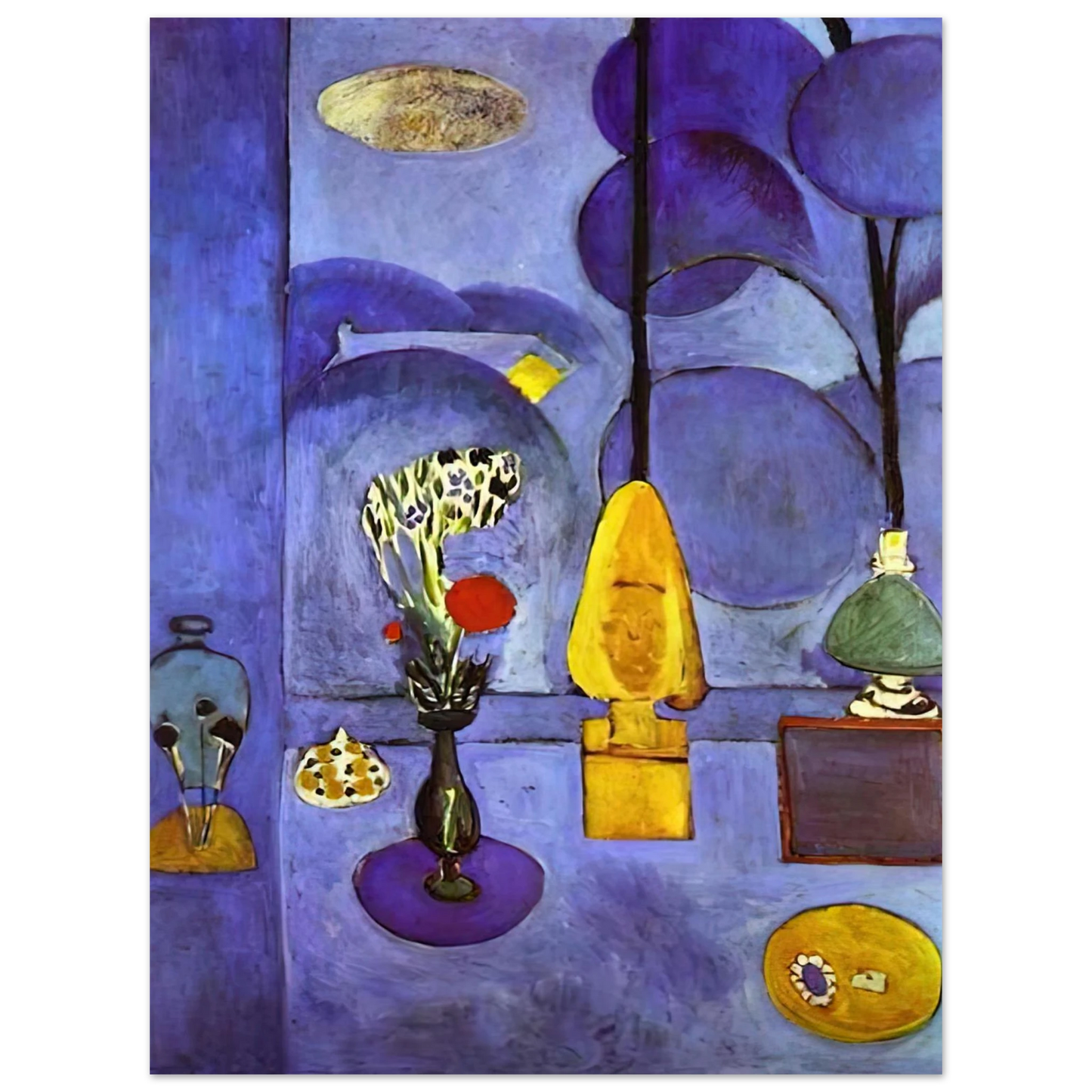
What is the significance of Henri Matisse's THE BLUE WINDOW?
THE BLUE WINDOW (1911) is a key Fauvist painting by Henri Matisse, showcasing his use of bold, expressive color and simplified forms to evoke emotion, marking a departure from traditional realism in modern art.
What are the dimensions of this fine art print?
This museum-quality reproduction measures 75x100 cm (30x40 inches), matching the original artwork's scale for an authentic display experience.
What type of paper is used for this archival print?
It's printed on Master's Edition archival paper, a matte, uncoated, natural white paper that is acid-free (pH above 7) and FSC-certified for premium quality and sustainability.
How is this print shipped and is there a minimum order?
We print and ship on demand with no minimum orders, ensuring each fine art poster is freshly produced and carefully packaged for secure delivery.
How long will this archival print last without fading or yellowing?
Made with acid-free materials (pH above 7), this print resists yellowing and fading, offering long-lasting durability for generations when displayed properly.
What artistic techniques did Matisse use in THE BLUE WINDOW?
Matisse employed Fauvist techniques like flat planes of vibrant color and simplified shapes to create emotional depth, focusing on the interplay of light and shadow through the window.
Why is the blue color so prominent in this artwork?
The dominant blue hue in THE BLUE WINDOW symbolizes tranquility and introspection, reflecting Matisse's interest in color as a means of expressing mood and atmosphere in modern art.