
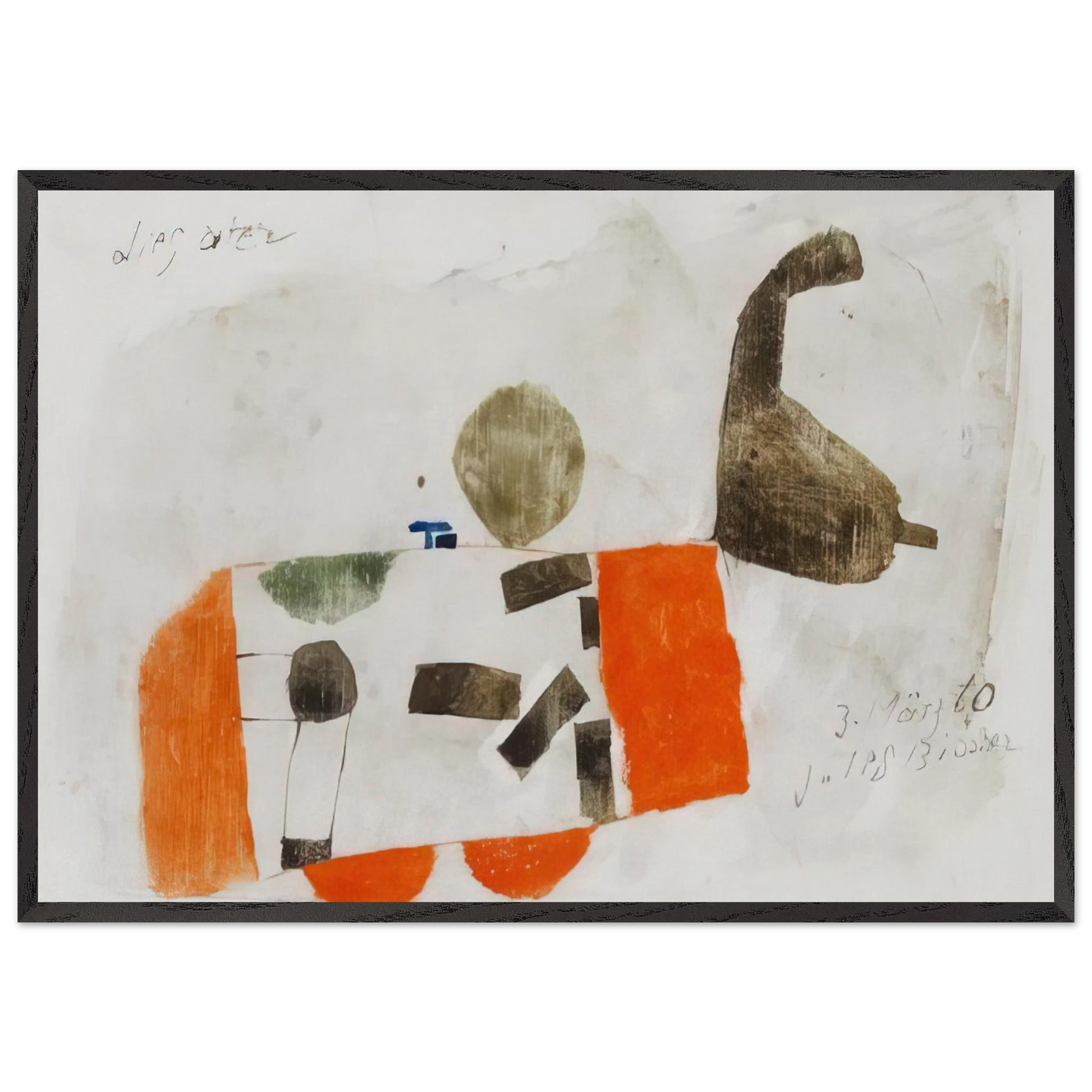
What is the historical significance of Julius Bissier's Komposition 3 Marz 60?
This 1960 work exemplifies Bissier's fusion of Eastern Zen calligraphy and Western abstraction, reflecting post-war spiritual renewal in European art through minimalist ink and tempera techniques.
How does the frame enhance this fine art print?
The black wooden frame, made from responsibly sourced oak and ash, is 20mm thick and wide, offering a bold, modern presentation that complements Bissier's abstract composition for a premium look.
What are the specifications of the museum-quality paper used?
It features 250 gsm (110 lb) matte, uncoated, natural white archival paper, 0.29 mm thick, with FSC-certified sustainable materials for long-lasting fine art reproduction quality.
Is this framed art print ready to hang?
Yes, it includes a hanging kit and is ready-to-hang directly on your wall, ensuring easy installation for your premium art print display.
How does the shatterproof plexiglass protect the print?
The shatterproof plexiglass safeguards against damage, providing durable protection while maintaining clarity for your archival-grade reproduction of Bissier's masterpiece.
What makes Julius Bissier's technique unique in this artwork?
Bissier used ink and tempera on paper, blending spontaneous gestures with subtle tonal layers to create meditative, abstract compositions influenced by Zen philosophy.
Why choose RedKalion for this archival reproduction?
RedKalion specializes in museum-quality prints with accurate color reproduction, sustainable materials, and expert framing, ensuring trust and authority in fine art reproductions.