
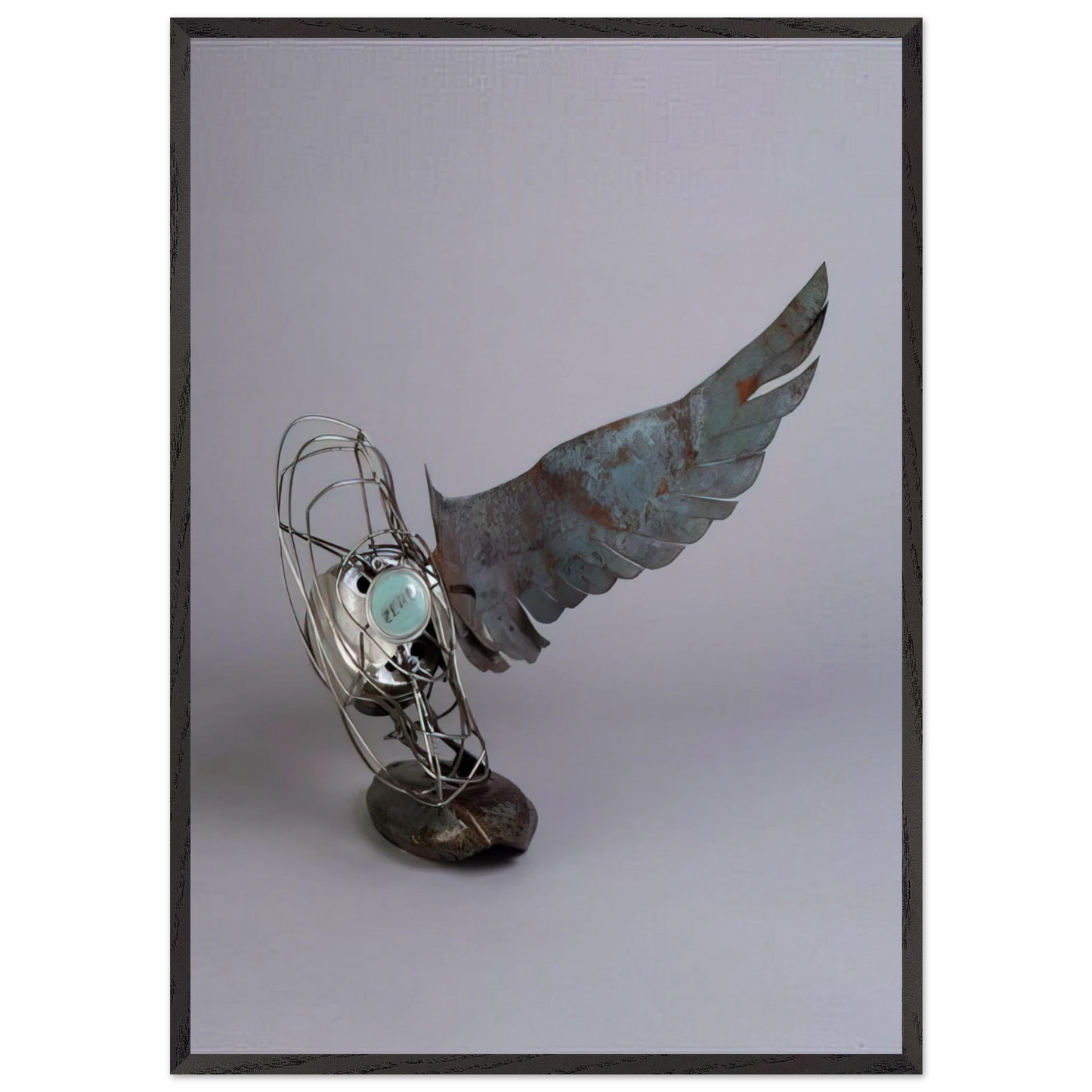
What is the significance of "Mercury Zero Summer Glut 1987" by Robert Rauschenberg?
This 1987 work showcases Rauschenberg's innovative Combine techniques, blending silkscreen, painting, and collage to explore themes of memory and consumer culture in late-20th-century art, making it a sought-after fine art print for collectors.
What are the specifications of the paper used for this framed art print?
The print uses 250 gsm (110 lb) matte, uncoated, natural white archival museum-quality paper with a thickness of 0.29 mm (11.4 mils), ideal for a premium reproduction that ensures longevity and vibrant color fidelity.
How is the black wooden frame constructed and what are its dimensions?
The frame is made from responsibly sourced oak and ash wood, measuring 20mm (0.79") thick and wide—wider than classic 14mm frames—for a modern, sturdy presentation that complements this museum-quality art print.
Is this framed print ready to hang, and what protection does it include?
Yes, it comes ready-to-hang with a hanging kit and features shatterproof plexiglass to protect the archival print from damage, ensuring easy installation and durable display in your home.
What makes this a sustainable and archival-quality art reproduction?
It uses FSC-certified sustainable paper and materials, combined with archival-grade printing techniques, to offer a long-lasting fine art print that meets museum standards for preservation and eco-friendliness.
How did Robert Rauschenberg's techniques influence "Mercury Zero Summer Glut 1987"?
Rauschenberg employed silkscreen and collage methods in this piece, layering imagery to create a textured, narrative-rich composition that reflects his role in bridging Abstract Expressionism and Pop Art movements.
What is the historical context of this artwork from 1987?
Created in the late 1980s, this work captures Rauschenberg's ongoing exploration of global themes and media hybridization, aligning with his later career focus on environmental and social commentary through mixed-media art.