
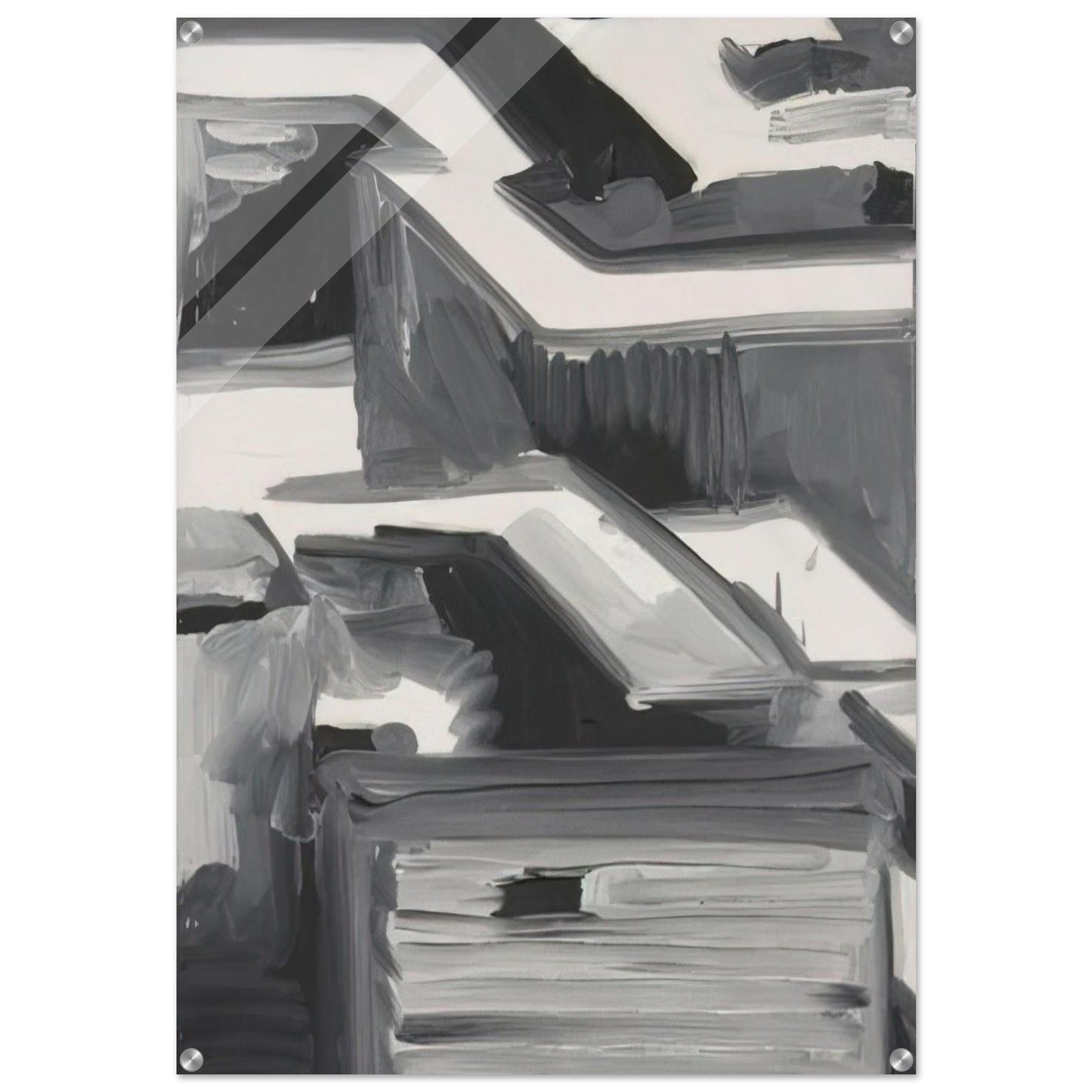
What is the historical significance of TOWNSCAPE 1968 0 by Gerhard Richter?
Created in 1968, this work reflects Richter's transition between photorealism and abstraction, using blurred techniques to explore urban memory and modernity in post-war Germany, making it a key piece in 20th-century art history.
How does Richter's technique in TOWNSCAPE 1968 0 affect the artwork's appearance?
Richter employed smearing and scraping of paint to create a blurred, textured effect that mimics photographic ambiguity, enhancing the emotional depth and abstract quality of this urban landscape print.
What are the specifications of the acrylic material used for this fine art print?
This museum-quality reproduction features a 4mm (0.15") thick acrylic substrate, offering a sleek, vibrant finish with durability and fade resistance for long-lasting display.
How is the hanging kit included with this acrylic print designed for installation?
The kit includes hardware, screws, and pre-drilled holes at each corner (14mm from the edge, 8mm diameter, 15mm screw head) for easy, secure mounting of your 70x100 cm print.
What is the archival quality of this Gerhard Richter reproduction?
RedKalion uses premium materials to ensure archival longevity, with the acrylic print resisting fading and damage, preserving the artwork's vibrancy for years as a durable art piece.
Why are transparent backgrounds in TOWNSCAPE 1968 0 rendered as white in this print?
Transparent areas default to white to optimize contrast and presentation, enhancing the visual impact of Richter's abstract composition in this modern art reproduction.
How does the straight-cut corner design contribute to the modern look of this print?
Straight-cut corners provide a clean, contemporary aesthetic that complements the abstract nature of TOWNSCAPE 1968 0, aligning with minimalist and modern interior styles.