
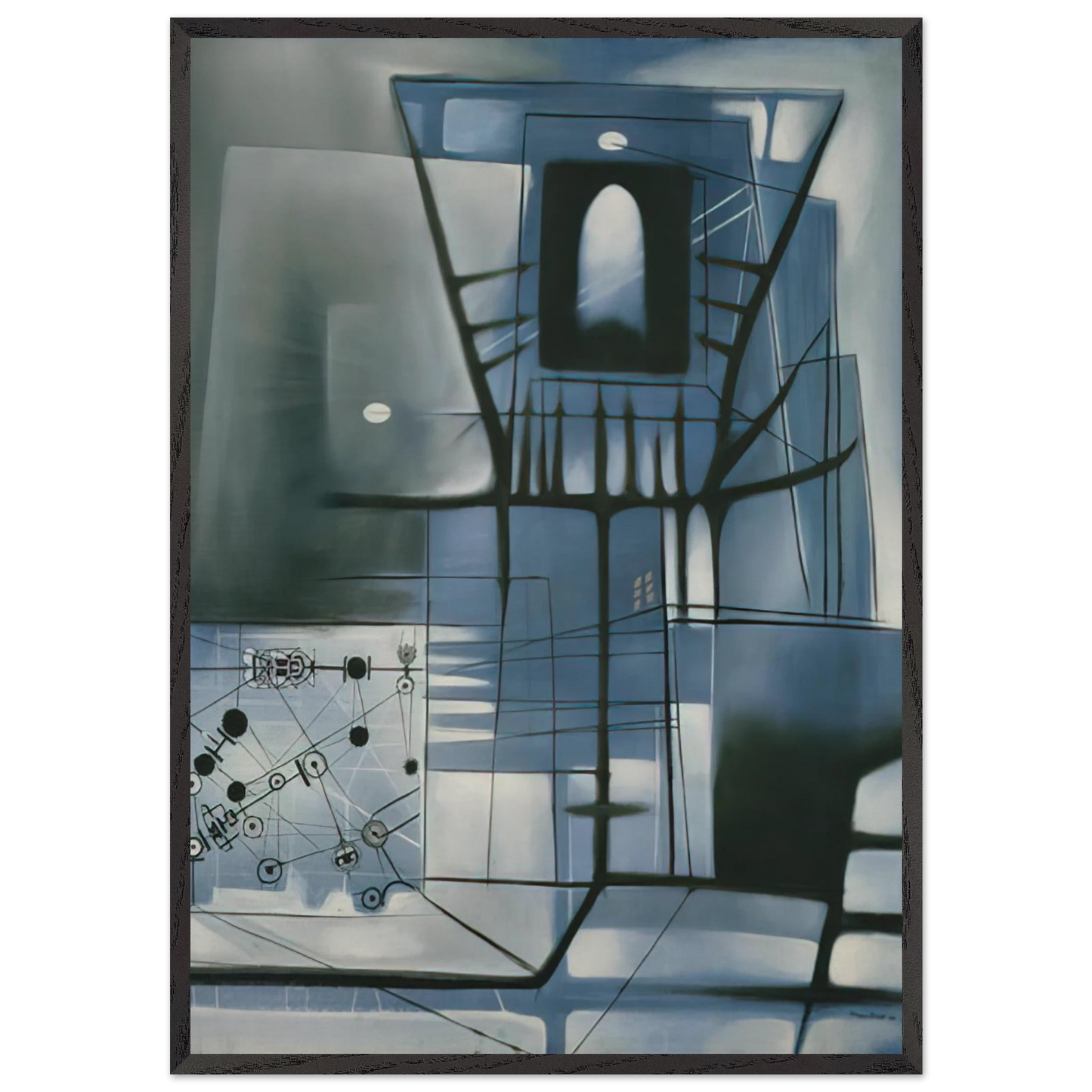
What makes this Jimmy Ernst print museum-quality?
We use 250 gsm archival-grade, natural white paper with a matte finish. This ensures the 1949 artwork maintains its color integrity and detail without glare, meeting the standards required for museum exhibitions and long-term fine art preservation.
What are the specifications of the black wooden frame?
The frame is crafted from FSC-certified black oak or ash wood. It measures 20mm (0.79") in both width and thickness, offering a robust, premium profile that is significantly more durable than the industry-standard 14mm frames.
Is the artwork protected during shipping and display?
Yes, each print is protected by high-quality, shatterproof plexiglass. This provides the clarity of glass while ensuring the artwork is safe from breakage during transit and remains protected from dust and environmental wear once hung.
Are the materials used for this print sustainable?
Sustainability is a core value at RedKalion. We exclusively use FSC-certified wood for our frames and paper, or equivalent regional certifications, ensuring your art print is as environmentally responsible as it is beautiful.
How is the artwork prepared for hanging?
Your Jimmy Ernst framed print arrives fully assembled and ready-to-hang. We include a complete hanging kit, allowing you to easily mount this large-format 70x100 cm piece directly onto your wall upon arrival.
What is the significance of the 1949 date in Jimmy Ernst's career?
1949 was a pivotal year for Jimmy Ernst, marking his transition toward more complex, linear abstractions. It represents his attempt to visualize the internal psychological tensions and geopolitical anxieties of the post-war American landscape.
What technique did Jimmy Ernst use in 'A Time for Fear'?
Ernst utilized a meticulous, precisionist approach often described as a 'web' or 'lattice' technique. He focused on fine lines and architectural structures to create depth and a sense of fragile balance within the abstract form.