


Discover Unlimited Art Possibilities
At RedKalion, you can find virtually any artwork from any artist, available in a wide range of sizes to perfectly match your space.
If you didn’t find what you’re looking for, contact us at support@redkalion.com . We will source any artwork and produce it in any size and format you need, including art prints, posters, canvas, framed pieces, framed canvas, and more.
For dedicated art enthusiasts, we also offer handcrafted replicas of any artwork, carefully painted by highly skilled artists using traditional techniques.
For custom requests, contact us at support@redkalion.com .
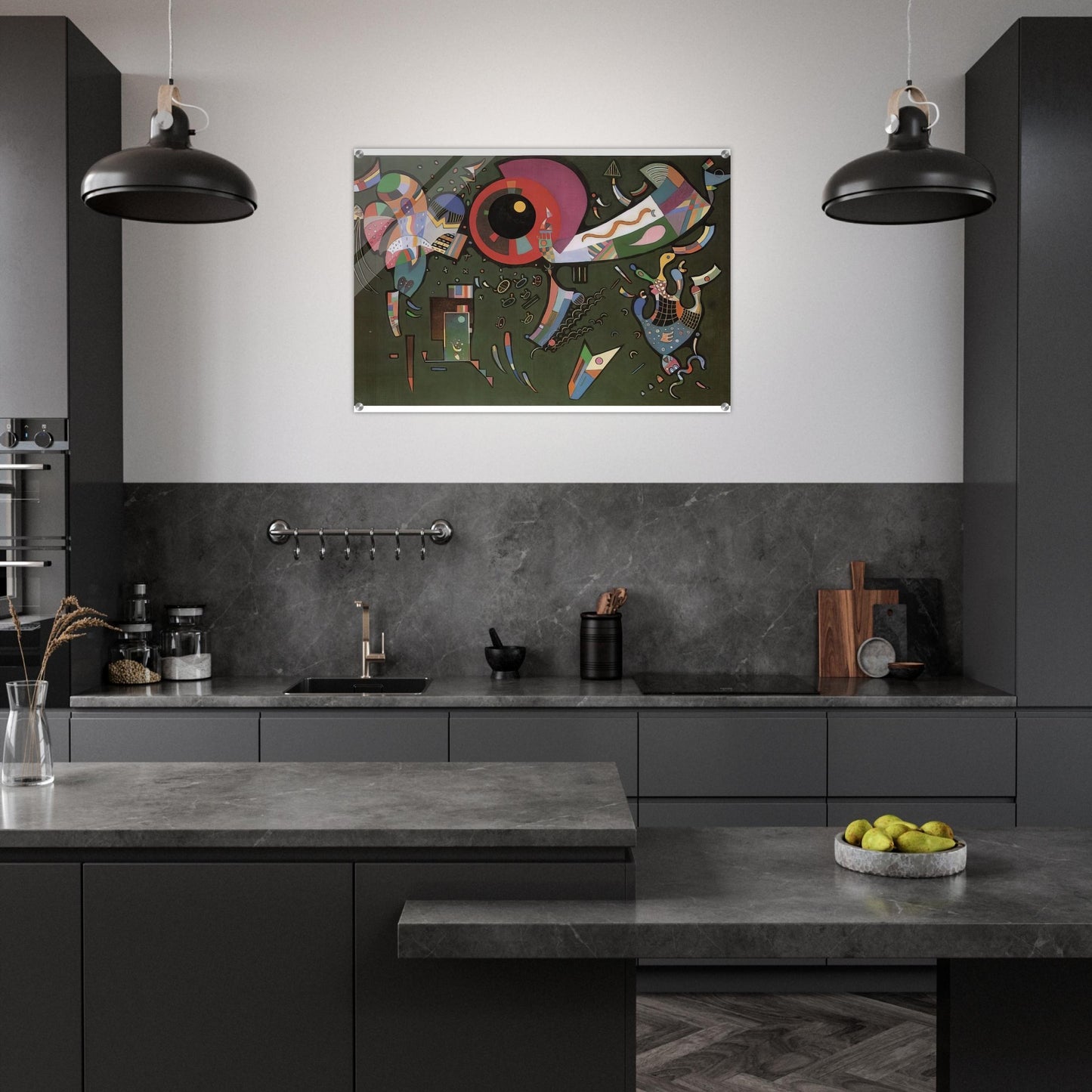
What materials are used for this Kandinsky print?
This reproduction is crafted using high-quality 4mm (0.15") acrylic. This material provides a sleek, vibrant finish that protects the artwork while offering incredible depth and a modern, glass-like appearance.
Is the mounting hardware included with the acrylic print?
Yes, each print includes a dedicated hanging kit with screws. The acrylic features pre-drilled holes at each corner (14mm from the edge, 8mm diameter) for a secure and professional display.
How does the print handle transparency in the original artwork?
To ensure the most vibrant and legible presentation of Kandinsky's colors, any transparent backgrounds in the digital file default to white during the printing process on the 4mm acrylic.
Will the colors fade over time?
RedKalion uses archival-grade printing techniques on durable acrylic to ensure longevity. Our museum-quality reproductions are designed to maintain their color integrity and resist fading for decades under normal indoor conditions.
What is the shipping and protection process for large prints?
We prioritize the safety of your masterpiece. Each 70x100 cm acrylic print is carefully packaged with protective layers and shipped in specialized containers to ensure it arrives in pristine, gallery-ready condition.
What was the inspiration behind Kandinsky's 'Around the Circle'?
Painted in 1940, it reflects Kandinsky’s fascination with biomorphic forms and the synthesis of geometric abstraction. It was influenced by his move to Paris and his interest in microscopic organisms and cosmic structures.
Why is the year 1940 significant for Wassily Kandinsky’s work?
1940 marks Kandinsky's late period in Paris. During this time, his work shifted from the rigid structures of the Bauhaus toward a more fluid, rhythmic, and organic style often referred to as his 'great synthesis.'