
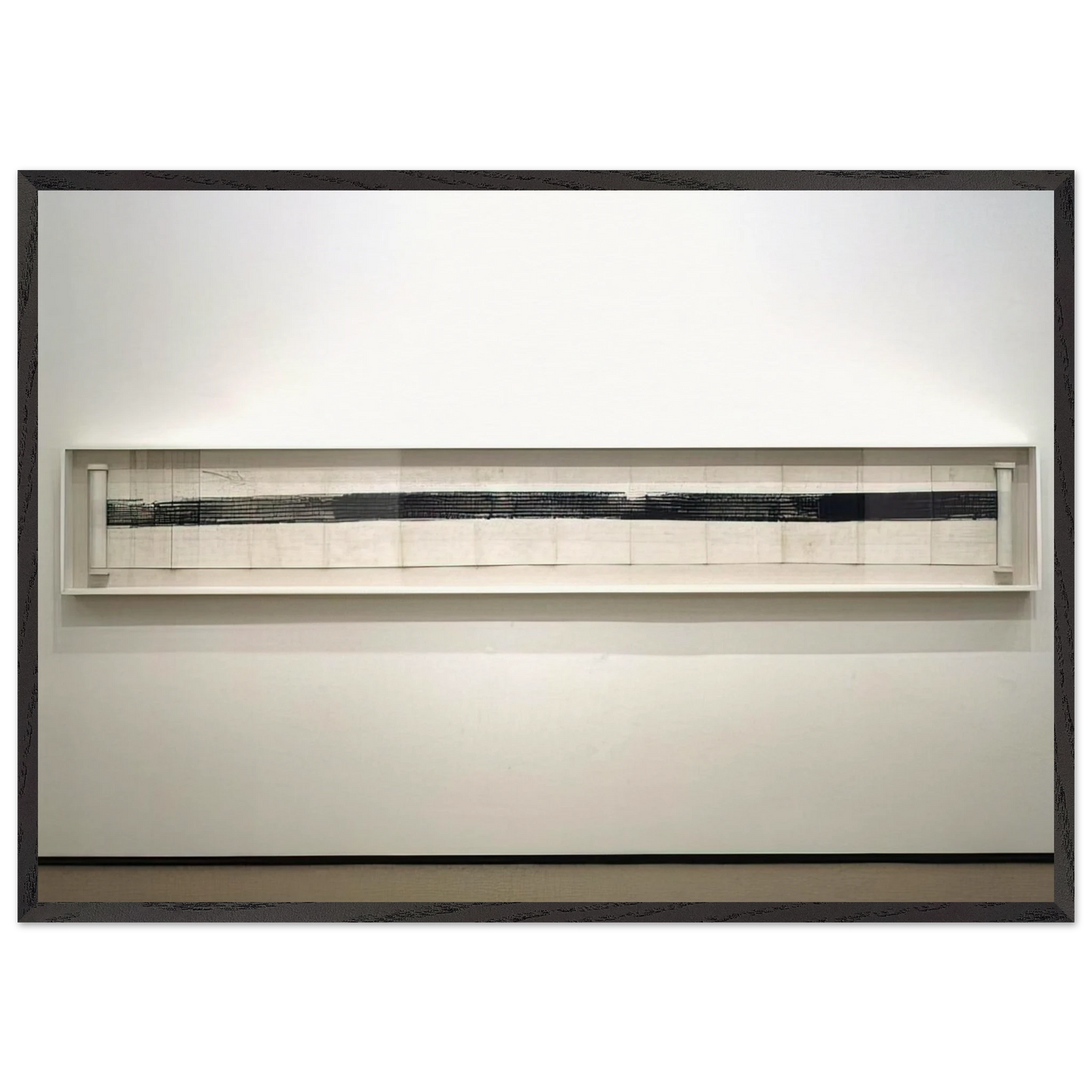
What makes the Automobile Tire Print historically significant?
Created in 1953, it is a landmark collaboration between Robert Rauschenberg and John Cage. It challenged traditional art by using a car tire as a mechanical tool for mark-making, prefiguring Pop Art and conceptualism.
What are the specifications of the paper used for this print?
We use 250 gsm (110 lb) archival museum-quality paper. It is natural white, matte, and uncoated, providing a sophisticated finish that prevents glare and ensures long-term durability.
How is the frame constructed and what are its dimensions?
The frame is made from responsibly sourced oak and ash wood, finished in black. It measures 20mm (0.79") in both thickness and width, offering a more robust profile than standard frames.
Does the print arrive ready to hang on the wall?
Yes, each framed Robert Rauschenberg print includes a professional-grade hanging kit. The artwork is pre-assembled and ready to be displayed immediately upon arrival.
How does RedKalion ensure the print is protected during shipping?
We utilize shatterproof plexiglass to protect the print surface and employ reinforced, gallery-standard packaging to ensure your artwork arrives in pristine condition regardless of the destination.
Who collaborated with Robert Rauschenberg on the original 1953 piece?
The avant-garde composer John Cage collaborated on the piece. Cage drove his Model A Ford over the paper while Rauschenberg applied black paint to the tire, creating a 22-foot long continuous track.
Are the materials used in this reproduction sustainable?
Absolutely. We use FSC-certified paper and wood or equivalent sustainable certifications, ensuring that your fine art print is produced with respect for the environment.