


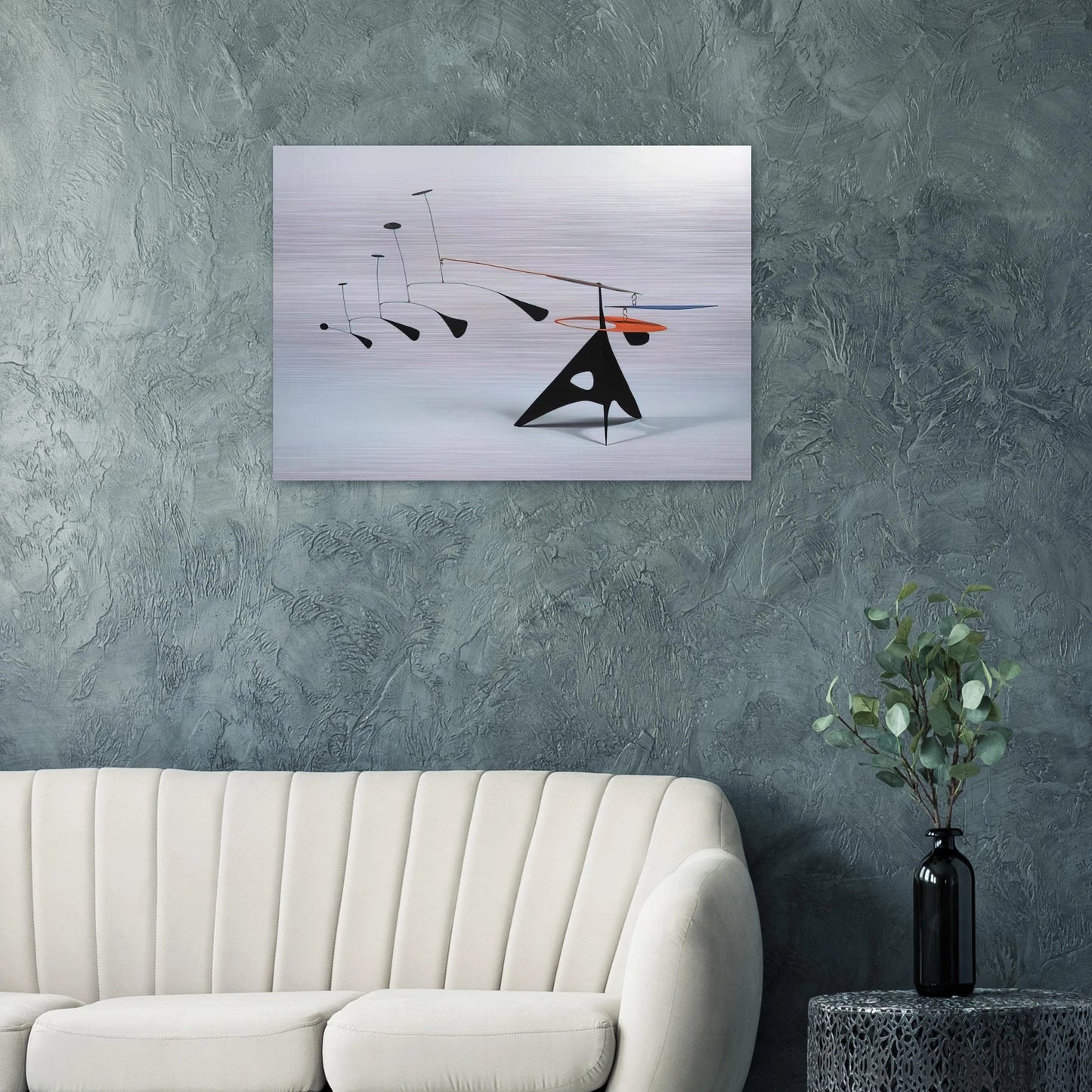
What makes the "Blue Feather" aluminum print unique?
This print utilizes brushed silver Aluminum DIBOND®, where the horizontal metallic grain interacts with Alexander Calder’s abstract forms. Unlike traditional paper, the silver finish adds a modern, industrial depth to the 1948 composition, making it a truly contemporary fine art piece.
What are the physical specifications of this Alexander Calder aluminum print?
The artwork is printed on a 3mm (0.12") thick Aluminum DIBOND® panel. It measures 70x100 cm (28x40 inches) and features a matte, glare-free finish. The direct print technology ensures the colors remain vibrant and archival-grade for decades.
How does the brushed silver finish affect the visual appearance?
The brushed finish creates a dynamic look; any white or unprinted areas in the "Blue Feather" design reveal the raw silver metallic texture. This grain reflects light subtly, providing a sophisticated alternative to standard high-gloss prints.
Is the hanging hardware included with the artwork?
Yes, every Alexander Calder print from RedKalion comes with a high-quality hanging kit included. The specific type of hardware provided is optimized based on the fulfillment country to ensure a secure and level display.
How is the print protected against fading over time?
Our archival-grade direct printing process on AluDibond is highly resistant to UV rays and environmental factors. This ensures that the deep blues and sharp blacks of Calder's 1948 masterpiece retain their original intensity without yellowing or fading.
What was the significance of 1948 in Alexander Calder's career?
By 1948, Calder had perfected the balance between his mobile and stabile forms. This era represents his peak maturity, where he transitioned into the large-scale, iconic abstract works that now define mid-century modern art history.
Does the metallic effect appear across the entire surface?
The metallic silver effect is most prominent in the white or unprinted areas of the design. The colored sections feature a matte finish, creating a sophisticated contrast between the pigment and the raw brushed aluminum grain.