Skip to product information
1 of 1

RedKalion

Candy Counter - 1963 - Wayne Thiebaud 70x100 cm / 28x40 inches Framed Art Print – Black Wooden Frame

Candy Counter - 1963 - Wayne Thiebaud 70x100 cm / 28x40 inches Framed Art Print – Black Wooden Frame

Regular price $449.99 USD
Regular price $999.99 USD Sale price $449.99 USD
Sale Sold out
Quantity

Elevate Your Space with Wayne Thiebaud’s Candy Counter (1963)

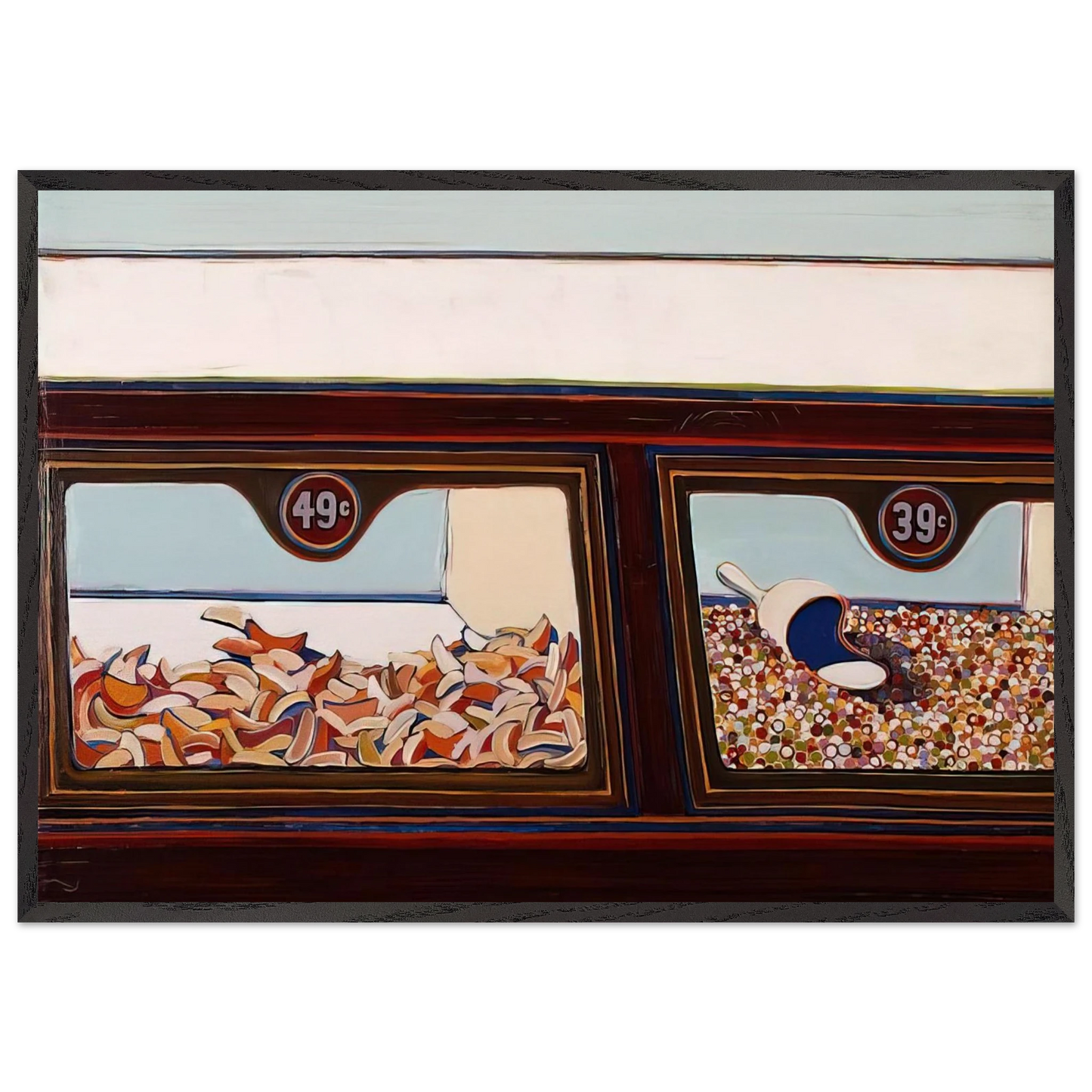
Experience the sophisticated nostalgia of mid-century Americana with this museum-quality reproduction of Wayne Thiebaud’s iconic 1963 masterpiece, Candy Counter. This 70x100 cm (28x40 inches) framed art print captures the essence of the Pop Art movement through Thiebaud’s unique lens, where everyday consumer goods are elevated to the status of fine art through meticulous composition and a rich, vibrant palette.

At RedKalion, we believe fine art should be an enduring investment. This reproduction is meticulously crafted on 250 gsm (110 lb) archival museum-quality paper. The natural white, matte finish eliminates glare while preserving the subtle color transitions and "haloing" effect—a technique where Thiebaud used contrasting outlines to make his subjects vibrate with life. This archival-grade paper ensures that the lush textures and rhythmic symmetry of the candy jars remain as vivid as the 1963 original.

The artwork is housed in a premium black wooden frame, expertly crafted from responsibly sourced oak or ash. Unlike standard commercial frames, ours features a 20mm (0.79") thickness and width, providing a bold, gallery-standard presence on your wall. Each piece is protected by shatterproof plexiglass, ensuring your investment is shielded from the elements while maintaining crystal-clear visibility.

  • Archival Excellence: Printed on FSC-certified, 250 gsm acid-free paper for generational longevity.
  • Premium Framing: Solid black oak/ash frame with a substantial 20mm profile.
  • Museum-Grade Protection: High-clarity, shatterproof plexiglass preserves the print.
  • Ready to Hang: Includes a professional hanging kit for immediate installation.

Thiebaud’s work is celebrated for its "heavy shadows" and geometric precision. By bringing Candy Counter into your collection, you are not just hanging a print; you are installing a piece of art history that balances commercial charm with classical painterly tradition.

View full details
What is the quality of the paper used for this Thiebaud print?

Our Wayne Thiebaud prints use 250 gsm (110 lb) natural white museum-quality paper. The matte, uncoated finish ensures archival longevity, making it ideal for fine art reproductions that require depth and color accuracy without the distraction of glare.

Is the black wooden frame sustainably sourced?

Yes. The black wooden frame is crafted from responsibly sourced oak and ash wood, meeting FSC-certified standards. With a 20mm (0.79") thickness, it provides a premium, sturdy structure compared to thinner, mass-market frames.

How is the artwork protected from damage?

We utilize high-quality, shatterproof plexiglass. This provides the clarity of traditional glass while offering superior protection against breakage and UV exposure, ensuring your Candy Counter print remains pristine in any environment.

Does the print come ready to hang?

Absolutely. Your 70x100 cm framed art print arrives fully assembled with a specialized hanging kit. The 20mm wide frame is designed for immediate wall mounting, providing a seamless gallery experience in your home or office.

What is the archival lifespan of this reproduction?

Designed to endure for generations, this print uses archival-grade materials. The acid-free, 250 gsm paper and lightfast inks prevent yellowing and fading, ensuring the vibrant hues of the 1963 original remain consistent over time.

Why is Wayne Thiebaud's 'Candy Counter' considered significant?

Candy Counter (1963) is a quintessential example of Thiebaud's exploration of Americana. It reflects the post-war boom of consumerism through the lens of nostalgia, using rhythmic composition and repetitive forms to find beauty in the everyday.

What artistic technique defines Thiebaud's 1963 period?

Thiebaud is famous for 'haloing'—the use of intense, contrasting colors along the edges of objects to create a shimmering effect. This technique, combined with a focus on geometric arrangement, gives his subjects a unique, vibrant presence.