
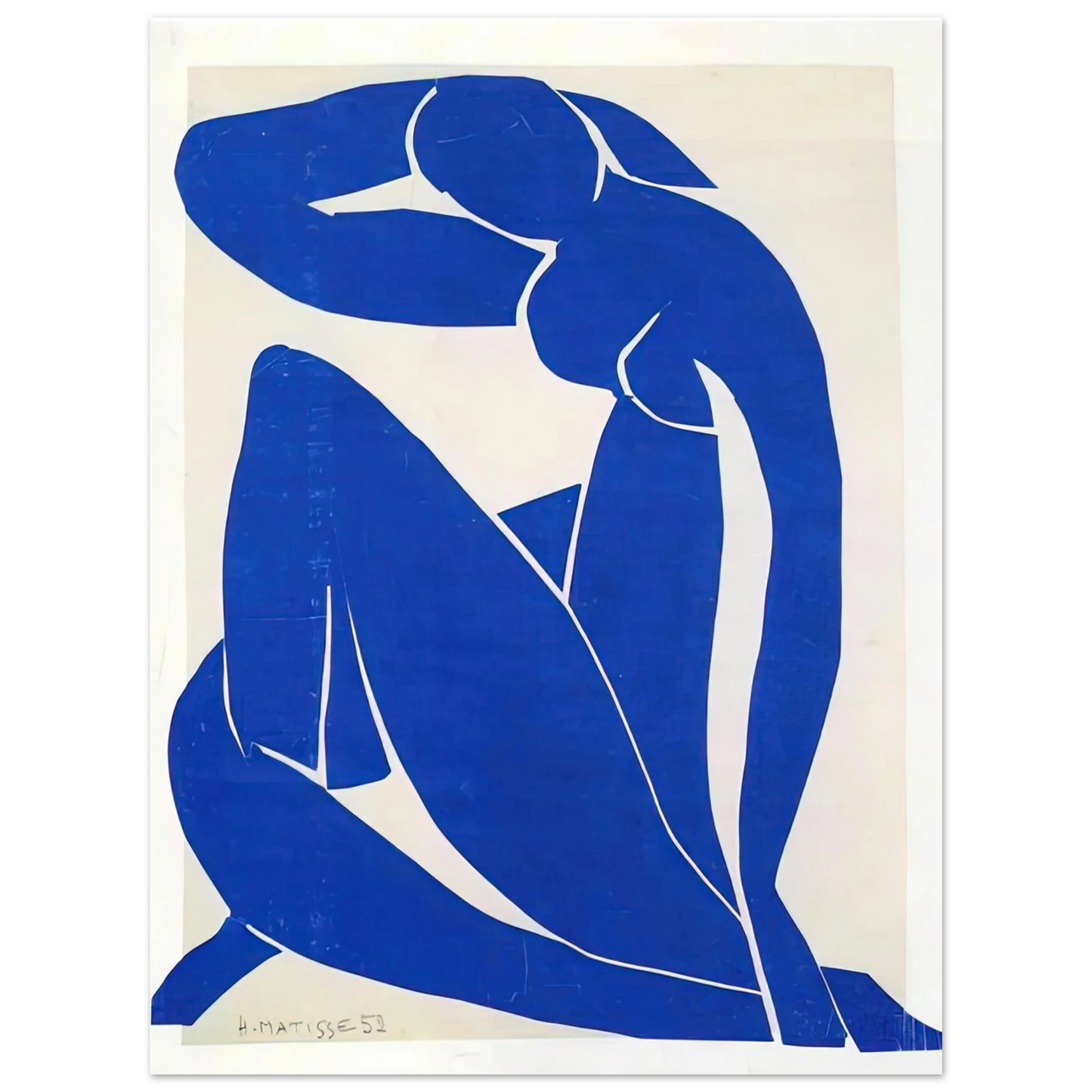
What is the historical significance of Henri Matisse's Blue Nude 1952?
Blue Nude 1952 is a key example of Matisse's late cut-out period, where he used painted paper cut-outs to explore simplified forms and bold colors, revolutionizing modern art with its abstract yet expressive depiction of the human figure.
How does the cut-out technique in Blue Nude 1952 reflect Matisse's artistic evolution?
This technique allowed Matisse to focus on pure color and shape, moving beyond traditional painting to create dynamic compositions that emphasize emotional resonance over realistic detail, marking a shift towards abstraction in his career.
What are the specifications of the paper used for this fine art print?
This museum-quality reproduction is printed on Master's Edition archival paper with a matte, uncoated finish, natural white tone, 250 gsm weight, and 0.29 mm thickness, ensuring durability and a luxurious texture for your art collection.
Is this print archival and long-lasting?
Yes, it uses acid-free paper with a pH above 7 to prevent yellowing over time, making it a durable, museum-quality fine art print that maintains its vibrant colors for generations.
How is the print shipped and are there minimum order requirements?
We offer no minimum orders and print and ship on demand, providing a convenient and sustainable way to receive this Henri Matisse Blue Nude 1952 poster directly to your door.
What makes this reproduction museum-quality?
It faithfully replicates Matisse's original colors and composition using high-resolution techniques on premium archival paper, meeting the standards of fine art galleries and collectors for authenticity.
Can I use this print for framing in my home or office?
Absolutely, its 75x100 cm (30x40 inches) size and matte finish make it ideal for framing, enhancing any space with a touch of modernist elegance from this iconic Blue Nude artwork.