
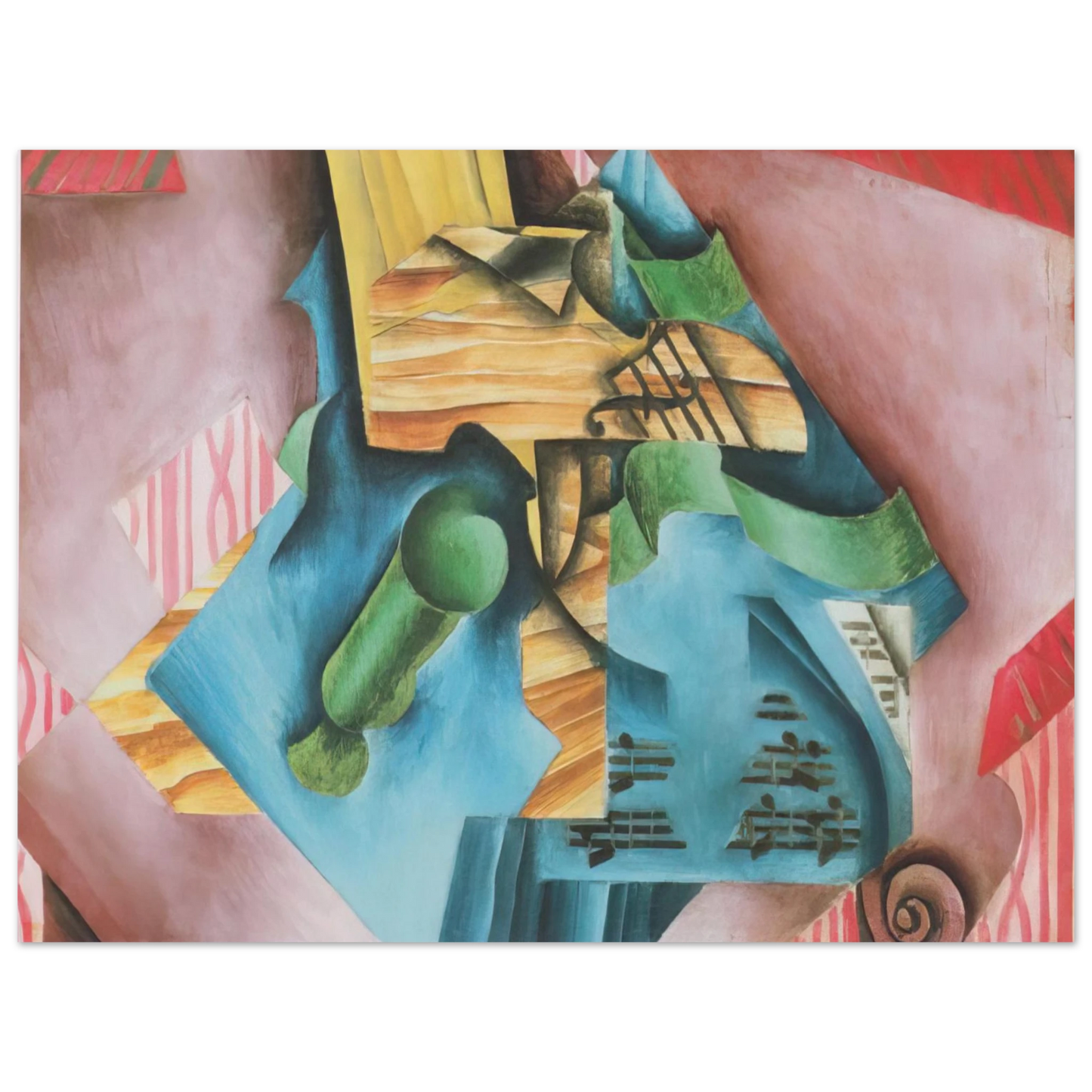
What is the historical significance of Juan Gris's "Violine and Glass" (1913)?
This artwork is a seminal piece of Synthetic Cubism, where Gris deconstructed everyday objects like a violin and glass into geometric forms, emphasizing intellectual composition over realistic depiction in early 20th-century avant-garde art.
How does the paper quality ensure a museum-grade reproduction?
Our Master's Edition archival paper is acid-free (pH above 7) and FSC-certified, with a matte, uncoated finish and 250 gsm weight, providing a luxurious texture and longevity that resists yellowing for a premium fine art print.
What are the exact dimensions of this fine art poster?
The print measures 75x100 cm (30x40 inches), matching the original artwork's scale for an authentic display in your home or office as a museum-quality reproduction.
How is the print shipped and what is the fulfillment process?
It is printed and shipped on demand with no minimum orders, ensuring fresh production and careful handling for delivery of your archival Cubist art print.
Is this print environmentally sustainable?
Yes, it uses FSC-certified paper, supporting responsible forestry for an eco-conscious fine art poster that combines quality with sustainability.
What artistic techniques did Juan Gris use in this piece?
Gris employed Synthetic Cubism, layering fragmented planes and muted colors to reconstruct objects like the violin and glass, focusing on abstract harmony rather than realistic detail.
How does the matte finish enhance the viewing experience?
The matte, uncoated finish reduces glare and provides a natural white texture, allowing the geometric forms and colors of this Cubist print to be appreciated without distraction.