
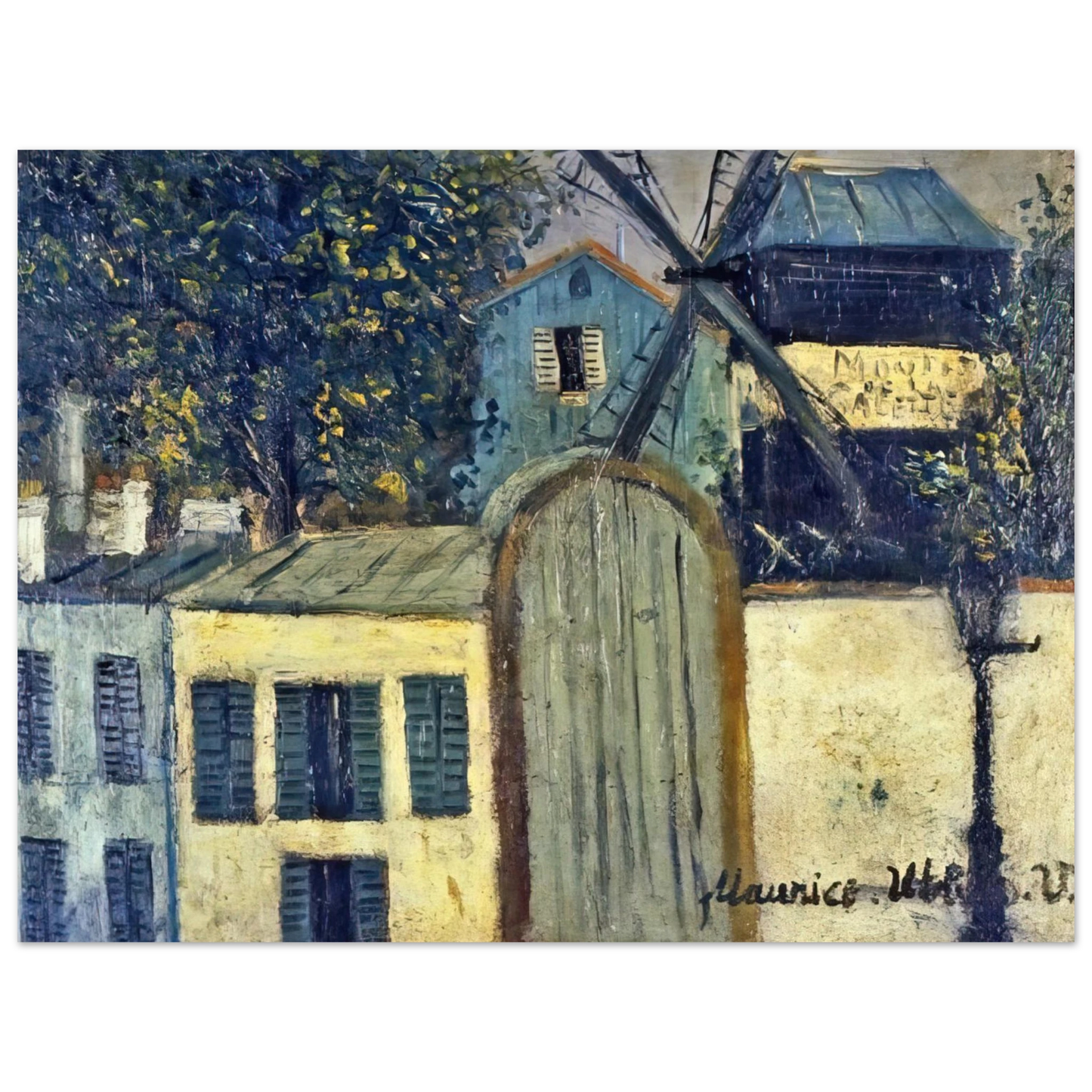
What is the historical significance of Maurice Utrillo's "Moulin de la Galette 1"?
This painting depicts the famous Montmartre windmill, a hub for artists and writers in early 1900s Paris, showcasing Utrillo's "White Period" style with textured, melancholic urban scenes that capture bohemian life.
How does Utrillo's technique influence the reproduction quality?
Utrillo's use of thick impasto, often with added materials like plaster, is honored in our museum-quality print through a matte finish that mimics the original's tactile depth and subtle tonal variations.
What are the specifications of the Master's Edition archival paper?
It features a natural white, matte finish, 250 gsm (110 lb) weight, 0.29 mm thickness, acid-free (pH above 7) for longevity, and FSC-certified sustainability, ensuring a premium fine art poster experience.
How is this fine art print shipped and delivered?
Printed and shipped on demand with no minimum orders, it arrives carefully packaged to protect the museum-quality reproduction during transit.
Will this archival print resist yellowing over time?
Yes, the acid-free (pH above 7) paper prevents yellowing, maintaining the artwork's vibrancy as a durable, long-lasting addition to your collection.
What makes the Moulin de la Galette an iconic subject in art history?
The windmill was a legendary Montmartre landmark frequented by artists like Renoir and Picasso, symbolizing Parisian bohemian culture and inspiring numerous works across movements.
How does the matte finish enhance this reproduction?
The uncoated, matte finish reduces glare and provides a luxurious texture that complements Utrillo's chalky style, ideal for displaying in various lighting conditions.