Skip to product information
1 of 1

RedKalion

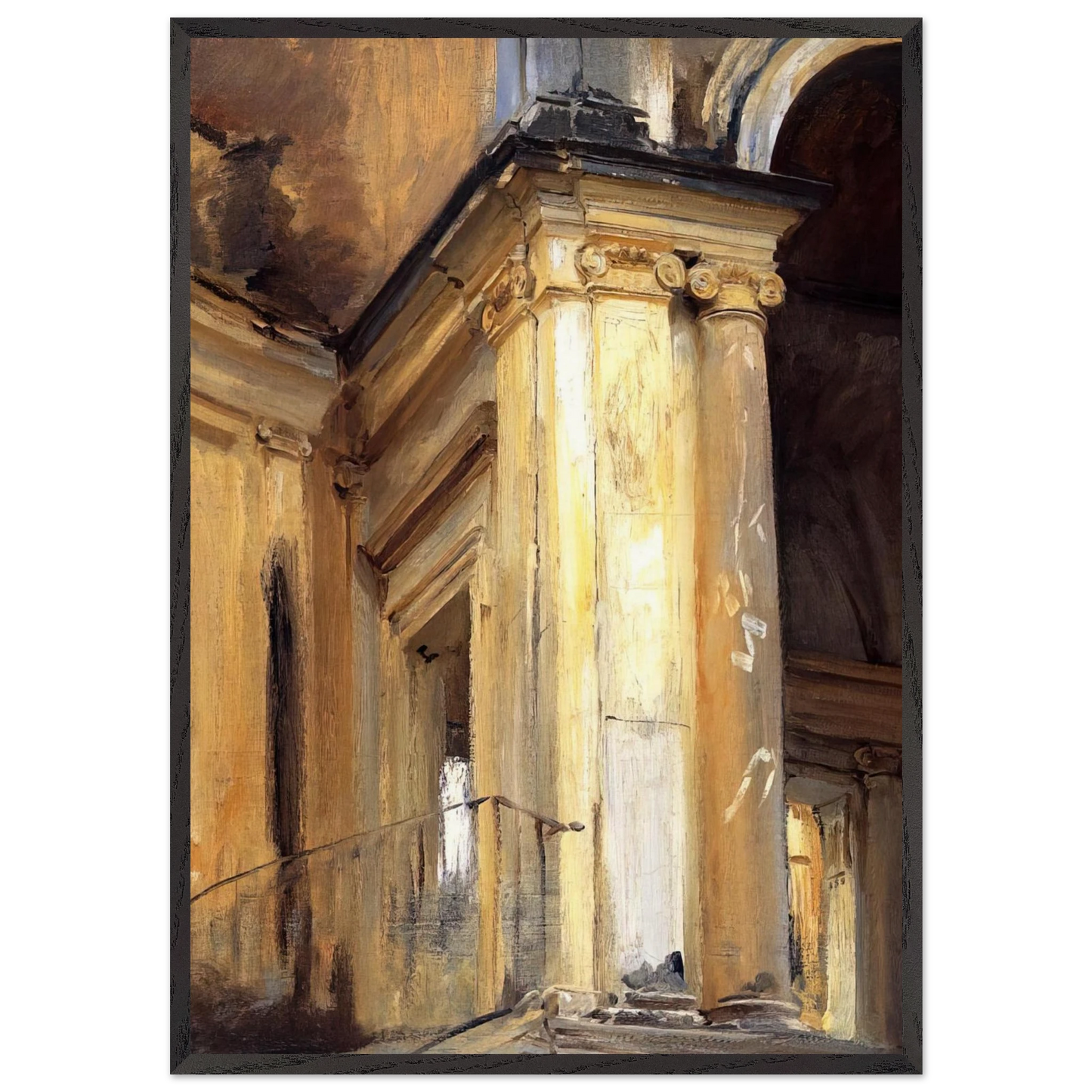
Roman Architecture - John Singer Sargent 70x100 cm / 28x40 inches Framed Art Print – Black Wooden Frame

Roman Architecture - John Singer Sargent 70x100 cm / 28x40 inches Framed Art Print – Black Wooden Frame

Regular price $449.99 USD
Regular price $999.99 USD Sale price $449.99 USD
Sale Sold out
Quantity

Roman Architecture by John Singer Sargent: A Masterful Framed Art Print

Elevate your space with John Singer Sargent's Roman Architecture, a museum-quality reproduction that captures the grandeur of classical antiquity through the eyes of a master painter. This fine art print measures 70x100 cm / 28x40 inches, presented in a sophisticated black wooden frame, ready to transform any room into a gallery of timeless elegance.

Artistic Significance & Historical Context

John Singer Sargent (1856–1925), renowned for his virtuosic portraiture and luminous landscapes, also excelled in architectural studies during his travels across Europe. Roman Architecture reflects his keen eye for detail and mastery of light, showcasing the enduring beauty of ancient Roman structures. Sargent's technique—characterized by loose, expressive brushstrokes and a nuanced palette—brings these historic edifices to life, evoking a sense of awe and historical continuity. This piece is not merely a depiction of stone and mortar; it's a window into the artistic dialogue between past and present, ideal for connoisseurs of art history and classical aesthetics.

Premium Physical Specifications

RedKalion ensures every detail meets the highest standards of quality and durability. Our framed art print features:

  • Frame: Crafted from responsibly sourced oak and ash wood, with a substantial 20mm (0.79") thickness that provides a bold, gallery-worthy presence, wider than the classic 14mm frame.
  • Print: Produced on archival museum-quality paper (250 gsm / 110 lb, 0.29 mm thick), offering a matte, uncoated, natural white finish that enhances color fidelity and resists fading.
  • Protection: Secured with shatterproof plexiglass to safeguard against damage while maintaining clarity.
  • Sustainability: Printed on FSC-certified materials, aligning with eco-conscious values.
  • Convenience: Ready-to-hang with an included hanging kit, allowing for immediate display without additional setup.

This fine art reproduction is more than a decoration; it's an investment in beauty and heritage, designed to endure for generations. Trust RedKalion, your premier curator of museum-quality prints, to deliver an archival masterpiece that honors Sargent's legacy and enriches your environment.

View full details
What are the dimensions of this John Singer Sargent framed art print?

The print measures 70x100 cm (28x40 inches), framed in a black wooden frame with a 20mm thickness, making it a striking centerpiece for any wall.

What type of paper is used for this Roman Architecture reproduction?

We use archival museum-quality paper: 250 gsm (110 lb) weight, 0.29 mm thick, with a matte, uncoated, natural white finish for optimal color and longevity in fine art prints.

Is this framed print ready to hang upon delivery?

Yes, it includes a hanging kit and is ready-to-hang, so you can display your John Singer Sargent artwork immediately without additional tools or setup.

How durable is the frame and protection for this art print?

The frame is made from responsibly sourced oak and ash wood, 20mm thick, and features shatterproof plexiglass to protect against damage, ensuring long-term preservation.

Is the paper sustainable for this museum-quality reproduction?

Yes, we use FSC-certified materials or equivalent, making this a sustainable choice for eco-conscious buyers of fine art prints.

What artistic style does John Singer Sargent use in Roman Architecture?

Sargent employs loose, expressive brushstrokes and a nuanced palette, typical of his late 19th-century realism, to capture the light and grandeur of ancient Roman structures.

Why is Roman Architecture significant in art history?

It showcases Sargent's skill beyond portraiture, highlighting his travel studies and contribution to architectural art, reflecting the enduring influence of classical antiquity in fine art.