
Discover Unlimited Art Possibilities
At RedKalion, you can find virtually any artwork from any artist, available in a wide range of sizes to perfectly match your space.
If you didn’t find what you’re looking for, contact us at support@redkalion.com . We will source any artwork and produce it in any size and format you need, including art prints, posters, canvas, framed pieces, framed canvas, and more.
For dedicated art enthusiasts, we also offer handcrafted replicas of any artwork, carefully painted by highly skilled artists using traditional techniques.
For custom requests, contact us at support@redkalion.com .
What materials are used for the frame of this Moise Kisling print?
The frame is crafted from responsibly sourced black oak and ash wood. It features a professional 20mm (0.79") width and thickness, providing a more robust and premium aesthetic than standard 14mm frames.
Is the paper quality suitable for long-term art preservation?
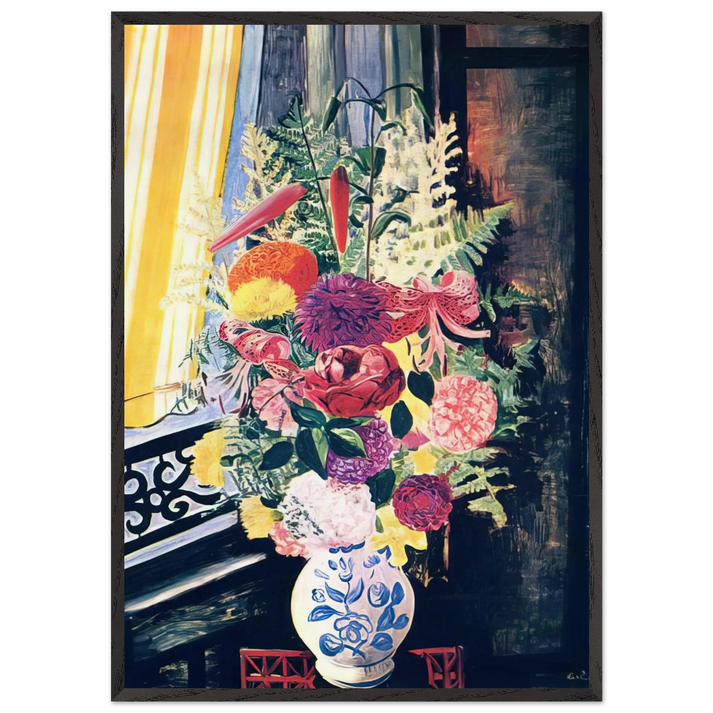
Yes. We use 250 gsm (110 lb) archival museum-quality paper. It is natural white, uncoated, and acid-free, ensuring the vibrant colors of Kisling’s 1927 bouquet remain vivid for generations.
Does the framed print arrive ready to hang on the wall?
Absolutely. Your Moise Kisling art print arrives fully assembled in its black wooden frame with a hanging kit included. You can elevate your space immediately upon delivery.
How is the artwork protected during shipping and display?
Each print is protected by premium shatterproof plexiglass. This provides the clarity of glass with significantly increased durability, ensuring your artwork arrives safely and remains protected from dust and damage.
Is this product environmentally sustainable?
RedKalion is committed to sustainability. We use FSC-certified materials or equivalent certifications, ensuring that the wood and paper for your fine art print are sourced responsibly.
Who was Moise Kisling and why is his 1927 work significant?
Moise Kisling was a central figure of the School of Paris. His 1927 works represent his stylistic peak, known for 'porcelain' textures and intense colors that bridged traditional still life with modern expressionism.
What makes the 1927 Bouquet of Various Flowers unique?
This piece is celebrated for its diverse botanical composition and the 'enamel' finish typical of Kisling’s technique, which gives the flowers a sculptural, permanent quality rarely seen in floral art.