Verfügbarkeit für Abholungen konnte nicht geladen werden
Unsere hochwertigen Holzrahmen, gefertigt aus verantwortungsvoll angebautem Eichen- oder Eschenholz, zeichnen sich durch eine einzigartige Maserung aus, die ihnen zusätzlichen Charakter verleiht. Die Poster werden auf erstklassigem, cremefarbenem, ungestrichenem Papier in Museumsqualität gedruckt – ideal für alle, die höchste Ansprüche stellen.
Sofort aufhängefertig: Inklusive Aufhängevorrichtung, kann direkt an der Wand aufgehängt werden.
Rahmenmaterial: Verantwortungsvoll beschafftes Eichen- und Eschenholz.
Rahmenmaße: 20 mm (0,79") dick und breit, breiter als der klassische 14 mm (0,55") Rahmen.
Papiergewicht: 250 g/m² (110 lb), Dicke: 0,29 mm (11,4 mils), ideal für Kunstwerke.
Papierveredelung: Mattes, ungestrichenes, naturweißes Archivpapier in Museumsqualität.
Schutz: Das Poster ist durch bruchsicheres Plexiglas geschützt.
Nachhaltiges Papier: FSC-zertifizierte Materialien oder gleichwertige Materialien.
Verfügbare Größen: 15 Größen in Zoll (USA & Kanada) und cm (Rest der Welt).
Keine Mindestbestellmenge, Druck und Versand auf Bestellung.
We use 250 gsm archival museum-quality paper with a matte finish. The frame is made from FSC-certified black ash wood, measuring 20mm in width for a premium look.
Is the artwork ready to hang upon arrival?
Yes, each framed Zao Wou-Ki print includes a pre-installed hanging kit, allowing you to display your museum-quality reproduction immediately after unboxing.
How is the print protected from damage?
We utilize shatterproof, high-clarity plexiglass to protect the paper from dust and impact, while ensuring the artwork’s colors remain vivid and visible from all angles.
What makes the paper "archival quality"?
Our natural white, acid-free paper is 0.29 mm thick and designed to resist yellowing and degradation over time, meeting the strict standards of galleries and museums.
How does RedKalion ensure sustainable production?
RedKalion uses FSC-certified wood for frames and environmentally friendly paper, ensuring that your fine art print supports responsible forest management and sustainability.
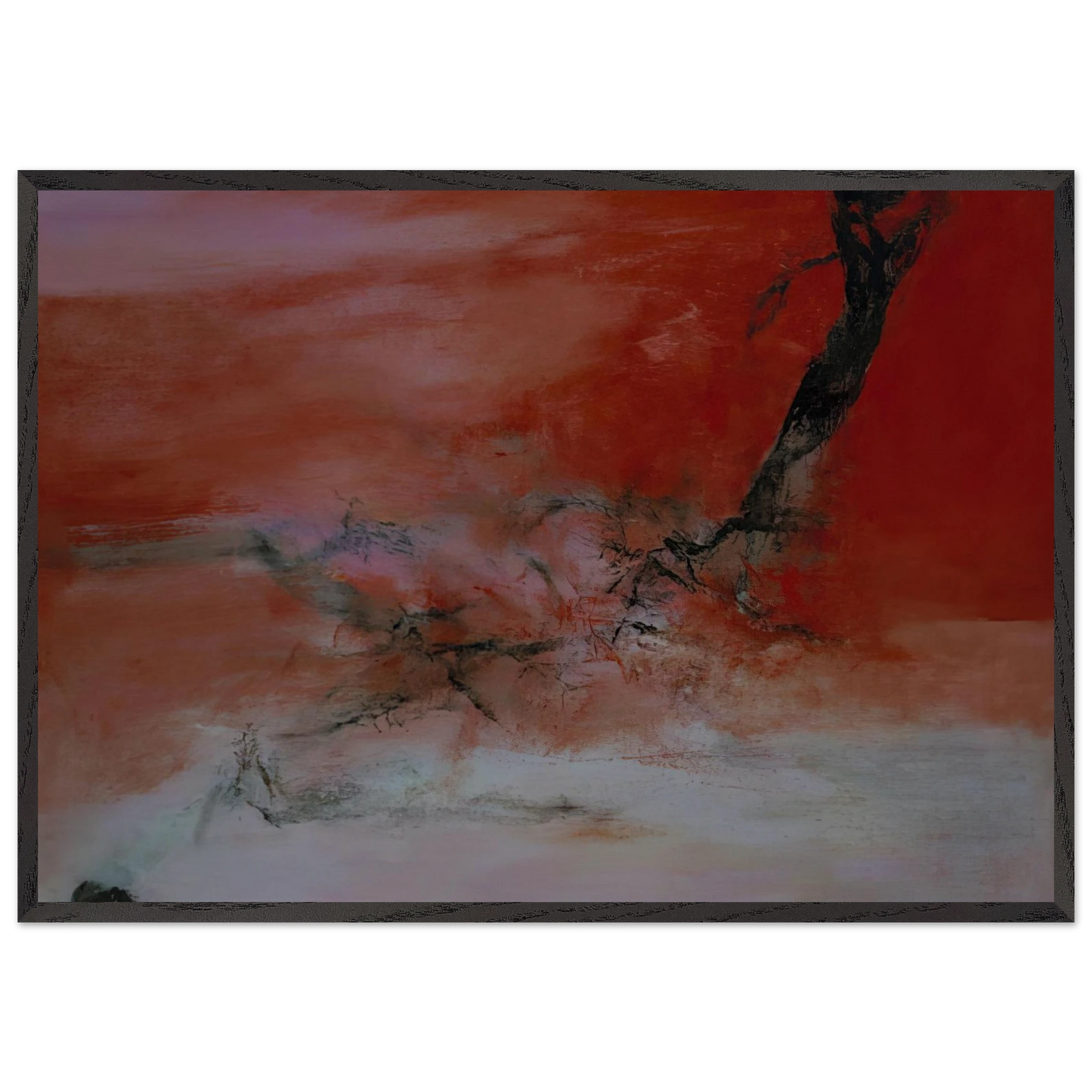
What is the significance of the title 10 JANVIER 2001?
Zao Wou-Ki often titled his works with the date of completion, reflecting his focus on the spontaneous capture of emotion and atmospheric light at a specific moment in time.
Why is Zao Wou-Ki’s style considered Lyrical Abstraction?
His style blends traditional Chinese ink techniques with Western oil painting, focusing on the expression of feelings and nature rather than literal representation, creating a poetic visual experience.
Wenn du dich für eine Auswahl entscheidest, wird die Seite komplett aktualisiert.